 Chinese · Fish & Seafood
🍤 Stir-Fried Shrimp with Dragon Well Tea
Long jing xia ren
Shrimp coated in egg white and potato starch, chilled at least 2 hours, pre-fried in oil at 250-260F and finished with Dragon Well tea leaves and a splash of tea infusion.
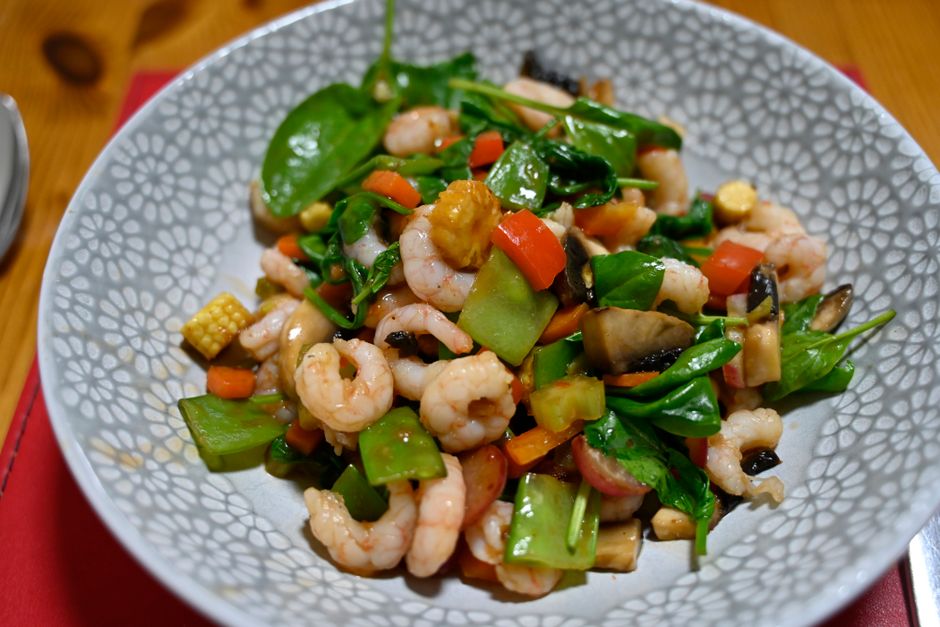
Shrimp are mixed with salt and egg white until slightly springy, coated in potato starch and chilled at least 2 hours. They are cooked in oil at 250-260F (120-130C) until they curl and turn opaque, then returned to a hot wok with wine, tea leaves and 2 Tbsp of the tea infusion until the juices thicken, and served with vinegar.
Ingredients
Equipment: Seasoned wok, Chopsticks, Cooking thermometer (our note)
- 1 pound (450 g) raw peeled, deveined shrimp (about 1.25 pounds before peeling)
- 3/4 teaspoon salt
- 2 tablespoons egg white
- 3 tablespoons potato starch
- 1 tablespoon Dragon Well tea leaves or other Chinese green tea
- 1 3/4 cups (400 ml) cooking oil
- 1 tablespoon Shaoxing wine
- 1/2 teaspoon potato starch mixed with 1 tablespoon cold water
- Chinkiang or red rice vinegar, for serving
Method
- Mix the shrimp with the salt and egg white in one direction until slightly springy, then add the 3 Tbsp starch until they are evenly clothed in starch and egg white. Chill at least 2 hours.
- Steep the tea leaves in 4 Tbsp water at 185-195F (85-95C) for 1 minute; strain, keeping both leaves and liquid.
- Stir 2 tsp of the oil into the shrimp. Heat the remaining oil in the wok on high to 250-260F (120-130C), add the shrimp and separate them with chopsticks.
- Stir gently until they curl, turn opaque and are very nearly cooked through, then remove. Do not let the oil exceed 275F (140C).
- Pour off all but 1 Tbsp of oil. On high heat, return the shrimp with the wine, tea leaves and 2 Tbsp of the infusion, and stir.
- Add the starch mixture and remove as soon as the juices thicken. Serve with vinegar.
Chef Tips
- Cues: slightly springy texture; evenly clothed in starch and egg white; shrimp curl, turn opaque and are very nearly cooked through; stop when the juices thicken.
- Temperatures printed: tea water 185-195F (85-95C); oil 250-260F (120-130C), not above 275F (140C). One pass said the shrimp lose succulence at 275F and above.
- Per the page, Dunlop says pre-frying in hot but not sizzling oil keeps delicate seafood such as shrimp and sliced fish tender and slippery; oil too hot turns the shrimp yellowish and too cold loses the starch coating.
Common Mistakes to Avoid
- Letting the oil get too hot; the page warns the shrimp turn yellowish (and not above 275F).
Nutrition (per serving)
Health Benefits
- Shrimp are a lean source of protein; green tea adds aroma.
Cultural Note
The page describes it as a seasonal dish from China's Jiangnan province and quotes Suzhou chef Sun Fugen on the starch coating, saying that if the oil is wrong 'their clothes fall off'.
Storage & Serving
Storage: No storage guidance printed.
Reheating: Best eaten straight from the wok (our note).
Serve with: Steamed white rice (our note)
Adapted From
- Adapted from "Stir-Fried Shrimp with Dragon Well Tea (Long Jing Xia Ren)", Cooks Without Borders. BYLINE AS PRINTED: "Recipe from Fuchsia Dunlop; adaptation and headnote by Leslie Brenner". Date as printed: none printed (the headnote says the book was reviewed in August 2020). Serves 3 - 4 (we use 4); no prep or cook time printed (shrimp chill at least 2 hours; tea steeps 1 minute). Adapted from Dunlop's Land of Fish and Rice per the page. URL: https://cookswithoutborders.com/stirfried-shrimp-with-dragon-well-tea
- SOURCING STATUS: TWO-PASS, ingredient lines as relayed by a research tool and to be checked against the live page; method wording is our own summary; servings, prep/cook split and nutrition are our own estimates unless the page prints them.
- FLAG: the page calls it a seasonal dish from China's Jiangnan province. No food-safety statement is printed.