 Ghanaian · Sauces & Condiments
🥗 Abomu
Abomu — abom, kontomire abom
Steamed cocoyam leaves mashed in the asanka with koobi and kpakposhito, with hot palm oil poured over at the end.
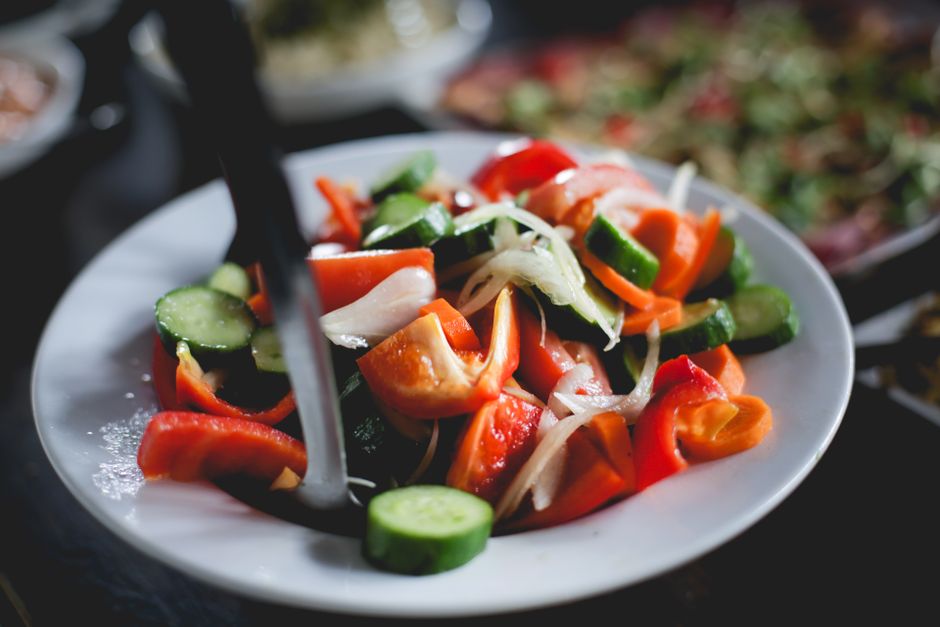
Abomu is defined by its vessel: it is made in and eaten from the asanka, the Ghanaian earthenware grinding bowl, and the mashing is done there rather than in a pan. Four hundred grams of spinach or cocoyam leaves steam with onion, kpakposhito and salted koobi until everything is tender, then the whole lot is mashed in the asanka. Thirty millilitres of zomi — the deeper, unrefined palm oil — is heated and poured over. Tinned sardines in tomato sauce go in. It is served with boiled yam, plantain or cocoyam.
Ingredients
Equipment: Asanka (earthenware grinding bowl) and grinder, Steamer or pot, Small pan, for the oil
- 400 g organic spinach or cocoyam leaves (kontomire)
- 1 large onion, sliced
- 20 g pettie belle chillies (kpakposhito)
- 185 g salted fish (koobi)
- 150 g tinned sardines in tomato sauce
- 30 ml palm oil (zomi)
- Salt, to taste
Noted in the method but absent from the ingredient list
- Tomatoes
Method
- Steam the kontomire with the tomatoes, onion, pepper and koobi.
- Steam until the tomatoes, onions and kontomire leaves are tender.
- Transfer to the asanka and mash.
- Heat the palm oil in a small pan.
- Pour the hot oil over the mashed mixture.
- Fold in the tinned sardines.
- Serve with boiled yam, plantain or cocoyam.
Chef Tips
- The asanka is the point. Mashing in earthenware with a wooden grinder gives a coarse, uneven texture that a blender cannot reproduce, and the bowl is also the serving dish.
- Until the tomatoes, onions and kontomire leaves are tender is the cue, and it covers all three — the onion is usually the slowest.
- Pour the oil over hot at the end rather than cooking in it. That keeps the zomi's flavour forward instead of cooking it off.
- Zomi is palm oil that has been further processed to deepen its colour and flavour. Ordinary red palm oil will work and will taste lighter.
- Thirty millilitres is only two tablespoons, which makes this a notably lean dish for a palm oil preparation.
- Note that the method calls for tomatoes but the ingredient list has none, so the quantity is genuinely missing. Two medium tomatoes is a sensible reading, offered as such.
- Koobi is salted dried tilapia and it is very salty indeed. Soak it before use and taste before adding any salt.
Common Mistakes to Avoid
- Using a blender instead of an asanka.
- Cooking the palm oil in with everything else.
- Adding salt before tasting, when the koobi is already salty.
- Over-steaming so the leaves go grey.
- Mashing it to a smooth purée rather than leaving it coarse.
Nutrition (per serving)
Health Benefits
- Cocoyam leaves are very high in vitamin A, vitamin C, iron and calcium.
- Only two tablespoons of oil for four servings.
- Sardines supply omega-3 fats, calcium and vitamin D.
- Very low in carbohydrate before the accompaniment.
Cultural Note
An asanka is a shallow ribbed earthenware bowl, and food made in one is both ground and served in the same vessel — which is why abomu is named for the process rather than the ingredients. The ribs do the grinding, and the coarse result is deliberate; a smooth purée would be a different dish entirely.
Storage & Serving
Storage: 2 days refrigerated.
Reheating: Serve at room temperature, or warm gently. It is often eaten cool.
Serve with: Boiled yam, Ampesi, Boiled cocoyam
Adapted From
- Adapted from 'How to prepare Abomu', pulse.com.gh. BYLINE AS PRINTED: 'Berlinda Entsie, 15:45 - 11 May 2020'. DATE FLAG: the URL carries a timestamp of 2024-08-10, so the printed date and the URL date disagree. Both are recorded; neither is treated as correct.
- THE DEFINITION, verbatim and the reason the asanka is in the equipment list rather than as an option: 'Abomu or Abom is a traditional Ghanaian stew made in and eaten from our traditional grinding bowl called Asanka.'
- Ingredients exactly as printed: 400g organic spinach or cocoyam leaves (kontomire); 1 large onion, sliced; 20g Pettie Belle chillies (Kpakposhito); 185g salted fish (Koobi); 150g tinned sardines in tomato sauce; 30ml palm oil (Zomi); Salt to taste.
- Method as printed: steam the kontomire with tomatoes, onion, pepper and koobi; mash in the asanka; heat the palm oil and pour it over; serve with boiled yam, plantain or cocoyam.
- DONENESS CUE, quoted: steam until 'tomatoes, onions and kontomire leaves are tender'.
- MISSING INGREDIENT, flagged and NOT filled in with a sourced figure: the method adds 'tomatoes' but THE INGREDIENT LIST HAS NO TOMATOES. The ingredient list above carries them under a header noting the discrepancy, with no quantity asserted. The 'two medium tomatoes' in the tips is explicitly offered as a reading, not as the source's figure.
- ON ZOMI: palm oil processed further than ordinary red palm oil, darker and more intensely flavoured. The source names it specifically rather than saying palm oil, and that distinction is preserved.
- ON KOOBI: salted dried tilapia, a staple Ghanaian preserved fish. Its own preservation process is not published here — see the note at Wele on why the salted and fermented fish preparations were not publishable.
- The same author's garden egg abomu is at Garden Egg Abomu, and the relationship between the two — whether abomu names a dish or a method — is not set out by any source. The vessel-and-mashing definition quoted above suggests a method, which is how both are treated here.