 Ghanaian · Beverages
🍹 Bissap Hibiscus Iced Tea
Bissap — roselle
A double extraction — four hours cold, then a second pour of boiling water over the same flowers, and in Ghana we don't waste a drop.
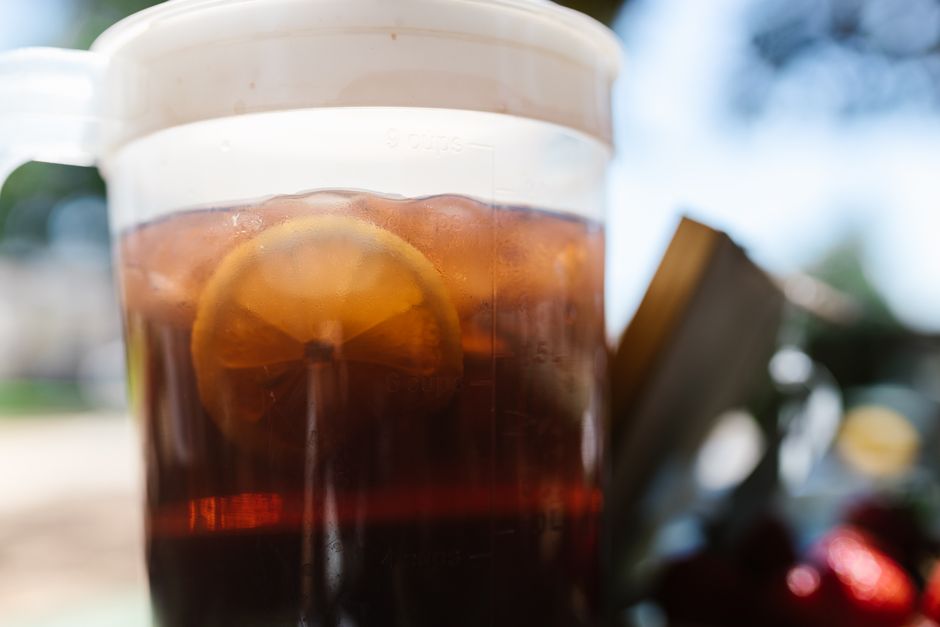
The unspiced counterpart to sobolo, and its method is the reason to keep it: the hibiscus is extracted twice. Two cups of dried flowers and a quarter cup of chopped lemon grass are steeped in five cups of boiling water for at least four hours under a cheesecloth. The liquid is strained off, then a second five cups of boiling water goes over the same flowers, sits a few minutes, and is strained and combined. The spent flowers are twisted in the cheesecloth to get the last of it out. Her note on reducing the second pour to two or three cups and finishing with sparkling water when serving is worth following.
Ingredients
Equipment: Two large stainless steel or ceramic bowls, Metal strainer, Cheesecloth, Pitcher or jar
- 2 cups dried hibiscus flowers — bissap or roselle
- 1/4 cup fresh lemon grass, chopped (optional)
- 1/2 tsp vanilla or rum flavoring, or to taste
- Sugar to taste — probably 1 to 2 cups, or sugar substitute
- 5 cups boiling water, for the first pour
- 5 cups boiling water, for the second pour — or only 2 or 3 cups, see the note
- 1 cup of juice (optional — pineapple)
To serve
- Chilled sparkling water, if you reduced the second pour
- Fresh mint leaves, fruit slices or a sugar cane swizzle stick
Method
- Bring the water to the boil.
- Rinse the hibiscus flowers lightly in a metal strainer in the sink to remove sand or grit — the dried flowers bleed immediately, so keep the strainer in the sink.
- Pull off the outside leaves of the lemon grass, rinse and chop it.
- Put the rinsed flowers and the lemon grass into a large stainless steel or ceramic bowl and pour the boiling water over.
- Cover the bowl with cheesecloth and let it sit for at least 4 hours.
- Bring another 5 cups of water to the boil.
- Strain the liquid from the flowers into a second bowl.
- Return the flowers and lemon grass to the first bowl and pour the just-boiled water over them.
- Stir well, let it sit a few minutes, then strain again into the first liquid, pushing down with a spoon to remove as much as possible.
- Line the strainer with the cheesecloth, add the flowers, and twist it tightly to remove as much liquid as possible. In Ghana we don't waste a drop.
- Discard the flowers and lemon grass.
- Stir in the sugar and the flavourings.
- After all of the sugar has dissolved, pour off the liquid into a pitcher, leaving any sediment behind in the bowl.
- Cover, chill, and serve over ice with water or sparkling water as desired.
Chef Tips
- Two extractions, not one. The second pour of boiling water over the spent flowers is where this recipe differs from every other hibiscus drink and it is why it tastes stronger.
- Rinse the flowers IN THE SINK. They bleed the moment water touches them and the stain does not come out.
- Her best variation: use only two or three cups for the second pour and top each glass with chilled sparkling water. A concentrate rather than a jug of tea.
- Leave the sediment behind in the bowl when you pour off. It settles out and makes the drink cloudy.
- Soak and rinse the cheesecloth in cold water immediately or you will not get the hibiscus out of it.
- The four-hour steep is given as a minimum with no cue attached, so longer is safe — overnight in the fridge works.
- Bissap or sobolo is the same flower. This is the plain version; the spiced Ghanaian treatment is at Sobolo.
Common Mistakes to Avoid
- One extraction instead of two.
- Rinsing the flowers over a worktop or a white sink.
- Pouring the sediment into the pitcher.
- Leaving the cheesecloth to dry stained.
- Sweetening before the second extraction is combined.
Nutrition (per serving)
Health Benefits
- Hibiscus is rich in anthocyanins and vitamin C.
- Lemon grass contributes citral, with documented antimicrobial activity.
- Caffeine-free and vegan.
- Sweetening is entirely to taste, so it can be made with very little sugar.
Cultural Note
Bissap travels under a different name in every West African country — sobolo in Ghana, zobo in Nigeria, bissap in Senegal, and sorrel in the Caribbean where it went with the enslaved. The twice-extracted method here, and the instruction not to waste a drop, is the thrift of a cook who learned it in a Ghanaian kitchen.
Storage & Serving
Storage: A week refrigerated, covered.
Reheating: Served cold. Do not reheat.
Serve with: Atwemo, Spicy Coated Groundnuts, Kelewele
Adapted From
- Adapted from 'Recipe #8: Bissap, Hibiscus Iced Tea', betumiblog.blogspot.com, Friday 14 August 2009. BYLINE AS PRINTED: 'Posted by Fran at 12:13 PM', timestamped 2009-08-14T12:13:00-05:00. Yield: NONE PRINTED. Confirmed across four fetches — two against the betumiblog.blogspot.com page and two against the www.betumi.com mirror of the same post — with no conflicts on any figure (TWO-PASS and then some).
- A MIRROR NOTE worth recording for anyone rebuilding this: the www.betumi.com mirror renders the post WITHOUT the 'Posted by Fran' byline line. The blogspot pages carry it. That is a rendering difference between two views of one post, not a sourcing discrepancy.
- Ingredients exactly as printed: '2 cups dried hibiscus flowers (bissap or roselle)'; '1/4 cup fresh lemon grass, chopped (optional)'; '1/2 teaspoon vanilla or rum flavoring (or to taste)'; 'sugar to taste (probably 1 to 2 cups; or sugar substitute)'; '5 cups of boiling water'; '1 cup of juice (optional, I'm using pineapple today)'.
- THE DOUBLE EXTRACTION, which is the method's distinguishing feature, verbatim: 'Then bring another 5 cups of water (*see note below on reducing this amount of water and adding sparkling water when serving) to a boil. Place a strainer over a second large bowl and empty the liquid from the hibiscus/lemongrass mixture into it. Return the hibiscus/lemon grass to the original bowl and pour the just-boiled water over them.'
- THE CONCENTRATE VARIATION, verbatim: 'Sometimes I use less boiling water the second time (only 2 or 3 cups), and add chilled sparkling water when serving the bissap. Enjoy! But be forewarned: bissap is addictive.'
- CUES: the only observable cue in the recipe is at the sweetening stage — 'After all of the sugar has dissolved'. THE FOUR-HOUR STEEP IS GIVEN AS TIME ONLY — 'let it sit for at least 4 hours' — with NO colour, taste or aroma endpoint. That absence is recorded rather than filled in. Note it is phrased as a minimum, which is why the entry publishes: nothing spoils by steeping longer.
- NOT FERMENTED. Both verbatim passes confirmed that fermentation is nowhere in this recipe. It is a steeped infusion, refrigerated.
- THE LINE WORTH KEEPING, verbatim: 'In Ghana we don't waste a drop.' It is the reason for the cheesecloth twist.
- A SPELLING INCONSISTENCY WITHIN THE POST, recorded: 'cheese cloth' as two words early in the method and 'cheesecloth' as one word later in the same method. TWO-PASS on both forms.
- NO TEMPERATURE is printed anywhere — only 'boiling'. NO YIELD is printed; the ten servings above is an editorial reading of ten cups of water plus a cup of juice.
- RELATIONSHIP TO SOBOLO: the same flower, and this author's own framing is that bissap and sobolo are the same drink. The spiced Ghanaian treatment, from a different author, is at Sobolo; its own page says 'Sobolo is the Ghanian version of Bissap, and is traditionally on the spicy side.' Published as two entries because the methods genuinely differ — a double cold-then-hot extraction here against a blended, boiled, heavily spiced one there.
- GARNISH as printed: 'use fresh mint leaves, fruit slices, or a sugar cane swizzle stick.'