 Ghanaian · Sauces & Condiments
🥥 Coconut Cream and Milk
Coconut cream and milk, and chilled coconut water
One coconut yields about two thirds of a cup of water to drink, then hot water blended with the meat gives milk — squeeze until as much liquid is removed as possible.
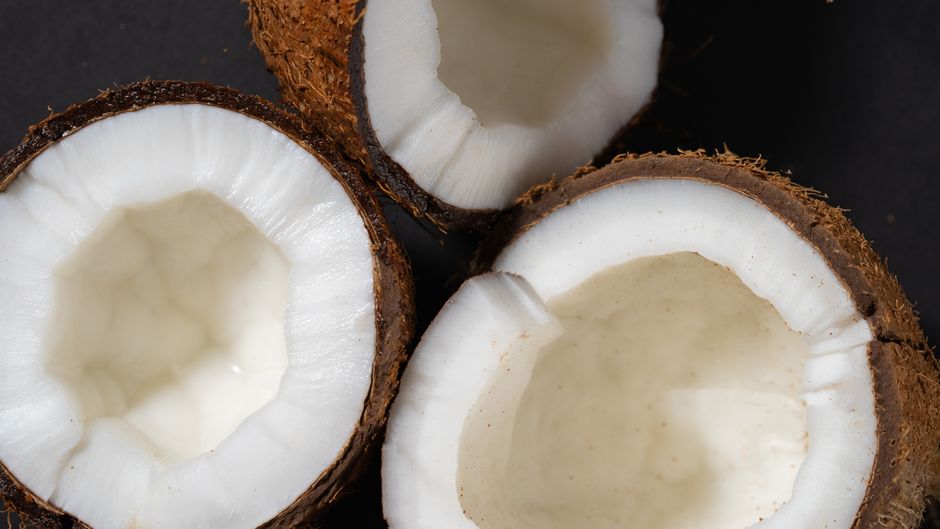
The component the coconut rice assumes, and a Ghanaian kitchen skill in its own right. The three eyes of the coconut are punctured with a hammer and an ice pick and the water drained through a strainer — about two thirds of a cup, which is a drink rather than an ingredient. That reserved water plus about half a cup more is heated until nearly boiling, then blended with the coconut meat in batches for about ten minutes in total, strained through cheesecloth and squeezed until as much of the liquid is removed as possible. Repeating with fresh water gives a lighter second milk. Left in the fridge, the cream rises to the top.
Ingredients
Equipment: Hammer and an ice pick, screwdriver or clean nail, Knife and a vegetable peeler, Blender, Strainer and cheesecloth, Small pan
- 1 fresh coconut
- The reserved coconut water — about 2/3 cup
- About 1/2 cup water, plus more for a second lighter milk
Nothing else. This is an extraction, not a recipe with seasonings.
Method
- Locate the three eyes at one end of the coconut and puncture all three with a hammer and an ice pick.
- Invert the coconut over a strainer set on a cup or bowl and drain the coconut water, shaking to get it all out. One coconut yields about 2/3 cup.
Chill that water and drink it. That is the first recipe.
- Strike the coconut with the hammer until it breaks into pieces.
- Pry the white meat away from the hard brown shell with a knife.
- Remove the thin brown layer with a knife or vegetable peeler so only white pieces remain.
- Heat the reserved coconut water plus about 1/2 cup of water until nearly boiling.
- Blend the meat with the hot water in batches, for about 10 minutes in total.
- Strain through cheesecloth and squeeze it until as much of the liquid is removed as possible.
For a lighter second milk, repeat with fresh water over the same chaff.
- Refrigerate. The cream rises to the top and can be spooned off.
- Freeze the leftover chaff for another use.
Chef Tips
- All three eyes, not one. Puncturing one gives you a vacuum and a mess; three lets it pour.
- Drain the water through a strainer and drink it chilled. It is not an ingredient — one coconut gives about two thirds of a cup and that is the whole point of the first recipe.
- Hot water, nearly boiling, not cold. Heat is what releases the fat from the meat and it roughly doubles your yield.
- Ten minutes of blending in total, in batches. That is far longer than instinct suggests and it is where the richness comes from.
- Squeeze until as much liquid as possible is out. The cheesecloth twist is not optional if you want cream.
- The cream rises in the fridge, so make it the day before and spoon the cream off the top. That is what the coconut rice calls for separately.
- A second pass with fresh water over the same chaff gives a thin milk — fine for cooking rice, not for cream.
Common Mistakes to Avoid
- Puncturing one eye instead of three.
- Discarding the coconut water.
- Blending with cold water.
- Stopping at a couple of minutes of blending.
- Not squeezing the cheesecloth.
Nutrition (per serving)
Health Benefits
- Coconut water is naturally high in potassium and a genuine electrolyte drink.
- Fresh coconut milk has no added gums, stabilisers or sulphites.
- Medium-chain fats are metabolised differently from long-chain.
- Vegan and dairy-free.
Cultural Note
Coconut sellers along the Ghanaian coast machete the top off and hand it over to drink, then split it so you can scrape out the jelly — the water first, the meat second, which is exactly the order these two recipes follow. Making your own milk is a Saturday job, and no tin tastes like it.
Storage & Serving
Storage: 3 days refrigerated; the cream rises and can be spooned off. It freezes well, as does the chaff.
Reheating: Warm gently. Boiling splits it.
Serve with: Coconut Rice, Mpotompoto, Groundnut Toffee
Adapted From
- Adapted from 'Wonderful ways with coconut: recipes #54 and 55', betumiblog.blogspot.com. BYLINE AS PRINTED: 'Posted by Fran at 3:56 PM', timestamped 2011-06-20T15:56:00-05:00. Recipe #54 is chilled coconut water; #55 is coconut cream and milk. Both are published here as one entry because #54 is a by-product of opening the coconut for #55.
- #54 AS PRINTED: one fresh coconut; puncture the three eyes with a hammer and ice pick and drain through a strainer. YIELD, SINGLE-PASS for the exact wording: 'My coconut yielded about 2/3 cup of delicious coconut water.' A second pass gave 'approximately two-thirds cup', so the figure is corroborated even where the phrasing is not.
- #55 AS PRINTED: heat the reserved coconut water plus about 1/2 cup water 'until nearly boiling' (second-pass phrasing); blend the meat with the hot water in batches for about 10 minutes in total; strain through cheesecloth and squeeze — 'Squeeze it until as much of the liquid is removed as possible'; repeat with fresh water for a lighter milk. SINGLE-PASS, from pass one only: the cream rises in the refrigerator, and she freezes the chaff.
- THE COCONUT-OPENING SEQUENCE is drawn from the same author's earlier 'Recipe #13: Small chop: corn and coconut snack', betumiblog.blogspot.com, timestamped 2009-08-27T14:39:00-05:00, 'Posted by Fran at 2:39 PM'. That post explains the technique in detail: locate the three eyes, pierce all three, invert over a cup and shake, strike with a hammer until it breaks, pry the meat from the shell with a knife, and remove the thin brown layer with a knife or vegetable peeler. Tools named verbatim: 'ice pick or sharp object like a screw driver or clean nail, a knife and/or a vegetable peeler'.
- WHY RECIPE #13 IS NOT PUBLISHED AS ITS OWN ENTRY, stated plainly: it has NO ingredient list and NO quantities at all — not a number of coconuts, not a number of corn cobs, not an amount of salt. It gives three options for the corn, verbatim, 'boil the corn cobs in salted water, grill them over an open fire, or cook them in the microwave', with NO time, NO temperature and NO doneness cue for any of them, and the instruction 'Serve pieces of corn and coconut together.' A retrieval pass that reported '1' coconut was inferring a count from the indefinite article; no count is printed. There is nothing publishable there beyond the coconut technique, which is used here. Its one piece of real guidance is comparative: local Ghanaian corn is firmer than North American sweet corn, which is 'much softer and sweeter' and cooks faster. Its suggested drinks, verbatim, are 'ginger beer, bissap, puha, or beer'.
- A RETRIEVAL CAVEAT on #13: a strict verbatim transcription of that post was refused twice by the fetching layer on length grounds, so its narrative was never captured character for character. The load-bearing finding — that it carries no quantities — was confirmed on two separate passes.
- NOTHING HERE IS FERMENTED and no rest or rise step exists.
- NO YIELD is printed for #55. The four servings above is an editorial reading of one coconut's milk.
- THIS ENTRY EXISTS because the coconut rice at Coconut Rice asks for 'coconut cream mixed with coconut milk' and tinned milk is not what its author used. Published as the component it depends on.