 Japanese · Breakfast
🥚 Onsen Tamago (Hot Spring Egg)
Onsen tamago 温泉卵
Four refrigerated eggs held 17 to 20 minutes in water cooled to about 180°F (82°C), rested 5 minutes and served in a warm dashi-soy sauce.
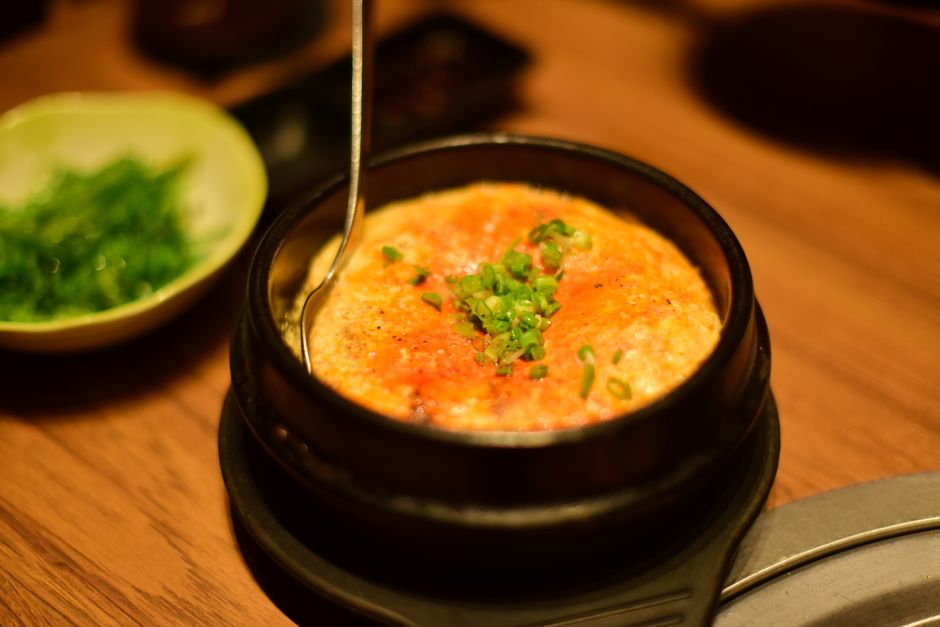
One litre of water is boiled, removed from heat and cooled with 200 ml tap water to about 180°F (82°C), then four cold eggs are lowered in, the pot covered, and timed 17 minutes for a runnier yolk or 20 for a creamier one. The eggs rest 5 minutes and are cracked into a bowl with a sauce of dashi, mirin, soy sauce and katsuobushi.
Ingredients
Equipment: Small heavy-bottomed saucepan with a tight lid, Fine-mesh skimmer, Timer, Thermometer (our note: helpful)
- 4¼ cups (1 L) water
- 4 large eggs (about 50 g each without shell), refrigerated (page warns not to use more than 4)
- ¾ cup (200 ml) tap water, colder than room temperature
Sauce
- ¼ cup (4 Tbsp) dashi
- ½ Tbsp mirin
- 1½ Tbsp soy sauce
- 2 Tbsp katsuobushi (skip for vegetarian)
Garnish
- green onion (scallion)
Method
- Boil the 1 L water in a small heavy-bottomed saucepan with a tight lid, turn off the heat and move the pot off the burner. Add the 200 ml cooler tap water; the water should be about 180°F (82°C).
- Lower the cold eggs in one at a time with a fine-mesh skimmer, cover immediately and set a timer for 17 to 20 minutes: 17 for a runnier yolk, 20 for a creamier one. The water should be about 154°F (68°C) at 20 minutes.
- Meanwhile boil the dashi, mirin, soy sauce and katsuobushi, turn off the heat and strain.
- Remove the eggs and rest them 5 minutes; the page says residual heat keeps cooking them.
- Serve warm or at room temperature: crack into a bowl, add the sauce and green onion.
Chef Tips
- Cues printed: water 'about 180°F (82°C)' at the start; about 154°F (68°C) at 20 minutes. Thin pots may need only ⅓–½ cup (100–150 ml) tap water. Do not scale the recipe (the page warns against more than 4 eggs).
- FOOD SAFETY as relayed from the author (check the live page): many people including Japanese eat uncooked eggs; the poaching temperature is below the FDA's 165°F (74°C) guideline and 'carries a salmonella risk'. Uncracked eggs keep 1–2 days refrigerated; reheat only to room temperature, then soak in 160°F (70°C) water about 10 minutes, no hotter. The report relays no pasteurised-egg statement for this page.
- The sauce keeps 4–5 days refrigerated. The vegetarian version omits the katsuobushi.
Common Mistakes to Avoid
- Adding more than 4 eggs or scaling up; the page says not to scale.
- Skipping the 5-minute rest; the page says residual heat keeps cooking the eggs.
Nutrition (per serving)
Health Benefits
- Eggs give protein.
- Dashi sauce adds flavour with little fat.
Cultural Note
The author says 'onsen' means hot spring and 'tamago' egg (also 'ontama'); Japan has over 30,000 natural hot springs and about 3,000 onsen resorts, she looks forward to it at ryokan breakfast, and it typically comes with steamed rice and dashi soy sauce.
Storage & Serving
Storage: Uncracked eggs keep 1–2 days refrigerated; the sauce keeps 4–5 days refrigerated (per the page).
Reheating: Per the page: reheat only to room temperature, then soak in 160°F (70°C) water about 10 minutes, no hotter.
Serve with: Steamed rice, Dashi soy sauce, Curry rice, rice bowls and noodle soups (per the author), Chawanmushi
Adapted From
- Adapted from "Onsen Tamago (Hot Spring Egg) 温泉卵", Just One Cookbook. BYLINE AS PRINTED: "By Namiko Hirasawa Chen". Date as printed: Updated Mar 22, 2025 (republished April 19, 2024; original post January 22, 2015 per pass 1).. Makes 4 onsen tamago; prep 10, cook 20, total printed 30 minutes (our time adds the 5-minute rest). The site's About page (fetched) calls Namiko Hirasawa Chen Co-Founder & Recipe Developer, now based in San Francisco, born and raised in Yokohama, Japan, sharing home-style Japanese recipes for about 15 years. URL: https://www.justonecookbook.com/onsen-tamago/
- SOURCING STATUS: TWO-PASS, ingredient lines as relayed by a research tool and to be checked against the live page; method wording is our own summary; servings, prep/cook split and nutrition are our own estimates unless the page prints them. The ingredient lines for this page were restated by the tool rather than quoted, so their wording is not guaranteed verbatim; quantities agreed across both passes.
- FLAG: lightly set egg dish. The salmonella-risk statement and the 160°F (70°C) reheating limit are the author's wording as returned by the tool; check the live page. FLAG: no pasteurised-egg statement was relayed. FLAG: the page names no region; she says she looks forward to it at ryokan breakfasts.