 Japanese · Lentils, Beans & Vegetarian
🫘 Homemade Natto (Fermented Soybeans)
Natto
Overnight-soaked soybeans cooked until tender, mixed with natto bacillus starter and fermented 24 hours at 40°C, then 24 hours more in the fridge.
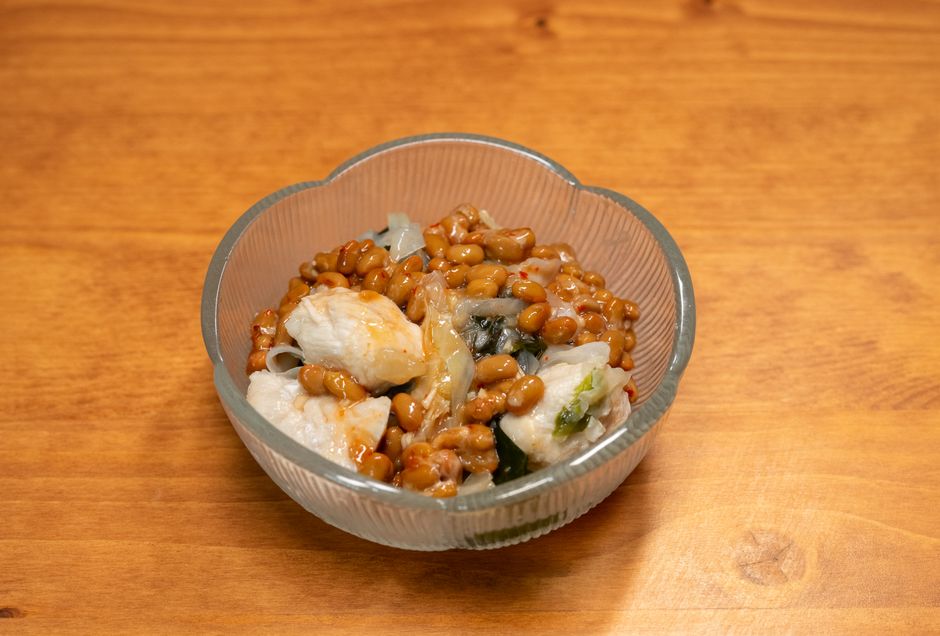
Dry soybeans are soaked overnight until plump, cooked until tender and mixed with natto bacillus starter in a sterilised bowl. They ferment at 40°C for 24 hours in a yogurt maker, fermentation box or warm spot, then spend another 24 hours in the fridge, after which the natto is complete.
Ingredients
Equipment: Yogurt maker, fermentation box or warm spot, Heatproof bowl, Pot
With natto bacillus starter
- 0.1g Natto Bacillus bacteria starter
- 380g dry soy beans
Alternative: frozen natto pack
- 1 pack of frozen natto (or 60g from previous natto)
- ~380g dry soy beans
- 1 tbsp filtered water
Alternative: natto from a previous batch
- ~400g cooked soy beans
- 60g natto from previous batch
Method
- Soak the dry soybeans overnight; they should expand and look plump.
- Cook the soybeans until tender.
- Sterilise your utensils and bowl with hot water.
- Mix in the starter (or frozen or previous-batch natto, as listed).
- Ferment at 40°C for 24 hours in a yogurt maker, fermentation box or warm area.
- The next day, put it in the fridge and let it ferment another 24 hours; then the natto is complete.
Chef Tips
- Fermenting cues: soaked beans should expand and look plump. NO CUE, TIME ONLY for the endpoint: the page says the natto is complete after the stated hours (24 hours at 40°C, then 24 hours in the fridge) and prints no sight, smell or texture test (reader comments mention strings and gooeyness, not the author). The overnight soak and the bean-cooking time have no hours printed.
- Printed food safety: 'Sterilize any utensils and bowl with hot water to remove any bacteria.' Reuse a previous batch a maximum of 3 times, then use frozen store-bought natto 'because the bacteria is stronger'. No other safety statement is printed.
- Prep/cook minutes are our split of the page's '45 min active'.
Common Mistakes to Avoid
- Skipping sterilisation of the bowl and utensils, which the page insists on.
- Reusing the same batch more than 3 times; the page says then use fresh frozen natto.
Nutrition (per serving)
Health Benefits
- Soybeans give plant protein and fibre.
Cultural Note
The page gives no cultural note.
Storage & Serving
Storage: Fridge up to 2 days, or freeze (per the page).
Reheating: Natto is eaten cold or at room temperature; thaw from frozen in the fridge (our note).
Serve with: Steamed rice, Miso soup
Adapted From
- Adapted from "How to Make Homemade Natto", Okonomi Kitchen. BYLINE AS PRINTED: "By Lisa Kitahara". Date as printed: May 17, 2021. Yield/time as printed: 2 cups; 45 minutes active, not counting fermentation. Bio line printed: "I'm Lisa, a home cook, recipe developer and founder of Okonomi Kitchen." No location printed. URL: https://okonomikitchen.com/how-to-make-natto/
- SOURCING STATUS: TWO-PASS, ingredient lines as relayed by a research tool and to be checked against the live page; method wording is our own summary; servings, prep/cook split and nutrition are our own estimates unless the page prints them. Servings (4) are our estimate for 2 cups; the 48 hours of rest are the page's fermentation hours.
- FLAG: the page names no region for this dish, so community is set to 'Japanese home cooking'.