 Korean · Vegetables & Legumes
🥬 Baechu Kimchi
배추김치 · Baechu kimchi
Classic napa cabbage kimchi layered with a fiery paste of chilli, garlic, ginger and salted shrimp.
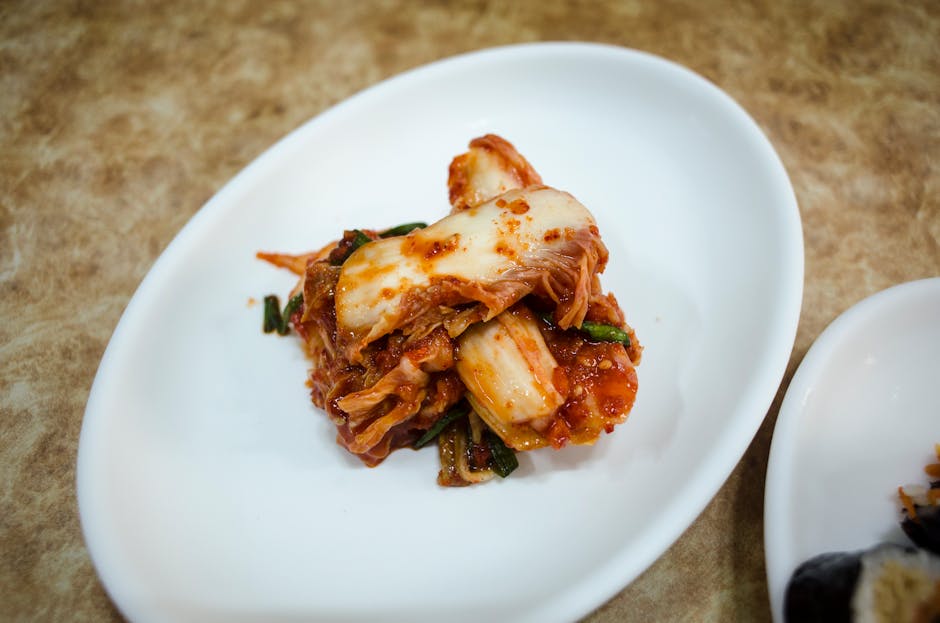
Baechu kimchi is the essential Korean side dish, made from salted napa cabbage layered with a paste of gochugaru, garlic, ginger, fish sauce and salted shrimp, then fermented until tangy, spicy and fizzy. It is eaten at every meal and used in stews, fried rice and pancakes. Making kimchi was a communal autumn ritual called kimjang, recognised by UNESCO.
Ingredients
Equipment: Large mixing bowl, Gloves, Airtight container
- 2 napa cabbages (about 2 kg / 4½ lb)
- 200 g (⅔ cup) coarse sea salt
- 1 litre (4 cups) water
- For the paste: 100 g (1 cup) gochugaru
- 60 ml (¼ cup) fish sauce
- 3 tbsp salted shrimp (saeujeot)
- 10 garlic cloves, minced
- 2.5 cm (1 in) ginger, grated
- 1 tbsp sugar
- 2 tbsp glutinous rice flour mixed with 250 ml water, cooked into a porridge and cooled
- 1 small radish, cut in matchsticks
- 6 scallions, cut in lengths
Method
- Cut the cabbages in half lengthways, rub the salt between the leaves and soak in the water for 6 hours, turning once, until the stems bend. Rinse well and drain for 1 hour.
- Cook the rice flour with the water for 3 minutes until a thick porridge, then cool completely.
- Mix the cooled porridge with the gochugaru, fish sauce, shrimp, garlic, ginger and sugar, then fold in the radish and scallions.
- Wearing gloves, spread the paste between every leaf of the cabbage and fold each half into a bundle.
- Pack tightly into a container, leave at room temperature for 1 day to start fermenting, then refrigerate and eat after 3 to 5 days.
Chef Tips
- Rinse the cabbage well so it isn't too salty.
- Press the kimchi down so it stays submerged in its brine.
Common Mistakes to Avoid
- Using too little salt, which allows spoilage.
- Leaving gaps of air in the container.
Nutrition (per serving)
Health Benefits
- Fermented food with probiotics and vitamins.
- Low in calories.
Cultural Note
Kimjang, the making and sharing of kimchi, was inscribed on UNESCO's Intangible Cultural Heritage list. Most kimchi contains fish sauce and shrimp; vegan versions use kelp stock and soy sauce.
Storage & Serving
Storage: Refrigerate for up to 2 months; it keeps fermenting.
Reheating: Serve cold or use in cooking.
Serve with: Steamed rice, Grilled meat, Any Korean stew
Adapted From
- Written by GieesK Kitchen from the traditional preparation of this Korean dish. Not copied from any cookbook or website.