 Moroccan · Couscous & Grains
🍲 Couscous with Seven Vegetables (Couscous Bidaoui)
Couscous bidaoui — seven-vegetable Friday couscous (كسكس بيضاوي)
Morocco's Friday couscous: hand-rolled grains steamed three times over a lamb, beef or chicken broth, then piled in a mound with cabbage, turnips, carrots, squash and zucchini.
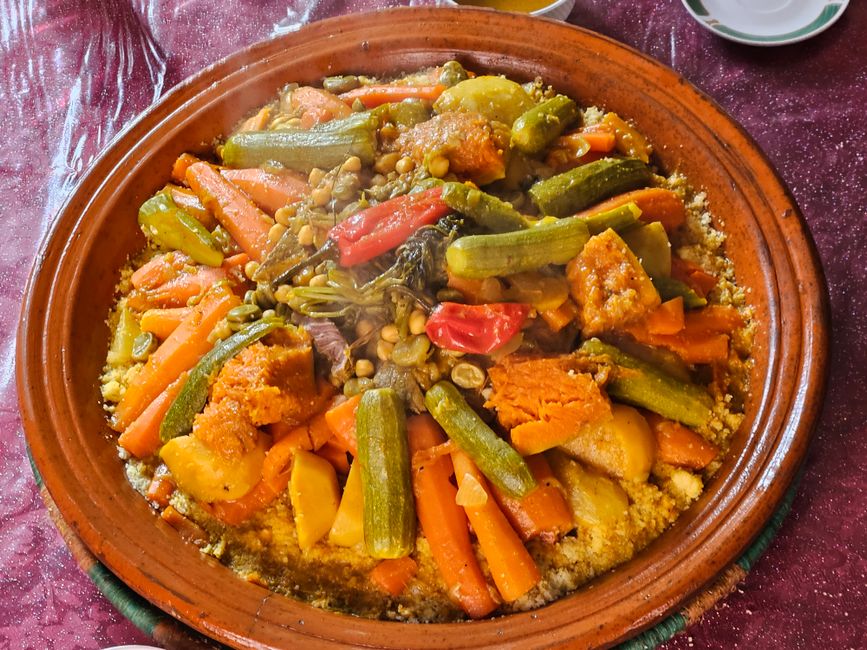
Benlafquih calls this the Casablanca version of the dish, and says many families serve it weekly for Friday lunch around one large communal dish. The meat and vegetables simmer in a seasoned broth in the base of the couscoussier while the couscous steams above it in three rounds, with oil, water and salt worked in between. She also notes that steaming is the only way couscous is made in Morocco. An optional tfaya of caramelised onions and raisins goes on top.
Ingredients
Equipment: Couscoussier (steamer pot), Large wide dish for rolling the grains, Large platter
Couscous
- 2.2 lb. couscous (not instant; I prefer medium caliber)
- 1/4 cup olive oil or vegetable oil
- 6 cups water, divided (can use milk for final steaming)
- 2 to 3 tsp salt (added after 1st steaming)
- 2 tbsp soft butter (added after final steaming)
Meat and broth seasoning
- 2.2 lb. lamb, beef, or goat meat, large pieces on the bone (or 1 large whole chicken)
- 1 large onion, coarsely chopped
- 3 fresh tomatoes, peeled and coarsely chopped
- 1/4 cup olive oil or vegetable oil
- 1 1/2 tbsp salt
- 1 tbsp ginger
- 1 tbsp pepper
- 1 tsp turmeric
- 1 handful parsley and cilantro sprigs, tied into a bouquet
- 2 tsp smen (optional; reserve until end of cooking)
Traditional vegetables
- 1/2 cup dried chickpeas, soaked overnight
- 1 small head of cabbage, cut in half or quartered
- 3 or 4 medium turnips, peeled and cut in half
- 8 to 10 carrots, peeled (cut in half lengthwise if large)
- 1 or 2 small tomatoes, peeled, seeded and quartered
- 1 or 2 small onions, cut in half
- 1 small acorn squash, quartered (or wedge of pumpkin)
- 4 or 5 small zucchini, ends trimmed
Optional vegetables
- 2 or 3 chili peppers or jalapeños (simmer in a little broth or steam until tender)
- 1 cup fresh or frozen fava beans (add with 2nd steaming)
- 2 or 3 sweet potatoes, peeled and cut in half (add with 3rd steaming)
Optional tfaya (caramelised onions and raisins)
- 1/2 cup raisins, soaked in water for 15 minutes
- 2 or 3 large onions, preferably red
- 1/2 cup water
- 2 tbsp butter
- 2 tbsp honey
- 1/2 tsp pepper
- 1/2 tsp cinnamon
- 1/4 tsp ginger
- 1/4 tsp turmeric
- 1 pinch saffron threads, crumbled
- 1 pinch salt
Method
- Soak the chickpeas overnight. A quick soak: boil 4 to 5 minutes, then stand 1 hour.
- Brown the meat with the oil, onion, tomatoes and spices over medium-high heat, stirring often and uncovered, for 10 to 15 minutes, until a thick, rich sauce forms.
- Add the drained chickpeas, the herb bouquet and about 3 quarts of water. Bring to a boil, cover and cook over medium heat for about 30 minutes.
- First steaming: drizzle 1/4 cup oil over the couscous and rub it in, work in 1 cup water, then steam for 15 to 20 minutes, timed from when steam first appears.
- Second steaming: cool briefly, work in 1 cup water, then the salt, then another cup of water. Add the cabbage, onions, tomatoes and fava beans to the pot and steam 15 to 20 minutes.
- Third steaming: add the turnips and carrots to the pot and cook 15 minutes. Work 2 to 3 cups water or milk into the couscous a little at a time, using only as much as needed to make it al dente. Add the squash, zucchini and sweet potato and steam 10 to 15 minutes more, until the couscous is light and fluffy and the late vegetables are cooked.
- Work in the butter and swirl the smen into the broth. Mound the couscous with a well, put the meat in the well, arrange the vegetables on top, drizzle several cups of broth over it and serve the rest on the side with the tfaya.
Chef Tips
- Use only as much water or milk as needed to make the couscous al dente.
- Doneness cue: couscous light and fluffy and the last vegetables cooked.
- For chicken, the author prefers to brown it at 425°F (220°C).
- Tfaya is ready when the liquids have reduced to a thick syrup, about 30 minutes to 1 hour.
Common Mistakes to Avoid
- Using instant couscous; the page specifies the steamed kind.
- Adding all the water at once, which makes the grains gummy.
- Adding the soft vegetables too early so they collapse.
Nutrition (per serving)
Health Benefits
- A vegetable-rich meal with fibre from chickpeas, cabbage and root vegetables.
- Balanced with plant and animal protein.
Cultural Note
The author writes that 'Couscous Bidaoui' refers to Casablanca (al-Dar al-Bayda) where this version originated, and that many families serve it weekly for Friday lunch. MarocMama adds that seven is considered a lucky number by some Moroccans.
Storage & Serving
Storage: Store broth, meat and vegetables separately from the couscous. Keeps 2 days in the fridge.
Reheating: Re-steam the couscous over simmering broth; warm the vegetables in the broth.
Adapted From
- Adapted from 'Moroccan Couscous with Seven Vegetables – Couscous Bidaoui', Taste of Maroc. BYLINE AS PRINTED: 'By Author Christine Benlafquih'. Date as printed: 'Last updated: September 25, 2020' (page metadata: first published October 6, 2017). Yield '8 servings'. Prep 35 min, cook 2 hr.
- SOURCING STATUS: ingredients TWO-PASS (three readings agree). Method wording is our own summary of the page; times and cues were relayed by a research tool and should be checked against the live page.
- DISAGREEMENT ACROSS SOURCES kept (not averaged): MarocMama's seven-vegetable couscous lists no couscous quantity and uses 10 cups of water; Cooking with Alia uses 2 cups dry chickpeas for 500 g of meat while this page uses 1/2 cup for 2.2 lb. Saveur's version (veal shank, bell pepper, potato) is not a traditional set and was not used.