 Nigerian · Soups & Stews
🦐 Seafood Efo Riro
Efo riro
A one-pot efo riro for cooks outside Nigeria: collards in first for ten minutes because they are tougher, then spinach and seafood for five.
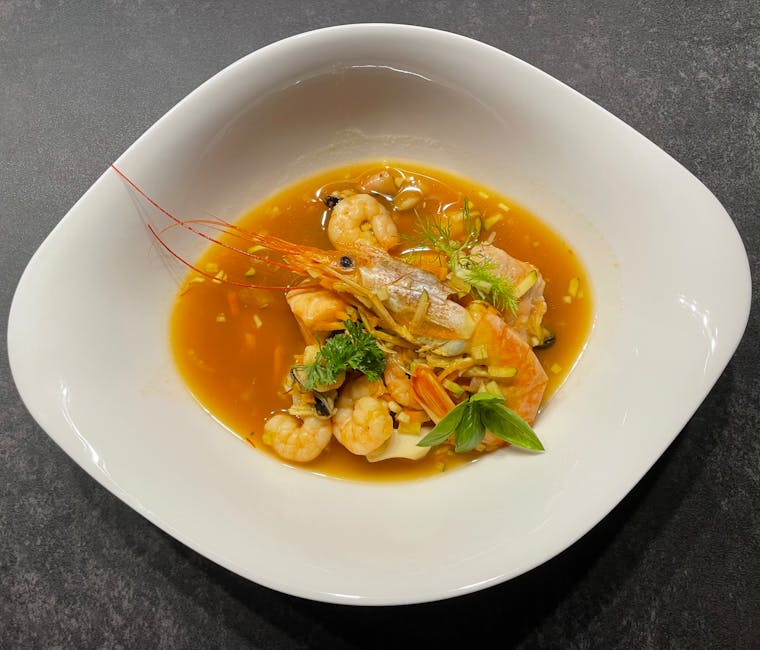
This is efo riro rebuilt from what a Nigerian cook abroad can actually buy, and the author is straightforward about it — spinach, kale and collard greens standing in for soko, tete, efo igbo and ugwu, with seafood in place of the usual assorted meats. The one genuinely instructive thing it adds is the staggering of the greens: collards go in ten minutes before the spinach because they take longer, which is a distinction the single-green recipes never have to make. Thirty minutes minimum on the pepper base with the soaked dried fish in it does the flavour work that the meat stock normally would.
Ingredients
Equipment: Large pot with a lid, Blender, Colander, Wooden spoon
- 1 cup dried fish (shawa), soaked
- 2 red bell peppers
- 1 scotch bonnet pepper
- 2 onions
- 1/4 cup palm oil
- 1 tbsp fermented locust beans (iru)
- 2 bouillon cubes
- 500 g spinach
- 300 g collard greens
- 2 tbsp ground crayfish
- 2 fillets smoked haddock
- 1 cup mixed seafood
- Salt
Method
- Soak the dried fish a few hours before cooking.
- Wash the spinach and collards several times to eliminate sand and dirt. Remove the thick stalk from the collards and slice both thinly.
- Wash the locust beans. Chop one onion.
- Blend the remaining onion with the bell peppers and scotch bonnet coarsely.
- Heat the palm oil 30 seconds, add the chopped onions and cook until they begin to brown, then add the locust beans.
- Stir around 2 minutes, then add the blended pepper and onion mix, the bouillon cubes and the soaked dried fish.
- Cover and simmer under medium heat at least 30 minutes, stirring occasionally.
- Add the smoked haddock, ground crayfish and salt, then the sliced collard greens. Cover and cook 10 minutes.
- Add the spinach and the mixed seafood. Lid on, 5 minutes.
- Mix with a wooden spoon, taste for salt, and simmer 5 more minutes before serving.
Chef Tips
- Collards before spinach, ten minutes apart. Collard leaf is far tougher; putting them in together gives you either raw collards or dissolved spinach.
- Strip the thick stalk out of the collards. It never softens in the time the leaf needs.
- Thirty minutes minimum on the pepper base, with the dried fish already in it. This is where the depth comes from when there is no meat stock.
- Soak the shawa hours ahead, not minutes. It is the backbone of the dish.
- Wash the greens several times. Sand in efo riro is the commonest fault and it cannot be fixed later.
- The seafood goes in at the five-minute mark and not before. Mixed seafood turns to rubber fast.
- This is a declared substitution, not a traditional efo riro. The author names the greens she is replacing: soko, tete, efo igbo and ugwu.
Common Mistakes to Avoid
- Adding collards and spinach at the same time.
- Leaving the collard stalks in.
- Cutting the 30-minute pepper simmer short.
- Adding the seafood early.
- Under-washing the greens.
Nutrition (per serving)
Health Benefits
- Seafood and smoked haddock supply lean protein, iodine and omega-3 fats.
- Collard greens are rich in vitamin K, calcium and folate.
- Low in carbohydrate.
- Dairy-free and gluten-free.
Cultural Note
Diaspora cooking is a real part of the Nigerian record rather than a corruption of it, and this recipe is useful precisely because its author names what she is substituting. Knowing that spinach stands in for soko and that collard greens stand in for nothing in particular tells you more about the original dish than a recipe that quietly writes 'spinach' and says nothing.
Storage & Serving
Storage: 3 days refrigerated. The seafood does not freeze well in the soup.
Reheating: Low heat, briefly. Overheating ruins the seafood.
Adapted From
- Adapted from 'Seafood Efo Riro Recipe – Stewed Leafy Greens, Yoruba Style', byline Abi Olayiwola, eatwellabi.com. Page metadata: prep 20 minutes, cook 55 minutes, total 1 hour 15 minutes, servings 6. Quantities as printed: 1 cup dried fish (shawa), 2 red bell peppers, 1 scotch bonnet, 2 onions, 1/4 cup palm oil, 1 tablespoon fermented locust beans, 2 bouillon cubes, 500 g spinach, 300 g collard greens, 2 tablespoons ground crayfish, 2 fillets smoked haddock, 1 cup mixed seafood, salt.
- AUTHOR-FLAGGED DEVIATION, in her own words: 'Traditionally, local vegetables like soko, (Nigerian spinach), tete (African spinach, callaloo), efo igbo (African eggplant leaves), ugwu (fluted pumpkin leaves) etc. are used to make efo riro. For people outside Nigeria who do not have access to these vegetables, spinach, kale and collard greens are suitable substitutes.' She also notes 'another time, it could be spinach or kale, depending on what I have on hand.' The seafood is her variation too.
- That passage is the clearest printed gloss of the traditional Yoruba greens vocabulary found in any source consulted, and is the reason this recipe is included despite being a declared substitution: soko is Nigerian spinach, tete is African spinach or callaloo, efo igbo is African eggplant leaves, ugwu is fluted pumpkin leaves.
- The staggered greens — collards 10 minutes, spinach 5 — are as printed and are specific to this recipe. Neither Efo Riro nor Efo Riro with Shoko Leaf needs the distinction because each uses a single green.