 Nigerian · Soups & Stews
🥬 Ila Asepo
Ila asepo — ila alasepo
Okra cooked together with everything else rather than separately — with half a teaspoon of kaun going in at the very start, where baking soda would go in at the very end.
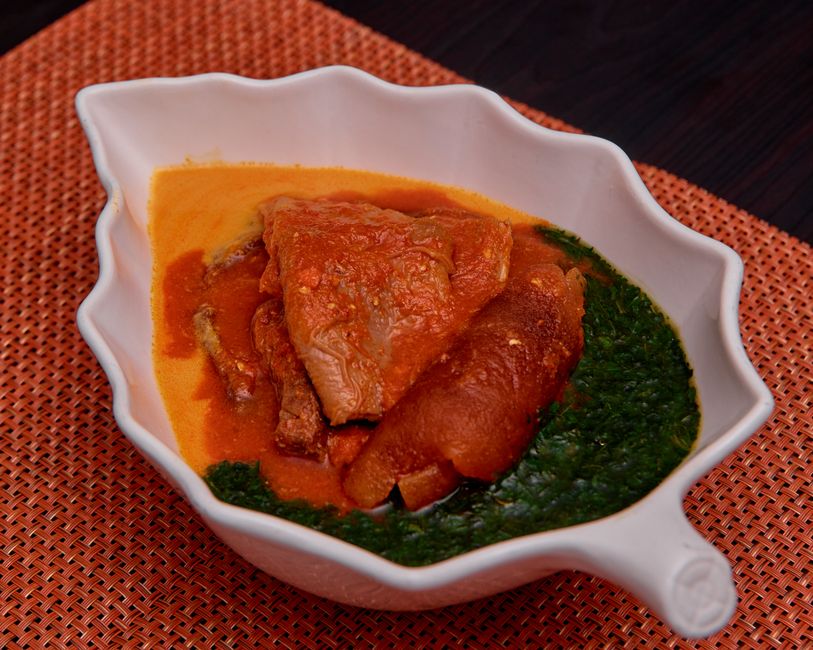
Asepo means to cook together, and that is the whole architecture: the okra is chopped and dropped raw into a stock that already has meat, smoked fish, prawns, crayfish and palm oil in it, then simmered three to five minutes and served. What makes this recipe technically valuable is a single aside about the alkali. Potash goes into the pot at the beginning, with the stock; baking soda, if you use that instead, goes in about two minutes before the end. It is the only place in any source consulted where the two alkalis are given different timings, and they are not interchangeable.
Ingredients
Equipment: Medium pot with a lid, Sharp knife, Wooden spoon
- 2 cups precooked meat
- 2 pieces smoked fish, washed and pulled
- 1 cup fresh or dried prawns
- 3 cups beef stock or water
- 1/2 tsp cooking potash (kaun) or baking soda (optional)
- 1 bouillon cube (2 if using water)
- 1 tsp pepper powder
- 3 tbsp blended crayfish
- 1/4 cup palm oil
- 1 red bell pepper (tatashe), finely minced
- 2 cups chopped okra
- Salt to taste
Method
- Put the pot on medium heat, add the stock or water, cover and bring to the boil.
- Add the potash now, if you are using it.
- Reduce to medium and add the meat, smoked fish, prawns, crayfish powder, bouillon, palm oil and pepper. Combine.
- Simmer 10 to 12 minutes.
- Stir, taste and adjust.
- Add the chopped okra and the minced tatashe. Stir, taste and adjust again.
- Simmer 3 to 5 minutes more and serve.
- If you are using baking soda rather than potash, add it approximately 2 minutes before cooking ends.
Chef Tips
- Potash at the start, baking soda at the end. This is the only source consulted that distinguishes them, and the distinction is real — they are different bases of different strength.
- Both alkalis are marked optional. Okra draws perfectly well on its own; the kaun deepens the draw and keeps the green.
- Three to five minutes on the okra, and no more. Chopped raw okra added late is what keeps the texture; cooked long it collapses and goes grey.
- Chopped, not grated and not blended. The pieces are meant to be visible.
- The tatashe goes in with the okra, minced fine — it is colour and sweetness, not a base.
- Two cups of okra to three cups of liquid is a thick, spoonable soup. Add stock if you want it looser.
- If you have neither alkali, nothing is lost. It is the one ingredient here the author marks as dispensable.
Common Mistakes to Avoid
- Adding baking soda at the start as though it were potash.
- Cooking the okra past five minutes.
- Grating or blending the okra.
- Boiling hard once the okra is in.
- Treating the alkali as essential.
Nutrition (per serving)
Health Benefits
- Okra mucilage is a soluble fibre that moderates blood sugar.
- High in vitamin K, folate and magnesium.
- Low in carbohydrate and calories for a main dish.
- Prawns and crayfish supply lean protein and iodine.
Cultural Note
Okra soup exists in nearly every Nigerian cuisine and the names map the country: ila asepo in Yoruba, otong among the Efik, and okra soup plain in the southeast. 9jafoodie's own otong page notes that the Yoruba version is ila asepo, which is one of the few cross-regional identifications a single source makes explicitly.
Storage & Serving
Storage: 3 days refrigerated. The draw slackens after a day.
Reheating: Warm gently. Boiling it again destroys the okra texture.
Adapted From
- Adapted from 'Ila Asepo (Alasepo) Recipe' on 9jafoodie — byline absent from the page, so credited to the site. Quantities as printed: precooked meat 2 cups, smoked fish 2 pieces (washed and pulled), fresh or dried prawns 1 cup, 3 cups beef stock or water, 1/2 teaspoon cooking potash (Kaun) or Baking soda (optional), 1 cube maggi (2 cubes if using water), 1 teaspoon pepper powder, 3 tablespoons blended crayfish, 1/4 cup palm oil, salt to taste, 1 red bell pepper (Tatashe) finely minced, 2 cups chopped okro.
- The headnote gives the etymology: 'Ila is the Yoruba word for Okra, and Asepo means "To cook together"; ila Alasepo is mixed okra soup.'
- THE ALKALI TIMING, as printed and the reason this recipe is here: 'If using baking soda, add approximately 2 minutes before cooking ends.' The potash goes in at the start, with the stock. This is the only place in any source consulted where potash and baking soda are given different timings, and it matters because they are chemically different bases.
- Within this same site, the ewedu recipe uses no alkali at all and thickens with egusi instead. The inconsistency between the two pages is in the source, not introduced here.
- NOTE: the page gives no yield, no total time and no doneness cue beyond the stated simmer times. The serving count here is a serving suggestion, not a sourced figure.
- On the alkali's identity see Kaun. 'Potash' is chemically the wrong word: the mineral sold as kaun is trona, a sodium carbonate mineral, not potassium carbonate.