 Nigerian · Baking & Breads
🍞 Agege Bread
Agege bread
Four cups of bread flour, four tablespoons of sugar and two of yeast, risen an hour and baked forty to forty-five minutes — the dense sweet loaf Lagos eats with everything.
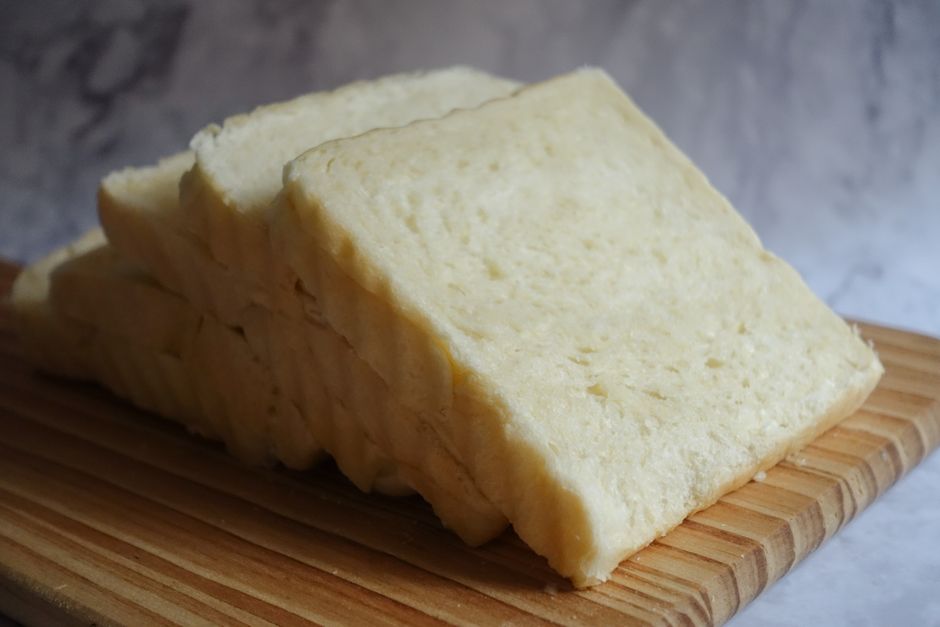
Agege bread is named after a suburb of Lagos and it is unlike most bread: dense, close-crumbed, faintly sweet, and strong enough to be torn into a bowl of stew or steeped in hot tea without dissolving. The dough is mixed by hand, kneaded until smooth, risen once for about an hour, lightly knocked back and baked in a loaf tin. Note that the source's stated water quantity cannot be right — the method's instruction to add water gradually until a soft stretchy dough forms is the reliable guidance, and the number is not.
Ingredients
Equipment: Large mixing bowl, Loaf tin, Greaseproof paper, Damp napkin, Wire rack
- 4 cups bread flour
- 2 tsp salt
- 4 tbsp sugar
- 2 tbsp dried yeast
- Warm water — added gradually until a soft stretchy dough forms; see the note on quantity
Method
- Mix all the dry ingredients in a large bowl — flour, salt, sugar and yeast.
- Add warm water gradually while mixing by hand, until a soft, stretchy dough forms. It should not be sticky.
- Knead on a lightly floured surface several minutes, until smooth.
- Place in a bowl and cover with a damp napkin.
- Leave to rise about 1 hour.
- Knead lightly, then place in a loaf tin lined with greaseproof paper.
- Bake in a pre-heated oven at gas mark 4 for 40 to 45 minutes.
- Cool on a wire rack.
Chef Tips
- Add the water gradually and judge by the dough, not by a measurement. The source's stated volume — roughly a third to half a glass against four cups of flour — cannot form a dough, and the method's own instruction is the one to follow.
- Soft and stretchy but not sticky is the target. For four cups of bread flour expect to need somewhere around 300 ml, added in stages.
- Two tablespoons of yeast is a lot by European standards and it is deliberate. Agege bread rises fast and hard.
- Four tablespoons of sugar is what gives it that distinct sweetness and the dark crust.
- A damp napkin rather than cling film. It keeps the surface from skinning during the rise.
- The recipe gives only one rise and no second prove after shaping, which is unusual for a tinned loaf. A second 30-minute prove in the tin will give you a lighter crumb if you want one.
- Gas mark 4 is about 180°C. Forty to forty-five minutes, and it should sound hollow underneath.
Common Mistakes to Avoid
- Trying to use the stated water volume literally.
- Making the dough sticky, which gives a gummy crumb.
- Under-kneading, so it never goes smooth.
- Baking in an oven that has not been preheated.
- Slicing it hot, which tears the crumb.
Nutrition (per serving)
Health Benefits
- Vegan and dairy-free as written.
- Lower in fat than most enriched breads — there is no butter or egg in it.
- Provides B vitamins and iron from fortified bread flour.
- A dense crumb means a smaller slice satisfies.
Cultural Note
Agege bread is one of the few Nigerian foods named for a specific Lagos neighbourhood, and it is sold in a plastic wrapper from the top of a hawker's head in traffic all over the city. Its density is the point: it has to survive being torn, dunked in stew, filled with mashed beans and pepper sauce, or soaked in tea, and a lighter loaf would simply collapse.
Storage & Serving
Storage: 3 days in a bread bag at room temperature, 3 months frozen sliced.
Reheating: Toast, or warm 5 minutes in a low oven.
Serve with: Ewa Agoyin, Akara, Hot tea
Adapted From
- Adapted from 'AGEGE BREAD', byline Tomi Makanjuola, The Vegan Nigerian, 23 August 2013. Quantities as printed: 4 cups bread flour, 2 tsp salt, 4 tbsp sugar, 2 tbsp dried yeast, and 'Warm water (approximately one-third to half a glass)'. Yield as printed: one loaf. Baking as printed: pre-heated oven, gas mark 4, 40 to 45 minutes. First rise about 1 hour.
- QUANTITY REFUSED AS PRINTED, and this is stated rather than quietly corrected. 'Approximately one-third to half a glass' of water against 4 cups of flour works out to roughly 70 to 125 ml against about 480 g of flour. As printed that cannot form a dough. The figure is not reproduced as an instruction here; instead the method's own guidance — add warm water gradually until a soft, stretchy dough forms, not sticky — is given, because that instruction is reliable and the number is not. No substitute volume is asserted as sourced.
- SECOND DEFECT NOTED: the recipe gives only one rise and no second prove after shaping, which is unusual for a tinned loaf. That is faithful to the source and is flagged in the tips rather than altered.
- Provenance and character, verbatim from the page: agege bread is 'named after a suburb in Lagos State. It is loved for its dense texture and "moreishly" sweet taste.' Eaten to 'mop up some peppery stew or steeped it in a mug of hot tea.'
- Agege bread also appears in two other entries' source material: as the partner to ewa agoyin in 1Q Food Platter's headnote — 'Ewa Agoyin and Agege bread is one food item that Lagosians are very familiar with' — and in Kitchen Butterfly's akara article, which names the breads served with akara as 'Ojile' and 'Agebe bread', the latter almost certainly a misprint for agege.
- Yewande Komolafe includes agege bread in her ten essential Nigerian recipes, though that recipe itself could not be retrieved.