 Nigerian · Main Dishes
🥥 Acha Pottage
Acha — fonio pottage
Acha cooked in coconut milk with beef, carrots and peas — two to three minutes only, because the pottage thickens quite quickly.
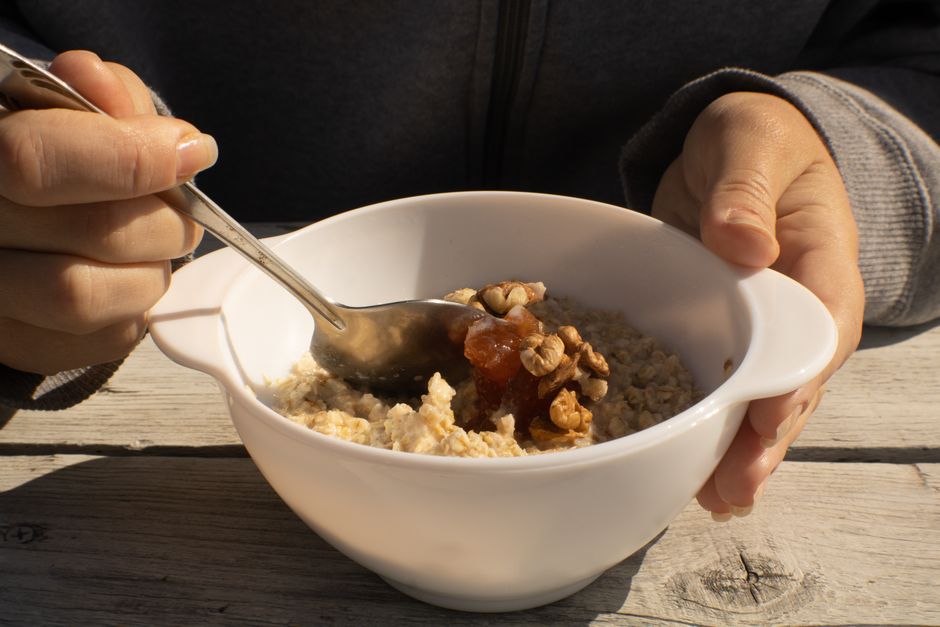
This acha pottage is built on coconut milk rather than broth, which is not traditional to Plateau cookery but makes a genuinely good dish. A large coconut is grated and squeezed for two cups of milk, the beef is steamed down with its stock reduced, and coconut oil, tomatoes, onion, pepper and seasoning go in with it. Carrots and peas get two minutes, then half a cup of washed acha goes in for two to three minutes. The author's own note is the useful one: the pottage will thicken quite quickly.
Ingredients
Equipment: Grater, Sieve or cloth, for the coconut milk, Medium pot, Wooden spoon
- 1 large coconut (2 cups coconut milk)
- 1 tbsp coconut oil
- 1/2 cup acha
- 1 cup boiled beef, chopped into small bits
- 1/2 small onion, chopped
- 1/4 cup chopped carrots
- 1/4 cup green peas
- 2 fresh tomatoes
- 2 scotch bonnet peppers
- Chicken seasoning, to taste
- Salt to taste
Method
- Extract the coconut milk by grating the coconut and squeezing it — you want about 2 cups.
- Season and steam the beef until cooked and tender, with the stock reduced.
- Add the coconut oil, tomatoes, onion, pepper and seasoning to the meat and boil until the vegetables cook, adjusting the seasoning.
- Add the carrots and the peas and cook 2 minutes.
- Add the washed acha and cook 2 to 3 minutes.
- Serve hot. The pottage will thicken quite quickly.
Chef Tips
- Two to three minutes on the acha, and the warning that follows matters — it thickens quite quickly, so serve it straight away.
- Wash the acha before it goes in. The grain is tiny and dusty.
- Fresh coconut milk from a grated coconut, two cups' worth. Tinned will work but it is sweeter and thicker.
- Reduce the beef stock before the other ingredients go in. You want concentrated flavour, not a watery base.
- Carrots and peas get only two minutes, before the acha. They should still have bite.
- A peer-reviewed study puts acha's optimum at 7.5 minutes at 100°C, which is longer than this recipe's two to three. If you want it softer, go nearer the paper's figure.
- Coconut milk is not traditional to Plateau acha cookery. The author does not flag it, but it functions as a deviation and is noted as one here.
Common Mistakes to Avoid
- Cooking the acha for more than three minutes.
- Leaving it to stand after cooking, when it tightens fast.
- Not reducing the beef stock.
- Overcooking the carrots and peas.
- Using unwashed acha.
Nutrition (per serving)
Health Benefits
- Fonio is gluten-free and rich in methionine and cysteine.
- Very low glycaemic index.
- Coconut provides medium-chain fats.
- High in fibre, iron and magnesium.
Cultural Note
That the two best-documented acha recipes are both adaptations — one with smoked turkey and thyme, one with coconut milk — is a fair picture of where this grain sits. It is ancient, nutritionally excellent, grown on the Jos Plateau, and almost entirely absent from the written record in its traditional forms, so what gets published is what urban and diaspora cooks make of it.
Storage & Serving
Storage: 2 days refrigerated.
Reheating: Low heat with water or coconut milk to loosen.
Serve with: On its own, as a pottage, Fried fish, Dodo (fried plantain)
Adapted From
- Adapted from 'Acha Pottage Recipe (Fonio pottage)', published by 1Q Food Platter — byline prints as the site name, no personal byline. Local names as printed: 'Acha, also called Hungry rice or Fonio'.
- Quantities exactly as printed: 1 large size coconut (2 cups coconut milk); 1 table spoon coconut oil; 1/2 cup Acha; 1 cup boiled Beef (chopped in small bits); 1/2 small Onion (chopped); 1/4cup chopped Carrots; 1/4cup green Peas; 2 fresh Tomatoes; 2 Scotch Bonnet Pepper; Chicken seasoning to taste; Salt to taste. Yield not specified.
- Method as printed: extract coconut milk by grating and squeezing; season and steam the beef until 'cooked and tender' with the stock reduced; add coconut oil, tomatoes, onion, pepper and seasoning to the meat and boil until the vegetables cook, adjusting seasoning; add carrots and peas and cook 2 minutes; add the washed acha and cook '2-3 minutes'; 'Serve Hot'.
- DONENESS CUE as printed: 'The pottage will thicken quite quickly'.
- COOKING TIME DISAGREEMENT, not reconciled: 2 to 3 minutes here, 5 minutes in the Olayiwola porridge, against a peer-reviewed optimum of 7.5 minutes at 100°C from Raji et al. (2017), International Journal of Food Studies, 6(2), 178–191. Acha cooks fast — that much is unanimous — but the figures span threefold.
- THE WATER RATIO REMAINS UNDOCUMENTED. This recipe uses coconut milk rather than water and does not state a grain-to-liquid ratio; the Raji paper does not state the seed-to-water proportion used in its trials; and no named source publishes one. That gap is recorded rather than filled.
- FLAGGED, NOT SELF-FLAGGED: coconut milk is not traditional to Plateau acha cookery. The author does not mark it as a deviation, but it functions as one and is noted here as such.
- A third acha source, 'A Recipe For Plateau Food Gote (Gwote) or Acha' at johnsonokunade.com, gives only 'A Cup of Acha' with every other ingredient unquantified, no acha-to-water ratio, no cooking time, no yield and no doneness cue beyond 'tender' for the meat. It also has an AUTHORSHIP PROBLEM: the domain is johnsonokunade.com but the content is attributed on-page to 'My Woven Words' and no personal byline appears on the recipe. It is not used for quantities here.
- GAPS, both empty: TUWON ACHA and KUNUN ACHA each returned NOTHING from any named source. Acha pottage is documented three times over; acha as a swallow and as a drink are not documented at all.