 Senegalese · Rice Dishes
🐠 Thiéboudiene Diaga
Thiéboudiene Diaga — riz au poisson sauce Diaga
A named variant of the rice-and-fish built on sauce Diaga, from a Senegalese cook who publishes a separate article on the secrets of a good thiéboudieune.
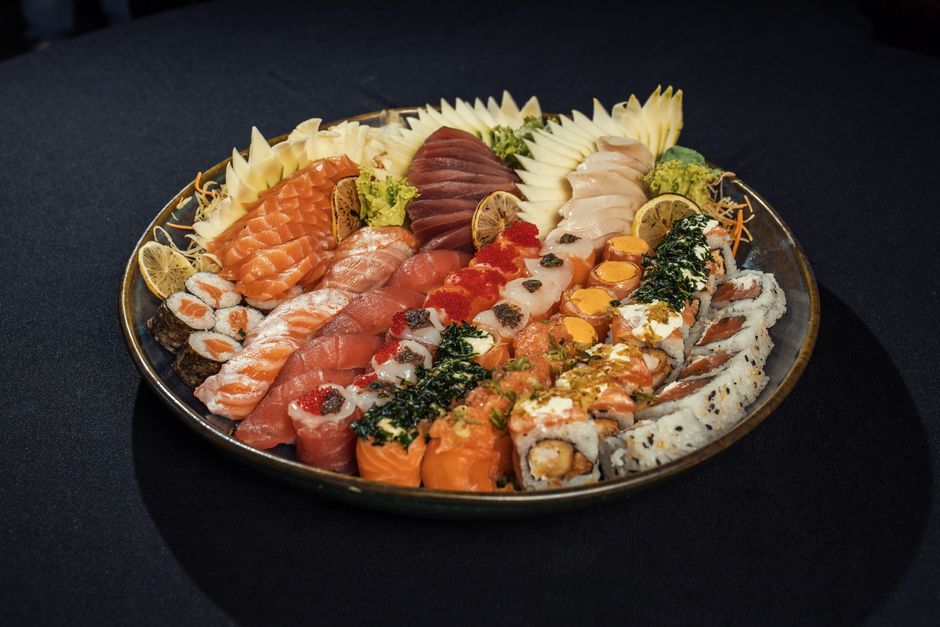
One of the documented regional and household variants of the national dish, published by a named Senegalese cook alongside her own technique article on what makes a good thiéboudieune. It is recorded here as a variant with its source's own framing intact rather than merged into the main entry, because Senegalese cooks treat these as distinct dishes with distinct names, not as interchangeable versions of one recipe.
Ingredients
Equipment: Large heavy pot, Mortar and pestle, Large serving bowl
The source prints quantities inside the method rather than as a list; only printed figures appear here
- Fish — thiof or other firm white fish
- Broken rice, washed
- Onions
- Tomato paste
- Oil
- Mixed vegetables — cabbage, carrot, cassava, eggplant, okra
- Yett
- Guedj
- Nokoss
- Roff, for stuffing the fish
- Tamarind
- Bird's eye chilli
- Bay leaf
- Salt and pepper
Several quantities are not printed in the source. See the note.
Method
- Pound the roff and stuff the slit fish with it.
- Pound or blend the nokoss.
- Heat the oil and brown the onions well — they must be well browned, even brown, to get a good rice colour.
- Add the tomato paste and part of the nokoss and cook it down.
- Add the water and bring to the boil, then add the yett, the guedj, a fresh chilli and a bay leaf.
- Add the fish and simmer until cooked through, then lift it out and keep it warm.
- Add the vegetables and cook until each is done, removing them as they finish.
- Wash the rice, then add it to the broth so the liquid sits slightly above the rice without drowning it.
- Cover and cook until the rice is tender and the broth absorbed.
- Serve the rice with the fish and vegetables, the tamarind and a ladle of broth.
Chef Tips
- The onion-browning rule from this author is the most quotable technique note in the Senegalese material: the onions must be well browned, even brown, to get a good rice colour. She gets her colour that way rather than from additives.
- Her rice-liquid cue is the best one in this collection: the water must sit slightly above the rice without drowning it.
- She is explicit elsewhere that she achieves the colour without bouillon, soy sauce or any other artifice. Whether you follow that is up to you, but it is her position.
- Remove each vegetable as it finishes. Senegalese rice dishes load the pot with vegetables of very different densities.
- This is a named variant, sauce Diaga, not a generic thiéboudieune. Senegalese cooks distinguish these by name and this collection keeps them separate.
- The source publishes a separate technique article on the secrets of a good thiéboudieune, which is worth reading alongside any of these recipes.
- Where quantities are missing above, they are missing in the source. Nothing has been estimated into the list.
Common Mistakes to Avoid
- Pale onions, which give pale rice.
- Too much broth when the rice goes in.
- Lifting all the vegetables out together.
- Leaving the fish in through the vegetable stage.
- Skipping the tamarind, which is what cuts the oil.
Nutrition (per serving)
Health Benefits
- High in protein from white fish.
- A heavy vegetable load across one pot.
- Tamarind contributes tartaric acid and polyphenols.
- Gluten-free and dairy-free.
Cultural Note
A Senegalese cook publishing five differently named thieb recipes, plus a separate article on the secrets of a good one, is a better guide to how the dish lives than any single authoritative version — it is a family of dishes with shared technique, and the technique is in the onions.
Storage & Serving
Storage: 3 days refrigerated.
Reheating: Steam the rice; warm the fish and vegetables in broth.
Adapted From
- Adapted from 'Thiéboudiene Diaga — riz au poisson sauce Diaga', aistoucuisine.com. BYLINE: Aïssatou Mbaye. The author's companion article, 'Les secrets d'un bon thiéboudieune', is a technique piece rather than a recipe and carries no quantities; it is recorded here as context.
- A SOURCING LIMIT, stated plainly: this entry is the thinnest of the Mbaye rice dishes in quantity terms. The site is JavaScript-rendered and its ingredient lists were partially unreachable; the figures that WERE recovered came from a structured data-extraction pass rather than verbatim transcription. Where the ingredient list above carries no amount, none is printed in the source, and none has been invented. The six servings is editorial — no yield is printed.
- THE TECHNIQUE CUES, which this author states consistently across her rice dishes and which are the real value of her work, as printed in French: 'Les oignons doivent être bien dorés voire brunes pour obtenir une belle couleur de riz' — the onions must be well browned, even brown, to get a good rice colour; 'L'eau doit être un peu au dessus du riz sans le noyer' — the water must sit slightly above the rice without drowning it; 'lorsque les oignons deviennent translucides'; and, on her sauces, 'Votre sauce est prête lorsqu'il n'y a presque plus d'eau' — your sauce is ready when there is almost no water left.
- HER STATED POSITION ON SEASONING, recorded because it is unusual in contemporary Senegalese recipe writing: she stresses getting the colour without 'ajout de maggi, de sauce soja ou autre artifice' — without adding bouillon, soy sauce or other artifice.
- WHY THIS IS PUBLISHED AS A SEPARATE ENTRY rather than folded into Thiebou Jenn: sauce Diaga is a named variant, and this author publishes at least five distinct thieb recipes under distinct names. Collapsing them would misrepresent how the dish is actually organised in Senegalese cooking.
- ON THE FERMENTED SEASONINGS: yett and guedj are bought ingredients here. Their from-scratch processes are documented at Guedj, Salted Fermented Dried Fish and Yeet, Fermented Dried Sea Snail with the finished-product description and safety warnings; neither has an in-process doneness test, and the gap is stated at those entries.