 Senegalese · Main Dishes
🔥 Chicken Yassa, Oven-Roasted
Yassa poulet
The chicken roasts at 200C for forty-five minutes while the onions cook down separately for thirty-five to forty — deep golden, then melting and caramelised.
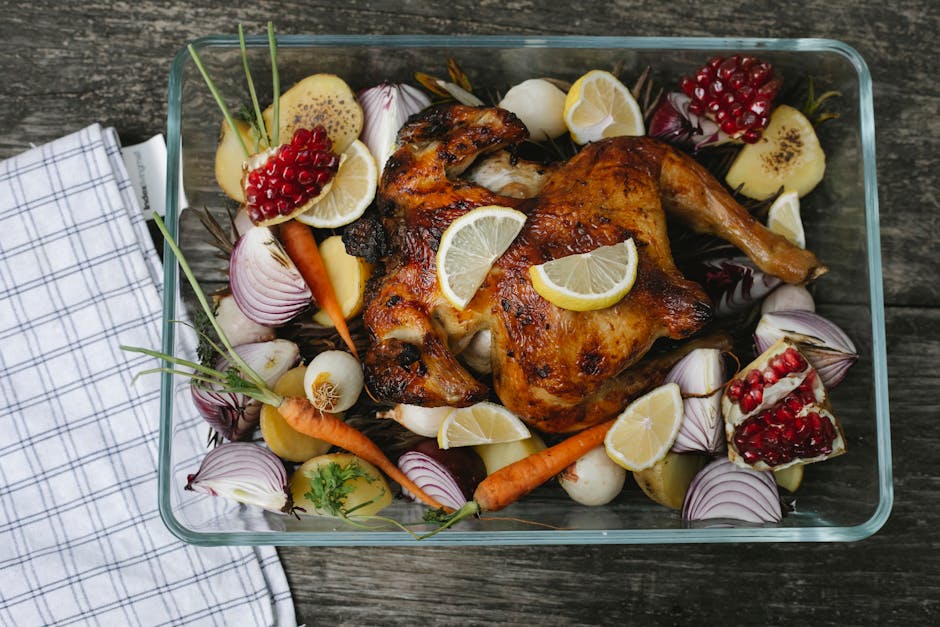
A chef's version that splits the work in two: four whole chicken legs, slashed and marinated, roast at 200C fan 180C for forty-five minutes until deep golden and cooked through, while four onions — two roughly chopped into the marinade and two thinly sliced — cook down for thirty-five to forty minutes until melting and caramelised. The marinade is blitzed garlic, spring onion, half a green pepper, ginger, scotch bonnet and parsley with a good pinch of salt, the juice of two lemons and a tablespoon of Dijon. The two halves come together with green olives for a final five minutes on low heat.
Ingredients
Equipment: Blender or food processor, Roasting tray, Large heavy pan, Oven
- 4 medium onions — 2 roughly chopped, 2 thinly sliced
- 4 cloves garlic, peeled
- 1 spring onion, roughly chopped
- 1/2 green pepper, roughly chopped
- 15 g ginger, roughly chopped
- 1 scotch bonnet chilli, deseeded and chopped
- A handful flat-leaf parsley
- 2 lemons, juiced
- 1 tbsp Dijon mustard
- 4 whole chicken legs, skin on, slashed
- 3 tbsp vegetable oil
- 2 tbsp red wine vinegar
- 1 bay leaf
- Green olives (optional)
To serve
- Plain rice, couscous or vermicelli
Method
- Blitz the roughly chopped onions, garlic, spring onion, green pepper, ginger, scotch bonnet and parsley with a good pinch of salt.
- Add the lemon juice and the Dijon mustard.
- Marinate the chicken with the sliced onion for at least a couple of hours, or overnight.
- Roast the chicken at 200C, fan 180C, gas 6, for 45 minutes, until deep golden and cooked through.
- Meanwhile cook the marinade and onions down — starting on high heat, then medium-high — for 35 to 40 minutes, until cooked through, melting and caramelised.
- Add the roasted chicken and the olives, cover, and finish for 5 minutes on a low heat.
- Serve with plain rice, couscous or vermicelli.
Chef Tips
- Melting and caramelised is the onion endpoint, and thirty-five to forty minutes is what it takes. This is the longest onion cook of any documented yassa and the sauce shows it.
- Roasting the chicken separately means you get crisp skin, which neither the one-pot nor the grilled version delivers. That is the trade this recipe makes.
- Start the onions high, then drop to medium-high. The initial heat drives off the marinade's liquid so the onions can actually colour.
- Two onions into the marinade and two sliced for the pan. Keep the split — the blitzed ones become sauce body, the sliced ones keep some texture.
- Only five minutes together at the end. Any longer and the roast skin softens, which defeats the method.
- Red wine vinegar here against cider vinegar or white vinegar elsewhere. It is a rounder, less sharp acid and it suits the long onion cook.
- Vermicelli as a serving option is worth knowing — it is genuinely eaten with yassa in Senegal, not a Western substitution.
Common Mistakes to Avoid
- Cooking the onions for fifteen minutes and calling them caramelised.
- Roasting the chicken and the onions in the same dish.
- Blitzing all four onions.
- Leaving it together too long at the end.
- Skipping the slashes in the chicken, so the marinade stays on the surface.
Nutrition (per serving)
Health Benefits
- Four onions across four servings is a substantial source of quercetin and prebiotic fibre.
- Lemon juice and parsley together supply vitamin C.
- Roasting rather than frying keeps the added fat to three tablespoons.
- Gluten-free and dairy-free with rice.
Cultural Note
Roasting the chicken apart from the sauce is a restaurant solution to a home-cooking problem — you cannot get crisp skin and a long onion braise out of one pot — and it is the kind of adjustment a chef makes without changing what the dish is.
Storage & Serving
Storage: 4 days refrigerated, 3 months frozen. The skin will soften.
Reheating: Oven, to recover some of the skin. Covered reheating will not.
Serve with: Plain rice, couscous or vermicelli, Green olives, Attaya
Adapted From
- Adapted from 'Chicken yassa', olivemagazine.com, filed under 'chef recipes'. BYLINE EXACTLY AS PRINTED: 'Khadim Mbamba'. DATE: NONE PRINTED on the page. Yield as printed: 'Serves 4'. TWO-PASS, with both passes agreeing on every quantity. A RETRIEVAL NOTE: the URL 302-redirects to a tollbit.olivemagazine.com mirror and both passes were served from that mirror.
- THE HEADNOTE, quoted: 'Yassa is one of Senegal's favourite dishes'.
- Ingredient list as printed, with the preparation notes as printed: '4 medium onions' — '2 roughly chopped, 2 thinly sliced'; '4 cloves garlic' — 'peeled'; '1 spring onion' — 'roughly chopped'; '½ green pepper' — 'roughly chopped'; '15g ginger' — 'roughly chopped'; '1 scotch bonnet chilli' — 'deseeded and chopped'; 'a handful flat-leaf parsley'; '2 lemons' — 'juiced'; '1 tbsp Dijon mustard'; '4 whole chicken legs (skin on)' — 'slashed'; '3 tbsp vegetable oil'; '2 tbsp red wine vinegar'; '1 bay leaf'; 'green olives' — '(optional)'; 'plain rice, couscous or vermicelli' — 'to serve'.
- Times, temperature and cues as printed, by step: step one carries none; 'at least couple of hours' and 'overnight' — printed 'at least couple of hours', missing the article, as printed; '200C/fan 180C/gas 6', '45 minutes', 'deep golden and cooked through'; 'high heat', 'medium-high heat', '35-40 minutes', 'cooked through, melting and caramelised'; '5 minutes on a low heat'.
- A SOURCING NOTE: the METHOD SHAPE above is SINGLE-PASS. The quantities, times, temperature and cues are TWO-PASS.
- THE DISAGREEMENT WITH Chicken Yassa, One-Pot, recorded and not reconciled: that version marinates and then cooks entirely in one pot; this one roasts the chicken separately in a 200C oven while the onions cook down. That version's acid is cider vinegar plus lime; this one's is lemon plus red wine vinegar. This one uses Dijon mustard and olives, which that one does not use at all. Neither is corrected toward the other.
- ON THE AUTHOR: filed by the publication under 'chef recipes'. The byline is a person's name, which is what this collection requires; no further biographical detail appeared on the page.