 Senegalese · Soups & Stews
🍗 Peanut and Chicken Stew with Homemade Peanut Butter
Màfe ginaar
Peanuts roasted and ground by hand, then folded into a tomato-and-chile sauce that cooks chicken, okra, carrots, sweet potato and cabbage, brightened with lime.
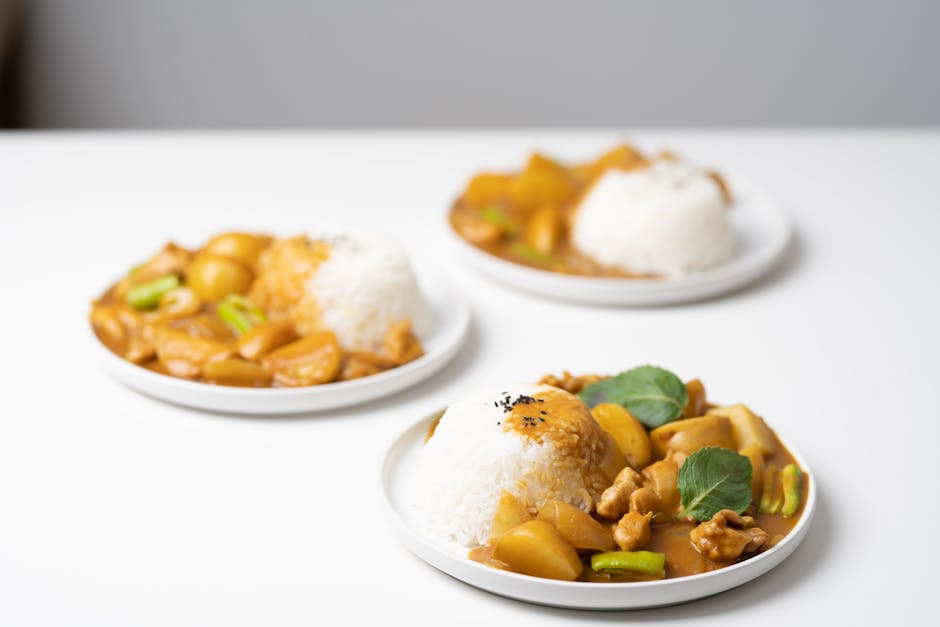
The Saveur version makes its own peanut butter — two cups of shelled, skinned peanuts roasted at 350° for about ten minutes and ground to a paste — and then uses only a third of a cup of it in the stew, which is why the page tells you to store the rest. Chicken thighs are browned about twelve minutes; garlic and onion cook down, tomato paste is caramelised, and the peanut butter is toasted with a chopped habanero and bay leaf before stock goes in. The vegetables and chicken cook together about 25 minutes. They are then lifted out and the sauce is reduced by half and thickened, and finished with a quarter cup of lime juice.
Ingredients
Equipment: Baking sheet, Food processor or mortar and pestle, 6-quart Dutch oven, Slotted spoon
Peanut butter and chicken
- 2 cups shelled, skinned peanuts
- 1/4 cup peanut oil
- 2 lb boneless, skinless chicken thighs, cut into 1 1/2-inch pieces
- Kosher salt and freshly ground black pepper, to taste
Sauce
- 6 cloves garlic, finely chopped
- 1 large yellow onion, finely chopped
- 1/4 cup tomato paste
- 1 habanero or Scotch bonnet chile, finely chopped
- 1 bay leaf
- 4 cups chicken or vegetable stock
- 8 oz small carrots, halved lengthwise
- 10 okra pods, halved lengthwise
- 2 medium sweet potatoes or 1 small butternut squash, peeled, halved, seeded, cut into 1-inch pieces
- 1 small head green cabbage, cut into 8 wedges, core left intact
- 1/4 cup fresh lime juice
To serve
- Cooked white rice or fonio — quantity not printed
- Khouthia (hibiscus leaf conserve), optional — quantity not printed
Method
- Heat the oven to 350° (unit not printed on the page). Spread the peanuts on a rimmed baking sheet and bake, stirring occasionally, until golden brown — about 10 minutes.
- Let the peanuts cool, then process in a food processor or pound in a mortar to a smooth paste. You will use 1/3 cup; store the rest sealed in the refrigerator up to 2 weeks.
- Heat the oil in a Dutch oven over medium-high. Season the chicken with salt and pepper and brown it all over, about 12 minutes, turning once. Move to a plate.
- In the same pot cook the garlic and onion, stirring, until soft — about 6 minutes. Add the tomato paste and cook, stirring often, until lightly caramelised — about 2 minutes.
- Stir in 1/3 cup of the peanut butter, the chopped chile and the bay leaf and cook, stirring, until lightly toasted — about 4 minutes.
- Add the stock and stir until smooth. Return the chicken and add the carrots, okra, sweet potato or squash, and cabbage. Bring to a boil, reduce to medium-low, and cook partly covered, stirring now and then, until the chicken and vegetables are tender — about 25 minutes.
- Move the chicken and vegetables to a serving bowl with a slotted spoon. Keep the sauce simmering, stirring often, until it has reduced by half and thickened — about 12 minutes. Stir in the lime juice and season.
- Spoon the sauce over the chicken and vegetables and serve with rice or fonio, and khouthia on the side if you have it.
Chef Tips
- Lightly toasting the peanut butter in the pan before the stock goes in is a real step — about four minutes — and it is where the nutty depth comes from.
- Take the chicken and vegetables out before reducing the sauce, so they do not overcook while it thickens.
- Add the lime juice last; its sharpness is the point and long cooking dulls it.
- Habanero stays in the sauce in pieces, so seed it for a gentler stew.
- You will have well over a cup of peanut butter left. It keeps two weeks in the fridge.
Common Mistakes to Avoid
- Adding the lime juice early.
- Leaving the vegetables in while reducing the sauce.
- Using sweetened commercial peanut butter instead of the homemade paste.
- Not browning the chicken properly before building the sauce.
Nutrition (per serving)
Health Benefits
- Peanuts bring plant protein, vitamin E and monounsaturated fat.
- Okra, carrots, sweet potato and cabbage give fibre and vitamins A and C in one pot.
- Gluten-free and dairy-free.
Cultural Note
Saveur’s May 2012 Senegal feature, written around John O’Connor’s story ‘A Feast For All’, gave the magazine’s readers their first full-dress mafé. The recipe’s insistence on hand-made peanut butter is a house touch rather than a Senegalese rule; many Dakar cooks buy peanut paste by the jar or the scoop.
Storage & Serving
Storage: 4 days refrigerated, 3 months frozen (the sweet potato softens on thawing).
Reheating: Gentle heat, covered, with a little stock.
Serve with: Steamed white rice or fonio, Khouthia (hibiscus leaf conserve), optional
Adapted From
- Recipe title as printed: ‘Senegalese Peanut and Chicken Stew (Màfe Ginaar)’ — note the grave accent on Màfe. BYLINE: NONE PRINTED on the recipe. The page credits only the photographer, Todd Coleman. The parent feature is ‘A Feast For All’ by John O’Connor, Saveur, May 2012 (issue 147); Saveur is the organisation attribution. DATE: 12 February 2014 per page metadata; the page also says the recipe ‘first appeared in our May 2012 issue’. Both recorded, not reconciled. Yield as printed: ‘serves 6-8’ (7 used here).
- TWO-PASS; both passes returned the ingredient list verbatim and agree on every quantity. The page prints fractions two ways in one list (‘1⁄4 cup’ with a fraction-slash and ‘1 1/2″’ with a plain slash) — recorded, not normalised.
- Doneness cues in short fragments: chicken ‘browned all over’; peanuts ‘golden brown’; tomato paste ‘lightly caramelized’; peanut butter ‘lightly toasted’; sauce ‘reduced by half and thickened’. The 350° oven temperature is printed with no unit; Fahrenheit is implied by the publication and not stated.
- A note on arithmetic, not an error: 2 cups of peanuts make far more peanut butter than the 1/3 cup the stew uses, which is why step 1 ends with storage instructions.
- The cooking times of steps 4 and 5 and the order ‘remove chicken and vegetables, then reduce’ are SINGLE-PASS from the second-pass paraphrase; the first-pass quotation ends at the simmer.