 Somali · Desserts
🧁 Basbuusa
Basbuusa
The dense original — coarse and fine semolina with coconut and yogurt, chilled before baking so the cut lines stay sharp, then drowned in rose-water syrup while still hot and put back in the oven.
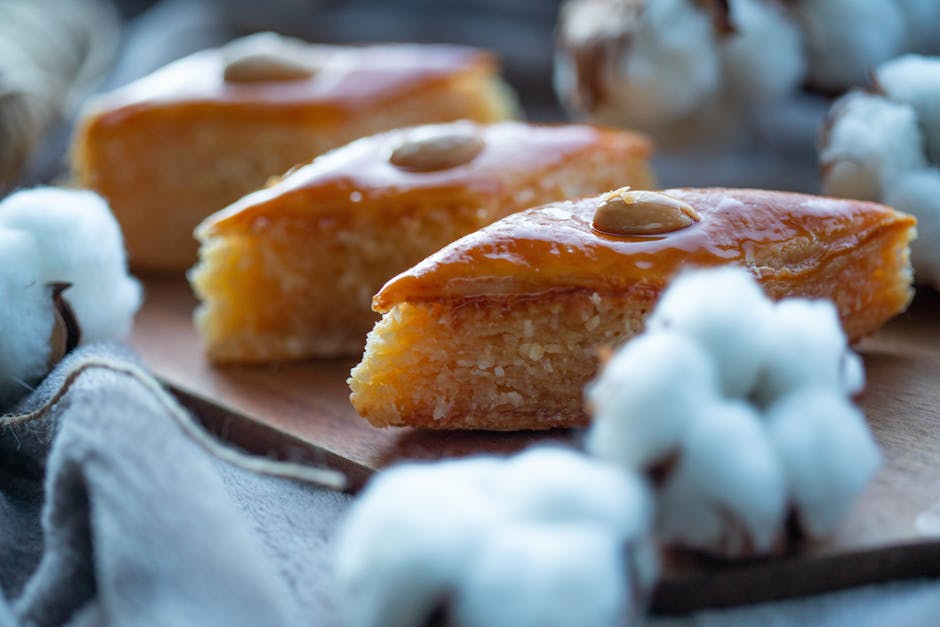
Basbuusa arrived on the Somali coast from the eastern Mediterranean and stayed as a Ramadan and celebration sweet. The cake itself is barely sweet; almost all the sugar is in the syrup poured over it at the end, which soaks in while the crumb is hot and open. Two grades of semolina are doing different jobs — the coarse gives the texture, the fine binds it — and using only one of them is the way this goes wrong.
Ingredients
Equipment: 23 x 33 cm (9 x 13 inch) baking tin, buttered, Large mixing bowl, Saucepan
For the cake
- 293 g (1 1/2 cups) coarse semolina
- 93 g (1/2 cup) fine semolina
- 133 g (2/3 cup) sugar
- 2 tsp baking powder
- 90 g (1 cup) shredded desiccated coconut
- 2 large eggs
- 167 ml (2/3 cup) melted unsalted butter
- 240 ml (1 cup) yogurt
- 2 tsp vanilla extract
- Butter, for the tin
- About 35 blanched almonds, one per piece
For the syrup
- 400 g (2 cups) sugar
- 475 ml (2 cups) water
- 1 tbsp lemon juice
- 2 tsp rose water
Method
- Make the syrup first so it has time to be ready: combine the sugar, water and lemon juice and boil for 10 minutes. Stir in the rose water.
- Boil the almonds for 1 minute, rinse them under cold water and slip the skins off.
- Combine all the cake ingredients in a bowl and mix well — no creaming, no folding, just mixed.
- Spread the batter into the buttered tin and level it.
- Refrigerate for 1 to 2 hours. This is what lets you score it cleanly.
- Score the chilled batter into squares or diamonds and press a blanched almond into the centre of each.
- Bake at 193C / 380F for 40 minutes.
- Pour the syrup over the basbuusa while it is still hot from the oven, then return it to the oven for another 15 minutes.
- Cut along the score lines and leave it to cool completely in the tin before lifting any out.
Chef Tips
- Both semolinas, in the proportions given. Coarse alone and it crumbles apart; fine alone and you lose the texture that makes it basbuusa.
- The refrigeration before baking is not optional — it firms the batter so the scored lines survive the oven and the pieces come out square.
- Syrup onto hot cake. A cooled cake will not take it up and you end up with a wet top and a dry middle.
- Let it cool completely in the tin. Lifting pieces out warm breaks them, so this is not a bake-ahead-by-thirty-minutes dessert.
- Rose water can be swapped for vanilla or cardamom, and the coconut for an equal weight of coarse semolina, but rose water is the authentic note.
Common Mistakes to Avoid
- Using one grade of semolina for both, which gives either a crumbling cake or a rubbery one.
- Skipping the chilling step, after which the score lines close up in the oven and it cannot be cut neatly.
- Letting the cake cool before syruping, so the syrup sits on top instead of soaking in.
- Turning it out warm, which breaks the pieces.
Nutrition (per serving)
Health Benefits
- Semolina is a durum wheat product with more protein than plain flour.
- Yogurt contributes calcium and gives the crumb its tenderness.
- Cut into twenty pieces from one tray, which is the portion it is designed for.
Cultural Note
Basbuusa is a Ramadan sweet above all, and in Somali homes it is one of the things made in a big tray because the whole street may come through. The Bravanese serve it with a condensed-milk fudge sauce they call soos caano Baraawe, which turns it into something closer to a pudding.
Storage & Serving
Storage: Covered, at room temperature up to 4 days. The syrup keeps it moist.
Reheating: Serve at room temperature. A short warm in a low oven revives day-old pieces.
Serve with: Shaah Cadays, Somali coffee, Extra syrup