 Somali · Bread
🥐 Rooti Jilicsan
Rooti Jilicsan
Soft yeasted rolls in two doughs — a plain one with olive oil that also braids, and an enriched one with milk, butter and egg — risen twice and baked at 188C.
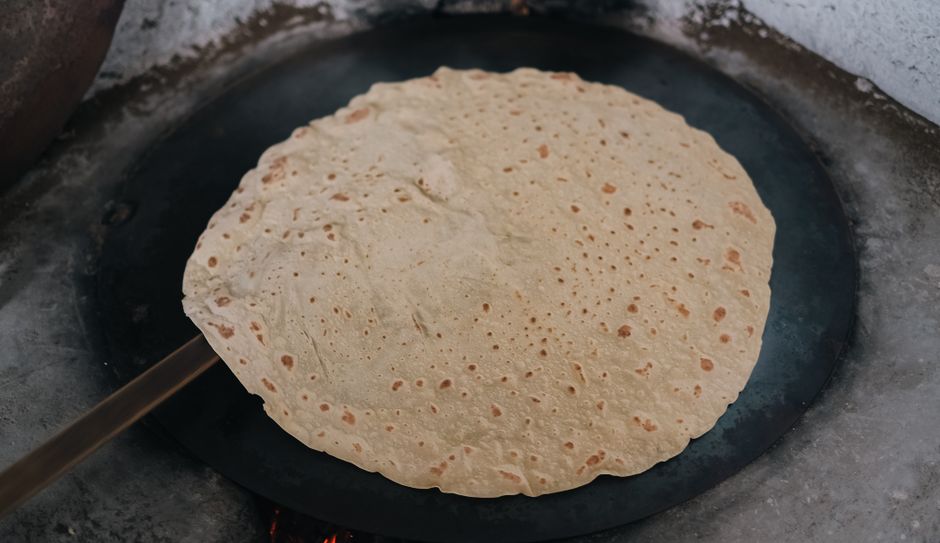
Rooti jilicsan means soft bread, and it is the Somali answer to the everyday roll: eaten with jam and cold milk, split for a filling, or torn alongside a stew. Two doughs are given because they do different jobs. The plain one, with olive oil and no dairy, is the versatile everyday bread and it braids well. The enriched one, with warm milk, melted butter and an egg, is softer and richer and is the one that gets eaten on its own.
Ingredients
Equipment: Stand mixer with a dough hook, or a bowl for hand kneading, Large oiled bowl, Baking sheet or pan, Clean cloth, Pastry brush
Plain dough — 6 rolls and 2 braided breads
- 30 ml (2 tbsp) instant or active dry yeast
- 118 ml (1/2 cup) slightly warm water, for the yeast
- 15 ml (1 tbsp) sugar, for the yeast
- 45 ml (3 tbsp) sugar
- 5 ml (1 tsp) salt
- 355 ml (1 1/2 cups) warm water
- 59 ml (1/4 cup) olive oil
- 700 g (5 cups) all-purpose flour
Enriched dough — 6 rolls
- 15 ml (1 tbsp) yeast
- 118 ml (1/2 cup) slightly warm water, for the yeast
- 15 ml (1 tbsp) sugar, for the yeast
- 118 ml (1/2 cup) warm milk
- 59 ml (1/4 cup) unsalted butter, melted
- 1 large egg
- 45 ml (3 tbsp) sugar
- 5 ml (1 tsp) salt
- 420 g (3 cups) all-purpose flour
For both
- Oil, for the bowl and the baking sheet
To garnish
- White and black sesame seeds, or nigella seeds
Method
- Mix the yeast with its 1/2 cup of warm water and 1 tbsp of sugar and set aside for 10 minutes, until foaming.
- Add the remaining ingredients for whichever dough you are making.
- Mix for 7 to 8 minutes in a machine, or knead by hand for 10 to 12 minutes, until smooth and elastic.
- Put the dough in an oiled bowl, cover, and leave to rise for 1 1/2 hours.
- Roll the dough into a cylinder and divide it. For the plain dough, take 6 equal pieces for rolls plus 2 larger portions for braiding; for the enriched dough, 6 equal pieces.
- Shape the pieces into balls and place them in an oiled pan. For each braided loaf, divide the larger piece into 3 ropes about 30 cm long and braid them.
- Cover and leave to rise for 1 1/4 hours.
- Brush with oil, milk or egg wash and scatter over the sesame or nigella seeds.
- Bake at 188C (370F) for 20 to 25 minutes, until golden.
Chef Tips
- Proof the yeast first and wait for the foam. If it does not foam in ten minutes the yeast is dead and the whole batch is wasted flour.
- Slightly warm water, not hot. Hot water kills yeast, and this is the commonest cause of bread that will not rise.
- Knead it properly — ten to twelve minutes by hand. Underkneaded dough gives a dense, crumbly roll instead of a soft one.
- Two rises, an hour and a half then an hour and a quarter. The second one is where the soft, fine crumb comes from.
- Egg wash gives the deepest colour and the most shine; milk is gentler; oil is the plainest.
- The enriched rolls are the ones to eat with jam and a cold glass of milk. The plain ones go with everything else.
- Thirty centimetres is the right rope length for a braid that holds its shape without going thin in the middle.
Common Mistakes to Avoid
- Using water that is too hot for the yeast.
- Skipping the proofing step and adding dry yeast straight to the flour.
- Cutting the kneading short.
- Rushing the second rise, which costs you the softness.
- Baking them too hot, so they colour before the centre is done.
Nutrition (per serving)
Health Benefits
- A modest amount of fat for a soft roll, especially in the plain dough.
- Sesame and nigella seeds add minerals and a little fibre.
- The enriched version adds protein and calcium from the milk and egg.
- It is white bread, so it is a vehicle rather than a health food.
Cultural Note
Rooti is bread as a general word, borrowed from the same root as the Hindi and Swahili terms and carried along the Indian Ocean. That Somali kitchens make both flatbreads on a griddle and soft yeasted rolls in an oven is a fair summary of the cuisine as a whole: an old pastoral repertoire and a long coastal trading history sitting in the same kitchen without friction.
Storage & Serving
Storage: Airtight, 2 days at room temperature. Freeze for 2 months.
Reheating: A few minutes in a moderate oven brings them back completely.
Serve with: Jam and a cold glass of milk, Maraq Digaag, Shaah Cadays