 Thai · Sauces & Condiments
🟡 Yellow Curry Paste (Food-Processor Method)
Nam phrik kaeng kari
Soaked dried red Thai chiles, toasted coriander, cumin and fennel, curry powder and turmeric processed with garlic, shallots, galangal, lemongrass and shrimp paste.
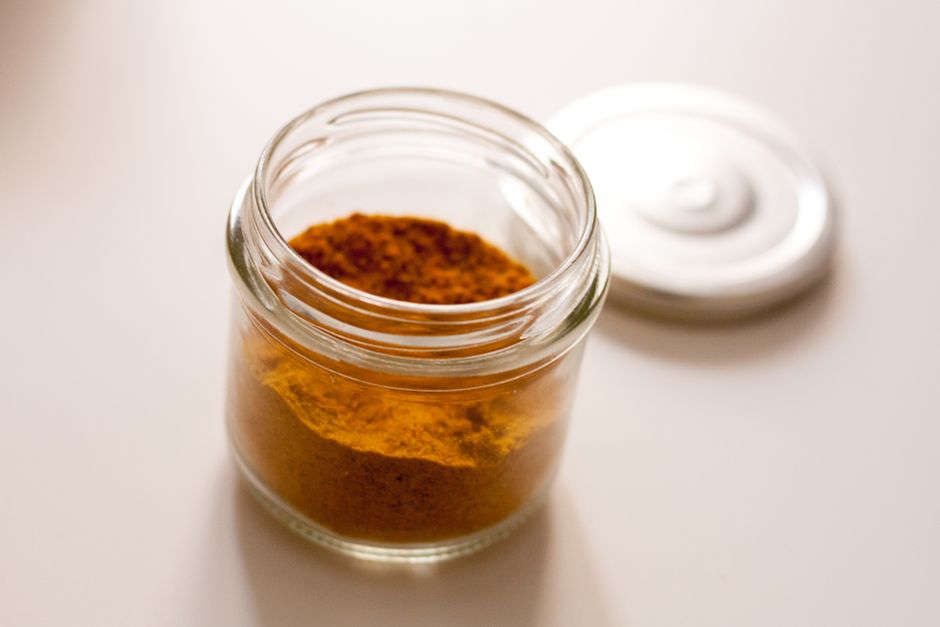
Six dried red chiles soak 15 minutes in warm water and are drained. Coriander, cumin and fennel seeds toast 30 seconds to 1 minute, are ground with white peppercorns, and join the chiles, curry powder, turmeric and the shared aromatics in a food processor until relatively smooth.
Ingredients
Equipment: Small skillet, Spice grinder, Food processor, Storage jar
Yellow variant
- 6 dried red Thai chiles, seeded, soaked for 15 minutes in warm water, and drained
- 2 teaspoons fennel seeds
- 2 tablespoons curry powder
- 1 tablespoon finely chopped fresh turmeric or 2 teaspoons dried turmeric
Base (all three pastes)
- 1 1/2 tablespoons coriander seeds
- 2 teaspoons cumin seeds
- 1 teaspoon white peppercorns
- 10 cloves peeled garlic
- 1/2 cup sliced shallots (about 1 large)
- 2 tablespoons finely chopped cilantro roots or stems
- 2 tablespoons finely chopped galangal or ginger
- 2 tablespoons sliced lemongrass from 7-8 stalks
- 2 teaspoons kaffir lime zest, kaffir lime leaves, or standard lime zest
- 2-3 teaspoons shrimp paste
- 2 teaspoons kosher salt
Method
- Cover the dried chiles with warm water, let soak for 15 minutes, drain and pat dry.
- Toast the coriander, cumin and fennel seeds in a small skillet over medium heat until fragrant, 30 seconds to 1 minute. Cool completely.
- Grind the toasted seeds with the white peppercorns to a fine powder.
- Process the ground seeds, chiles, curry powder, turmeric and remaining ingredients until the mixture has turned into a relatively smooth paste. Remove any wax from sealed shrimp paste first.
Chef Tips
- Cues: chiles soaked 15 minutes; seeds fragrant after 30 seconds to 1 minute; paste relatively smooth.
- Printed: the recipe makes a whole cup of curry paste, which can be frozen; use one to two tablespoons for every quart of cooking liquid.
- (our note) Curry powder blends vary; the page does not say which blend to use, and the ingredients of the blend are not listed on the page.
Common Mistakes to Avoid
- Skipping the cooling of the toasted seeds before grinding.
Nutrition (per serving)
Health Benefits
- Turmeric and spices add colour and aroma.
Cultural Note
The page gives no cultural note beyond the author's remark on food processors versus mortars.
Storage & Serving
Storage: Can be frozen for long-term storage; transfer to a storage jar, cover the top with plastic wrap, seal and freeze (per the page). No refrigerator shelf life printed.
Reheating: Not applicable (our note).
Serve with: Yellow curry (our note), Green curry paste
Adapted From
- Adapted from "Homemade Thai curry pastes are easy to personalize" (recipe "Thai Curry Paste"), KQED Bay Area Bites. BYLINE AS PRINTED: "Kate Williams". Date as printed: Nov 1, 2014; updated Dec 12, 2016. VARIATION OF Green Curry Paste (Food-Processor Method) (same page, yellow variant). Makes about 1 cup (one recipe with green, yellow and red variants). Background: not formally stated; she writes she "amassed a solid collection of Thai cookbooks". URL: https://www.kqed.org/bayareabites/89362/homemade-thai-curry-pastes-are-easy-to-personalize
- SOURCING STATUS: ingredient set TWO-PASS; exact quantities SINGLE-PASS (pass 2 verbatim, pass 1 agreed on the ingredient set), relayed by a research tool and to be checked against the live page; method wording is our own summary; servings, prep/cook split and nutrition are our own estimates.
- FLAG: VARIATION OF Green Curry Paste (Food-Processor Method); the base is shared, the yellow variant adds fennel, curry powder and turmeric. FLAG: CAVEAT (c) from the research report: one page covers green, yellow and red pastes, made in a food processor; no Thai heritage is stated for the author. Storage and shelf life disagree with the Pengjad massaman paste page (frozen for long-term storage with no fridge life, vs fridge 1 to 2 weeks); not reconciled. Printed freezing guidance: transfer to a storage jar, cover the top of the paste with plastic wrap, seal and freeze. Use one to two tablespoons of curry paste for every quart of cooking liquid. Purists using a mortar may object to a food processor; the author says hand-grinding is "usually not worth the extra effort unless trying to impress a Thai cook" (single-pass remark); ginger for galangal gives a noticeably different curry.