 Ugandan · Lentils, Beans & Vegetarian
🫘 Firinda
Firinda — Empombo
Beans soaked overnight and then peeled one by one, boiled soft and mashed to a cream — a wedding soup from the far west, and the labour is the reason it counts as a delicacy.
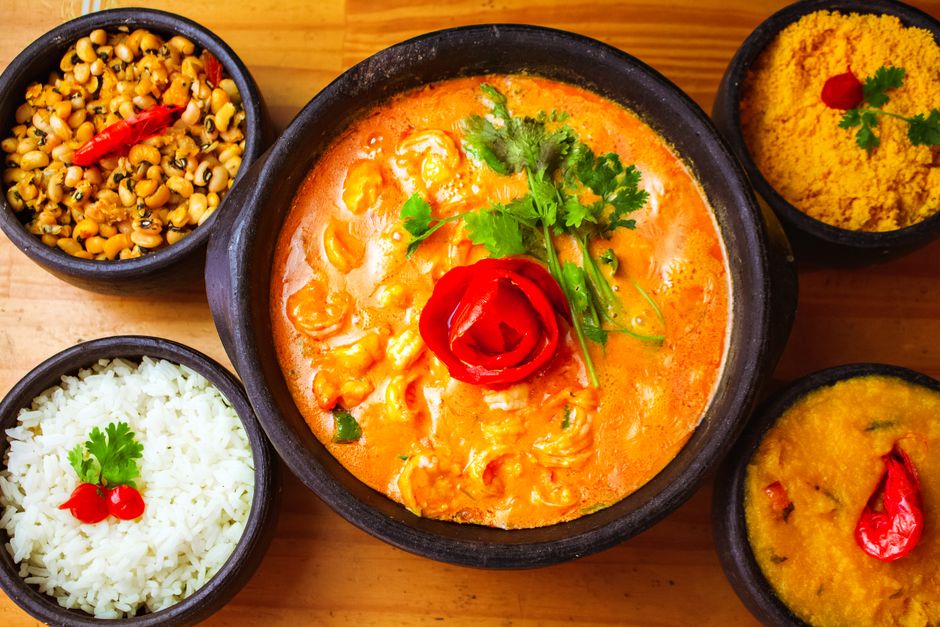
Firinda is skinned beans mashed smooth, and it is a delicacy for one reason: somebody has to peel every bean. It comes from the far west of Uganda and was made only for weddings, because no household would take that on for an ordinary Tuesday. Once peeled it is a blank canvas and takes whatever seasoning you want, which is the other thing people say about it. The traditional answer to the labour is to make it a social event and peel several kilos at once with company.
Ingredients
Equipment: Large bowl, for the overnight soak, Two saucepans, Potato masher, wooden ladle or pestle
- 480 ml (2 cups) beans, soaked overnight and peeled
- 3 large tomatoes, chopped
- 1 small onion, chopped
- 120 ml (1/2 cup) spring onions, chopped
- 1 clove garlic, chopped
- 2.5 ml (1/2 tsp) ground ginger powder
- Cooking oil
- Curry powder
- Salt
- Black pepper
Method
- Soak the beans overnight until the skins are soft, then peel them one by one.
- Combine the peeled beans with water in a pot and boil over medium heat for 30 minutes.
- While they boil, chop the tomatoes, onions and garlic and set aside.
- Take the beans off the heat.
- In another pot, pour in cooking oil and after a minute add the salt, ginger and garlic. Keep stirring so they do not burn.
- Add the onions and tomatoes and stir for three more minutes.
- Add the beans along with the water they were boiled in, and cover.
- Cook another 20 to 30 minutes, stirring occasionally, until the beans are flaky — slightly disintegrating and tender.
- Take it off the heat. Using a wooden ladle, a pestle or a potato masher, mash the soup until it has a creamy consistency.
- Add the black pepper, scatter the chopped spring onions over, and serve.
Chef Tips
- The peeling is the dish. It is also the most annoying part, and making it a job for several pairs of hands with a few kilos of beans at once is the traditional answer — peel a big batch and refrigerate the rest.
- Soak them until the skins are genuinely loose. Overnight is right; a short soak means fighting every bean.
- Keep the cooking water and mash the beans in it. That is what gives the cream rather than a dry paste.
- Flaky is the cue before you mash — the beans should be starting to fall apart on their own.
- It is a blank canvas and it is meant to be. Season it the way you want, because there is no canonical spicing.
- Mash by hand rather than blending. A blender gives you something smooth and characterless; a masher leaves it creamy with body.
Common Mistakes to Avoid
- Skipping the peeling and calling it firinda. It is a different dish with the skins on.
- Short-soaking the beans.
- Draining the cooking water.
- Mashing before the beans are flaky.
- Blending it smooth.
Nutrition (per serving)
Health Benefits
- Beans are high in plant protein, fibre, folate and iron.
- Peeling removes much of the fibre that makes beans hard on some digestions, which is part of why it reads as a delicacy.
- Entirely plant-based with very little added fat.
- Filling and cheap, which is how it fed wedding crowds.
Cultural Note
A dish becomes a delicacy for one of two reasons: the ingredient is rare, or the labour is. Firinda is the second kind — ordinary beans made special by hours of peeling, and reserved for the occasion that justified it. That it has moved from weddings into everyday cooking in some households says more about kitchen appliances than about taste.
Storage & Serving
Storage: Refrigerate up to 3 days. Peeled raw beans keep several days refrigerated.
Reheating: Warm gently with a splash of water — it thickens considerably.
Adapted From
- Adapted from Sophia Musoki, 'Classic Firinda Soup', A Kitchen In Uganda (29 September 2014) — all quantities, the method, the mash-in-its-own-water technique and the peeling-party suggestion are hers.
- The provenance — that firinda comes from the far western part of Uganda and was prepared only at weddings because of its laborious preparation — is what her grandmother told her, as recorded in that post.