 Ugandan · Meat Dishes
🥘 Ebyenda
Ebyenda — goat offal stew
A kilo of mixed goat offal boiled one to two hours with vinegar until tender and the water gone, then left to fry in its own rendered fat before the vegetables and spices go in — no oil at any point.
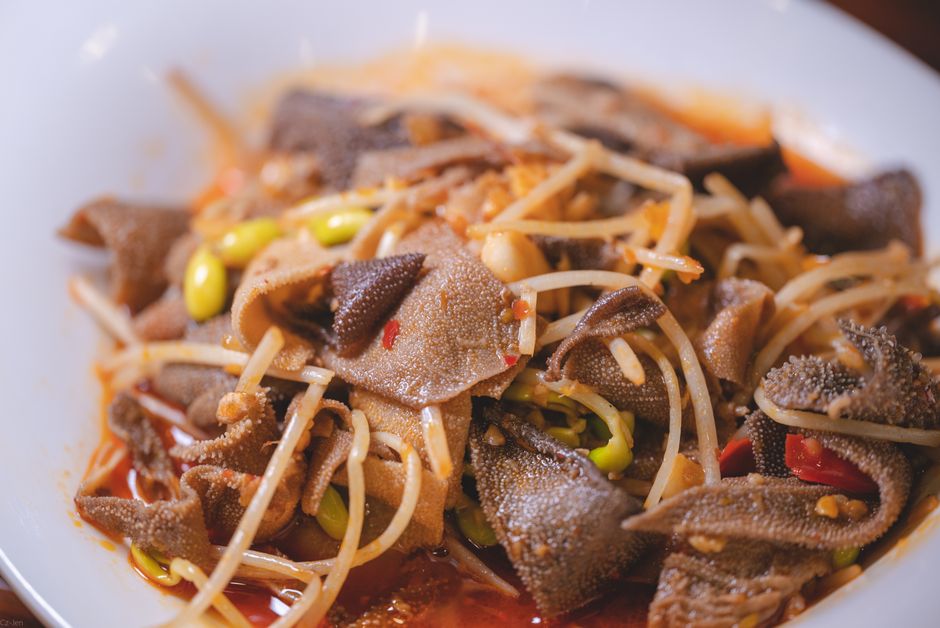
Ebyenda is offal stew, and it is one of those dishes where the technique is dictated entirely by the ingredient. Offal comes with a great deal of fat, so no oil is added: you boil it until tender and the water has gone, and then it starts frying in what is left at the bottom of the pan. The vinegar or lemon juice does the tenderising. The long boil is not optional and the timing is genuinely variable — an hour to two, depending on what mix of offal you have.
Ingredients
Equipment: Heavy cast pan or pot, Wooden spoon
- 1 kg assorted goat offal, cut into bite-sized pieces
- 3 large tomatoes, diced
- 1 large green pepper, diced
- 1 large carrot, diced
- 1 large onion, diced
- 1 clove garlic, crushed and chopped
- Juice of 1 lemon, or white vinegar
- 5 ml (1 tsp) ground coriander
- 5 ml (1 tsp) turmeric powder
- Black pepper
- Salt
- Water, to cover
No oil
Method
- Wash the offal thoroughly to remove all the dirt and sand.
- Put it in a pan with salt, the vinegar or lemon juice, and water.
- Put the pan on high heat and let the meat boil. This can take 1 to 2 hours.
- Keep checking the water level and top it up as it reduces so the meat does not burn.
The fry
- Once the meat is tender and all the water has gone, the offal will start frying in the fat left at the bottom of the pan.
- Fry it until it starts to go slightly golden brown.
- Add the crushed garlic and the onions, stirring constantly.
- Add the rest of the ingredients — tomatoes, green pepper, carrot, coriander, turmeric and black pepper.
- Add water and let the stew simmer on low heat another 30 to 45 minutes, stirring as it goes.
- Serve hot.
Chef Tips
- No oil goes in. Offal carries plenty of its own fat, and once the water boils away that fat is what fries the meat and holds the flavour.
- Use a heavy cast pan. It cuts the cooking time noticeably on a boil this long.
- Vinegar tenderises. Lemon juice does the same job if you have no vinegar.
- Keep the water above the meat and keep topping it up. Offal that catches on the bottom during the boil ruins the whole pot.
- One to two hours is a real range, not a hedge — it depends entirely on which offal you have and in what proportions.
- Wash it properly. Sand in offal is the single most common failure and it cannot be fixed later.
- If it comes with more fat than you want, discard some before you start. The rest will still cook it.
Common Mistakes to Avoid
- Adding oil.
- Not washing the offal thoroughly enough.
- Letting the water boil dry before the meat is tender.
- Adding the vegetables during the boil rather than after the fry.
- Cutting the final 30 to 45 minute simmer.
Nutrition (per serving)
Health Benefits
- Offal is exceptionally high in iron, vitamin B12, vitamin A and zinc — more so than muscle meat.
- Very high in protein with almost no carbohydrate.
- Cooked in its own rendered fat with no added oil.
- Turmeric and coriander go in whole rather than as a commercial blend.
Cultural Note
Offal is eaten across Uganda and is not marginal food — it turns up in katogo byenda for breakfast and as a stew for a main meal. That an entire cooking technique follows from the ingredient's own fat content is characteristic of Ugandan cooking generally, which tends to work with what a thing gives you rather than adding around it.
Storage & Serving
Storage: Refrigerate up to 3 days.
Reheating: Warm gently. It improves overnight.
Adapted From
- Adapted from Sophia Musoki, 'Goat Offal Stew', A Kitchen In Uganda (21 November 2017), also printed as Offal Stew in her free ebook 16 Ugandan Dishes to Make — all quantities, the 1-to-2-hour boil, the fry-in-its-own-fat step and the 30-to-45-minute finishing simmer are hers.
- Her blog-only notes are reproduced here: use a heavy cast pan to reduce cooking time, vinegar tenderises and lemon juice substitutes, keep the water covering the meat and keep adding it, and no oil is added because offal comes with plenty of its own fat.
- The local name ebyenda is from the same post.