 Ugandan · Breakfast
🍵 Matooke Porridge
Green banana porridge
Three green bananas boiled fifteen minutes until falling apart, mashed immediately in their own cooking water, loosened with milk and honey and sieved smooth.
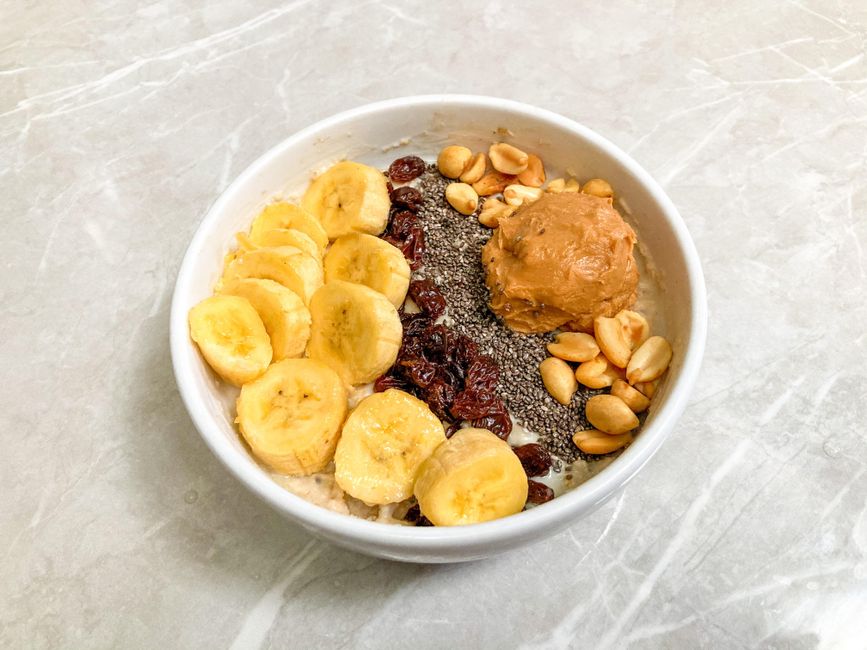
Green banana porridge is what you do with matooke when you want breakfast rather than a meal, and the trick is not draining the water the bananas boiled in — that water goes into the mash. Mash them while they are still very hot and soft, or you will not get them smooth. Sieving at the end is optional; chunky is a legitimate choice. The recipe makes one bowl, which is honest about the fact that this is a single-person breakfast.
Ingredients
Equipment: Saucepan, Masher or wooden spoon, Wire mesh sieve (optional)
- 3 green bananas, peeled and washed
- 240 ml (1 cup) water
- 120 ml (1/2 cup) milk
- 30 ml (2 tbsp) honey
- A drop of vanilla essence
- A pinch of salt
Toppings
- Simsim, groundnuts, pumpkin seeds, a little chocolate, honey to drizzle
Method
- Put the bananas in a clean pan, add the water and a sprinkle of salt, and put it on the heat.
- Let them boil until soft, tender and falling apart — about 15 minutes.
- Take them off the heat and mash them immediately, while they are still very hot and soft. Do not drain the water; mash them in it.
- Mash until there are almost no lumps left.
- Add the milk and stir well to combine.
- Put it back on the heat and simmer about 5 minutes.
- Add the honey and the vanilla, stirring as they go in.
- Take it off the heat.
- Sieve it through a wire mesh sieve to remove any remaining lumps — or leave it chunky if you prefer.
- Serve hot with your toppings.
Chef Tips
- Do not drain the water after boiling. Use it to mash them — it is where the flavour went and it is what gets the mash smooth.
- Mash immediately, while they are very hot. Cooled matooke goes firm and will not come smooth however hard you work.
- This recipe makes one bowl. Double or triple it freely.
- Small matooke are assumed. If yours are large, two will be enough.
- The sieve is optional and stated as such. Chunky is a real preference, not a failure.
- Simsim, groundnuts and pumpkin seeds on top is what turns a starch porridge into a breakfast with protein in it.
- A pinch of salt in the boiling water matters more than it sounds in a sweet porridge.
Common Mistakes to Avoid
- Draining the cooking water.
- Letting the bananas cool before mashing.
- Adding the milk before the mash is smooth.
- Adding honey while it is still on high heat.
- Using ripe bananas — this needs green cooking bananas.
Nutrition (per serving)
Health Benefits
- Green bananas are high in resistant starch, which feeds gut bacteria.
- A good source of potassium, vitamin B6 and fibre.
- Honey rather than refined sugar, and only two tablespoons.
- Seed and nut toppings turn it into a balanced breakfast.
Cultural Note
Matooke is so central to central and western Uganda that it turns up in every register, breakfast included. Using the cooking water rather than throwing it away is a small habit that runs through the whole cuisine — the bean stock in kikomando, the pork oil for the potatoes, the offal's own fat.
Storage & Serving
Storage: Best fresh. Refrigerate up to 24 hours.
Reheating: Warm gently with a splash of milk or water.
Serve with: Roasted Simsim, Toasted Pumpkin Seeds, Roasted groundnuts
Adapted From
- Adapted from Sophia Musoki's Matooke (Green Banana) Porridge, printed in her free ebook Seasonal Cooking and on her blog as 'Green Banana Porridge' (18 August 2017) — all quantities, the 15-minute boil, the mash-while-hot instruction, the 5-minute simmer and the optional sieve are hers.
- Her blog-only observations are reproduced here: the recipe makes porridge for one person and can be doubled or tripled; small matooke are used, and two large ones would be enough; and do not drain the remaining water after boiling — use it to mash them.
- Her toppings — simsim, groundnuts, pumpkin seeds, chocolate and a honey drizzle — are as she lists them.