 Ugandan · Breakfast
🥣 Finger Millet Porridge
Bushera — ekitiribita
A hundred and twenty-five grams of millet flour mixed smooth into half a litre of cold water, poured into two litres of boiling water and cooked seven minutes — thin enough to drink.
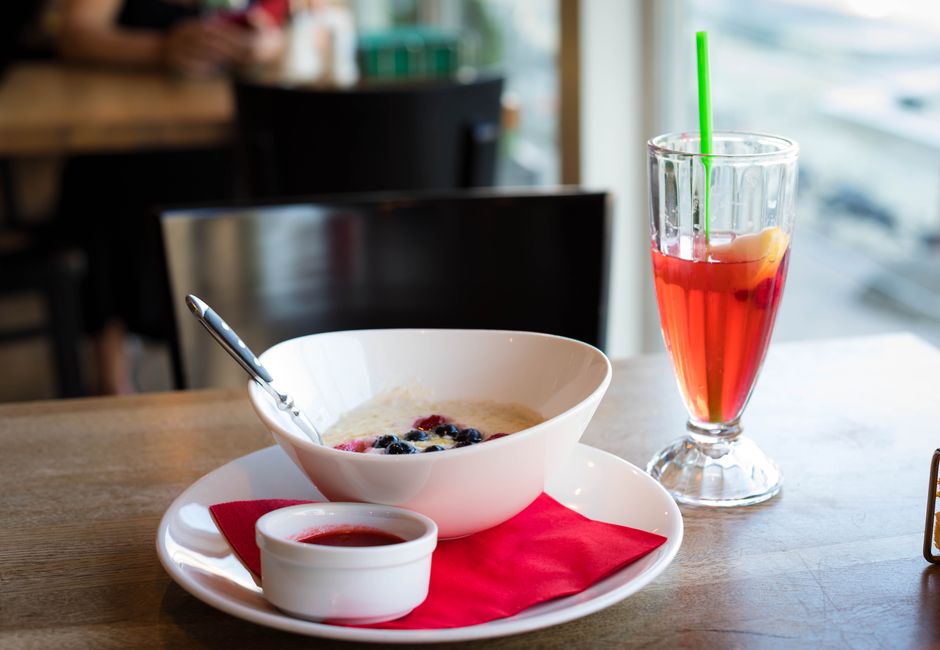
Finger millet is the most important traditional grain in Uganda and it carries four names across four languages: obulo in the centre, oburo in the west, akuma in Ateso in the east, and kan in the north. This porridge is thin enough to drink and is taken at breakfast or in the evening. The method is the same cold-slake-then-boiling-water rule as every other Ugandan flour dish, and the ratio here is unusually precise for a food this everyday.
Ingredients
Equipment: Large saucepan, Bowl, Wooden spoon
- 125 g finger millet flour
- 500 ml cold water
- 2 litres boiling water
- Sugar, to taste (optional)
Common additions
- Milk, or tamarind juice
Method
- Mix the 125 g of millet flour thoroughly with the 500 ml of cold water, until a uniform brown liquid forms.
- Pour that into 2 litres of boiling water.
- Cook, stirring, for about 7 minutes.
- Add sugar to taste if you want it.
- Serve warm or cold.
Chef Tips
- Mix to a uniform brown liquid in the cold water first. If there is any flour still visible, it will be a lump in the finished porridge.
- The flour mixture goes into water already boiling, not the other way round.
- Seven minutes is the whole cook. This is a thin drinkable porridge, not a thick one.
- Milk or tamarind juice is often added to enhance the taste, and both are traditional rather than modern.
- Served warm or cold, and both are normal. Cold bushera is a genuinely good hot-weather drink.
- Finger millet is rich in methionine, an amino acid known to be lacking in a number of Ugandan staple diets, which is part of why the grain matters so much.
- The four names are worth knowing: obulo in central Uganda, oburo in the west, akuma in Ateso in the east, and kan in the north. It is one grain.
- Note that this is the non-fermented porridge. The fermented sorghum or millet drink also called bushera is a different thing made by a different process.
Common Mistakes to Avoid
- Adding the dry flour to boiling water.
- Not mixing the cold slurry until uniform.
- Cooking it far longer and ending up with a stiff porridge.
- Stopping the stirring during the seven minutes.
- Confusing it with the fermented drink of the same name.
Nutrition (per serving)
Health Benefits
- Finger millet is exceptionally high in calcium for a grain, plus iron and magnesium.
- Rich in methionine, an amino acid commonly short in Ugandan staple diets.
- Naturally gluten-free and low in fat.
- Thin enough to be a drink, which makes it useful for the very young, the elderly and the unwell.
Cultural Note
Finger millet has been cultivated in Uganda for thousands of years and it is also an important source of income for rural women, who process it into both fermented and non-fermented drinks. The loss of native varieties during the northern civil war is one of the quieter costs of that period.
Storage & Serving
Storage: Refrigerate up to 2 days and drink cold.
Reheating: Warm gently, stirring.
Serve with: Mandazi, Roasted Simsim, Chapati
Adapted From
- Adapted from 'Bushera or Ekitiribita (Finger Millet Porridge)', p7 of 'Traditional Products and Dishes: Uganda — From Earth to Table', second edition 2018, Slow Food International — the 125 g of flour, 500 ml of cold water, 2 litres of boiling water and roughly 7-minute cook are as printed there, as is the instruction to mix to a uniform brown liquid and the serve-warm-or-cold note.
- The four regional names for finger millet — obulo in central Uganda, oburo in the west, akuma in Ateso in the east, kan in the north — the methionine note, and the observation that milk or tamarind juice is sometimes added, are from the same booklet entry.
- That booklet also records that the civil war in northern Uganda threatened native finger millet varieties and led to the introduction of fast-growing varieties which do not yield consistently once replanted or trimmed.