 Ugandan · Street Food & Snacks
🥔 Gonja and Sweet Potato Crisps
Gonja crisps
Unripe plantain skinned by three or four lengthwise slits, soaked in cold salted water with a sweet potato so neither discolours, sliced thin and fried crisp.
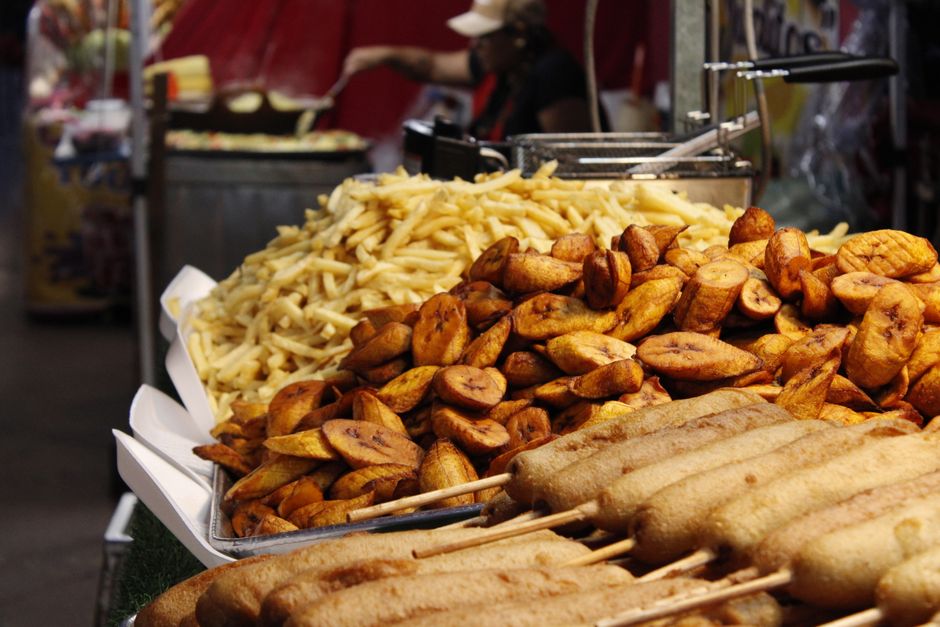
Uganda is the world's largest producer of plantain, harvesting some nine and a half million metric tonnes, and gonja can never be eaten raw — it has to be cooked. This is the crisp version, made with unripe fruit so it fries rather than caramelises. Two details are worth having: the skin comes off via three or four lengthwise slits rather than by peeling, and both vegetables go into cold salted water while you work, which stops them going grey.
Ingredients
Equipment: Bowl of cold water, Large saucepan or deep fryer, Sharp knife or mandoline, Kitchen paper
- 2 unripe gonja plantains
- 1 small sweet potato
- Red pepper flakes (optional)
- Oil, for deep frying
Used twice in the method but absent from the printed list
- Salt
Method
- Top, tail and halve the gonja. Make three or four lengthwise slits and remove the skin.
- Soak the gonja in cold salted water to prevent discolouration.
- Peel the sweet potato and add it to the same water.
- Heat the oil in a large saucepan or deep fryer.
- Remove the vegetables, pat them dry on kitchen paper and slice them into thin rounds.
- Fry until crisp, then drain and add the pepper flakes.
- Sprinkle with salt and serve once cooled.
Chef Tips
- Three or four lengthwise slits, then the skin comes away. Unripe plantain skin does not peel like a banana and trying will cost you flesh and temper.
- Cold salted water the moment they are cut. Both plantain and sweet potato go grey in minutes on the board.
- Slice after drying, not before. Wet slices spit in the oil and stick together.
- Unripe gonja, not ripe. Ripe fruit has too much sugar and burns before it crisps.
- Pat genuinely dry on kitchen paper. This is the difference between crisp and greasy.
- Salt is used twice in the method — in the soaking water and over the finished crisps — and does not appear in the ingredient list at all.
- Serve once cooled. They crisp as they cool, the same as bagiya.
- Buy ripe gonja only if you will use it within a day or two; unripe keeps longer, which suits this dish.
Common Mistakes to Avoid
- Trying to peel unripe plantain like a banana.
- Leaving the cut pieces in the air.
- Frying wet slices.
- Using ripe fruit.
- Salting only at the end and skipping the salted soak.
Nutrition (per serving)
Health Benefits
- Plantain and sweet potato both supply potassium, vitamin C and fibre.
- Sweet potato adds beta-carotene.
- Unripe plantain is high in resistant starch.
- Deep-fried, so this is a snack rather than a health food.
Cultural Note
That the largest plantain producer in the world mostly roasts it whole on a charcoal grill, and only sometimes turns it into crisps, says something about how a staple is treated where it is abundant. The crisps are the fancier option and they are sold in packets; the roadside grill is what most people actually eat.
Storage & Serving
Storage: 2 days in an airtight container once fully cool.
Reheating: A hot oven for a few minutes.
Serve with: Ugandan tea, Muchomo, A cold drink
Adapted From
- Adapted from A. Kadumukasa Kironde II, 'All about that gonja recipe, storage', Daily Monitor, 18 June 2023 — the 2 unripe gonja, 1 small sweet potato, the three-or-four-lengthwise-slits skinning, the cold salted soak, the pat-dry-then-slice order and the serve-when-cooled instruction are all his, for a stated 4 servings.
- His column also records that Uganda is the world's largest producer of plantain, harvesting 9.5 million metric tonnes; that gonja can never be eaten raw and must be cooked; that the three primary Ugandan methods are frying, boiling or steaming, and charcoal broiling; and that ripe gonja should be bought only for use within one or two days.
- That column uses salt twice in its method — in the soaking water and sprinkled over the finished crisps — and does not list salt among its ingredients at all.