 Ugandan · Street Food & Snacks
🥔 Potato Bhajia
Bhajia — bhajiya
Potatoes sliced thin and held in ice water, dipped in a crêpe-thin gram flour batter rested half an hour, and fried three to four minutes at a hundred and ninety degrees.
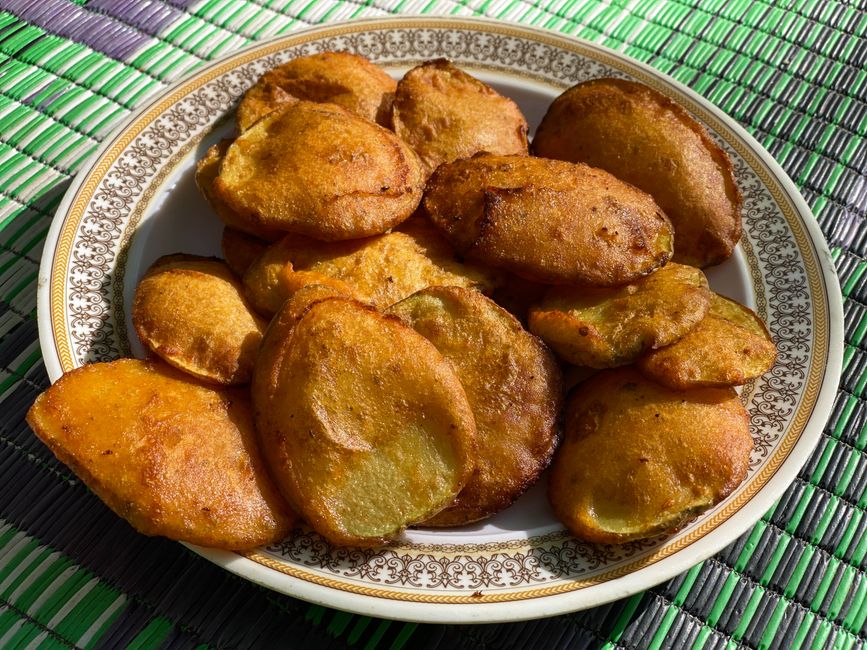
Bhajia are thin potato slices in a spiced gram flour batter, and they are the most iconic of the bhajias — forged, as one writer puts it, from the coming together of two distinct cuisines, and treasured on the South Asian-East African table. The batter here is deliberately thin, crêpe-style, just enough to coat a slice, and it rests half an hour before use. The potatoes sit in ice water until the moment they are dried and dipped.
Ingredients
Equipment: Mandoline or sharp knife, Bowl of ice water, Mixing bowl, Deep pan, Thermometer, Clean tea towel
- 1 kg potatoes, thinly sliced
The batter
- 450 g chickpea flour
- 100 g plain flour
- 1.25 ml (1/4 tsp) baking powder
- 2.5 ml (1/2 tsp) citric acid
- 5 ml (1 tsp) garlic powder
- 5 ml (1 tsp) onion powder
- 2.5 ml (1/2 tsp) ground ginger
- 2.5 ml (1/2 tsp) ground turmeric
- 2.5 ml (1/2 tsp) chilli powder
- 2.5 ml (1/2 tsp) ajwain seeds
- 7.5 ml (1 1/2 tsp) fine salt
- 30 ml (2 tbsp) sunflower or rapeseed oil
- 625 ml warm water
- 30 ml (2 tbsp) fresh coriander, chopped
- 5 fresh ajwain leaves, chopped (optional)
- 1 green chilli, minced (optional)
- 1 litre sunflower or rapeseed oil, for frying
Method
- Slice the potatoes thinly and immerse them in ice-cold water. Set aside.
The batter
- Put all the batter ingredients except the water in a mixing bowl and combine.
- Gradually add the warm water to form a thin, crêpe-style batter that will coat the slices.
- Rest it at room temperature 30 minutes.
Frying
- Heat the oil to 190 degrees in a deep pan.
- Dry the potato slices thoroughly in a clean tea towel.
- Dip each slice in the batter and slide it carefully into the hot oil.
- Fry until golden and cooked through, about 3 to 4 minutes, in small batches so the pan is not crowded.
- Drain on a plate lined with kitchen paper. Serve with a coarse coriander chutney.
Chef Tips
- Ice water for the sliced potatoes, and dry them thoroughly before dipping. Wet slices will not hold batter and they spit in the oil.
- A thin, crêpe-style batter. It should coat a slice and no more — a thick batter gives you a fritter rather than a bhajia.
- Rest the batter half an hour. It hydrates the gram flour and the texture is noticeably better for it.
- A hundred and ninety degrees, and small batches. Both matter: the temperature sets the batter fast, the small batches keep the temperature there.
- Citric acid is in the batter and it is not a mistake — it sharpens the flavour in a way lemon juice cannot, because it adds no water.
- There is a genuine technique split worth knowing. This version dips the slices in a wet 625 ml batter; a second documented version uses a dry dredge — the slices tossed with gram flour, rice flour, chilli-ginger paste, turmeric, ajwain and coriander, rested 15 to 20 minutes, with no water at all, so the potatoes' own moisture hydrates the flours. Both are called potato bhajia and both are correct.
- The chutney is part of it: cucumber, tomato, carrot, garlic, coriander, hot green chillies, lemon juice, water, sugar and salt blended coarse and served cold.
- Ajwain is doing real work here, in the batter and as fresh leaves. Do not skip it.
Common Mistakes to Avoid
- Dipping wet potato slices.
- Making the batter too thick.
- Skipping the thirty-minute rest.
- Frying below temperature or in large batches.
- Leaving the ajwain out.
Nutrition (per serving)
Health Benefits
- Chickpea flour is high in plant protein, fibre and folate.
- Naturally gluten-free apart from the small amount of plain flour, which can be left out.
- Turmeric, ginger, garlic, ajwain and chilli all go into the batter.
- Deep-fried, which is the limit on it.
Cultural Note
Bhajia sit on the same street tables as the samosa and the mandazi in Uganda, all three so naturalised that nobody thinks of them as Indian. The community that brought them was expelled in 1972 and the food stayed — which is the pattern for almost everything in this strand, and the reason the strand deserves its own place in a Ugandan collection rather than a footnote.
Storage & Serving
Storage: Best straight from the pan. 1 day refrigerated.
Reheating: A hot oven for a few minutes. Never a microwave.
Serve with: Coriander chutney, Mogo Chips, Ugandan tea
Adapted From
- Adapted from Sanjana Modha, 'Crispy Potato Bhajias', sanjanafeasts.co.uk, December 2019 — all quantities, the ice-water hold, the everything-except-the-water batter method, the thin crêpe-style consistency, the 30-minute rest, the 190-degree oil, the dry-the-slices-in-a-tea-towel step and the 3-to-4-minute fry in small batches are all hers, as is the chutney of cucumber, tomato, carrot, garlic, coriander, green chillies, lemon juice, water, sugar and salt blended to a coarse purée and served cold.
- Her framing is carried here: crispy spiced potato fritters are the most iconic of the bhajias, forged from the coming together of two distinct cuisines, and treasured on the South Asian-East African dinner table. She writes as a British child of Kenyan and Tanzanian immigrants of Indian Gujarati ancestry.
- The dry-dredge alternative — gram flour, rice flour, crushed green chilli and ginger, turmeric, ajwain and coriander tossed with the slices and rested 15 to 20 minutes with no water at all — is from Hayley Dhanecha's 'Maru Bhajia', which is explicitly inspired by the original Maru na Bhajia of Nairobi and makes no Uganda claim. That structural difference between a wet batter and a dry dredge is a genuine technique split rather than an error.
- Bhajia is documented as one of the Indian-derived street staples of Uganda alongside samosa, mandazi and chips.