 South African · Desserts
🥧 Melktert
Melktert
A soft cardamom-scented pastry shell filled with nine eggs, condensed milk and milk, dusted with cinnamon and cardamom before it goes in the oven, and baked until it still wobbles in the middle.
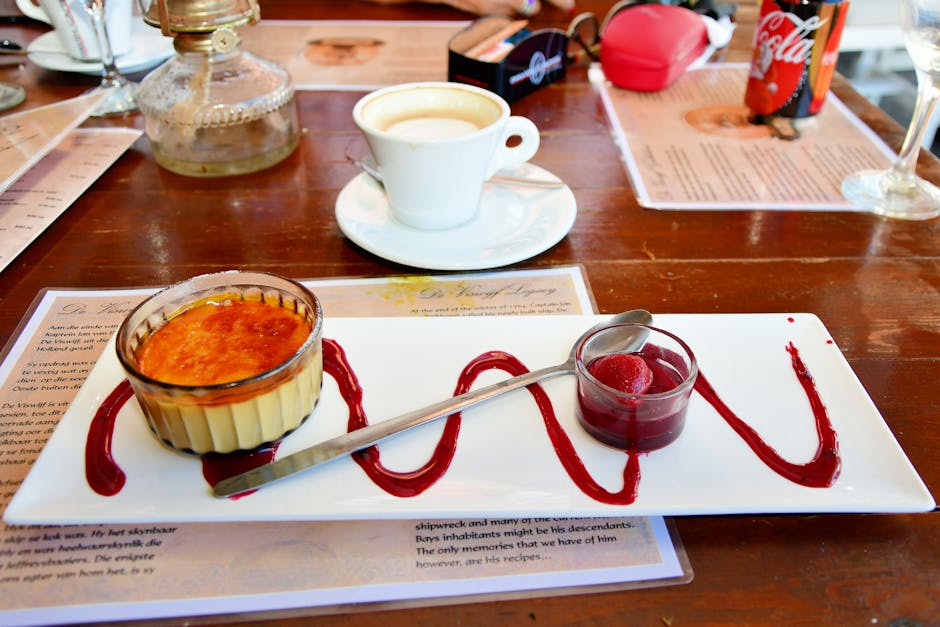
Milk tart is said to come from the Dutch settlers who reached the Cape in the 1600s, who were dairy farmers, and it has been thoroughly naturalised since. Two things about this version are worth knowing: the base is a soft pressed pastry rather than a crumb crust, and the cinnamon goes on before baking rather than being dusted over at the end, which cooks it into the surface instead of leaving it powdery on top. Fifteen squares out of a single dish is how it is served at gatherings.
Ingredients
Equipment: Electric mixer, 3-litre rectangular baking dish, Rolling pin, Sieve
The pastry
- 150 g butter, at room temperature
- 150 g caster sugar
- 1 large free-range egg
- 2 tsp vanilla essence
- 315 g cake flour
- 1 tsp baking powder
- 1/4 tsp ground cardamom
The filling
- 9 large free-range eggs
- 2 tsp vanilla essence
- 1 x 385 g tin condensed milk
- 710 ml (3 cups) milk
To dust, before baking
- 1 tsp ground cinnamon
- 1/2 tsp ground cardamom
Method
- Beat the butter and caster sugar with an electric mixer until light and creamy. Add the egg and vanilla and mix until just combined.
- Add the flour, baking powder and cardamom and mix by hand to a soft dough. Cover with clingfilm and chill for 10 minutes. Heat the oven to 180C.
- Mix the 9 eggs and the vanilla together in a large jug. Separately mix the condensed milk and the milk together.
- Combine the two mixtures and strain to remove any lumps of egg.
- Butter a 3-litre rectangular dish. Roll the dough out on a floured surface to 5 mm thick, lay it in the dish and press it up the sides. Check for holes and cracks — a liquid filling will find them.
- Pour in the filling and sift the cinnamon and cardamom over the surface.
- Bake for 45 to 50 minutes, until set with a slight wobble at the centre.
- Cool completely before cutting into squares.
Chef Tips
- Patch every hole and crack in the pastry before the filling goes in. Nine eggs' worth of liquid custard will leak through a pinhole.
- Strain the filling. Unstrained, you get threads of cooked egg white through the set custard.
- The wobble is the doneness test. A tart baked until firm all the way through will be rubbery when cold.
- The spice goes on before baking, not after. Dusted at the end it sits on the surface; sifted on beforehand it bakes in.
- Cool it fully. Cut warm, it slumps.
Common Mistakes to Avoid
- Baking it until the centre is firm, which overcooks the custard.
- Cutting into it while warm.
- Rolling the pastry too thin, so it tears while being pressed up the sides.
- Skipping the strain and finding scrambled egg through the tart.
Nutrition (per serving)
Health Benefits
- Nine eggs and three cups of milk across fifteen portions make this a relatively high-protein dessert.
- A good source of calcium.
- Cinnamon and cardamom do the flavouring work that more sugar would otherwise do.
Cultural Note
Melktert belongs to both Afrikaner and Cape Muslim kitchens, which is the case with a surprising amount of Cape food. It is a fixture at traditional gatherings, including the Cape Muslim prayer evening called a Gadat, where it is cut into squares and handed round rather than served in slices.
Storage & Serving
Storage: Refrigerate, covered, up to 3 days. It cuts most cleanly cold.
Reheating: Served cold or at room temperature. Warming it loosens the custard.
Serve with: Rooibos tea, Coffee, Nothing at all — it is complete