 Ghanaian · Street Food & Snacks
🟡 Koose
Koose — akara, bean fritters
Two hundred grams of peeled black-eyed beans with just sixty millilitres of water — the low hydration is what makes them fluffy.
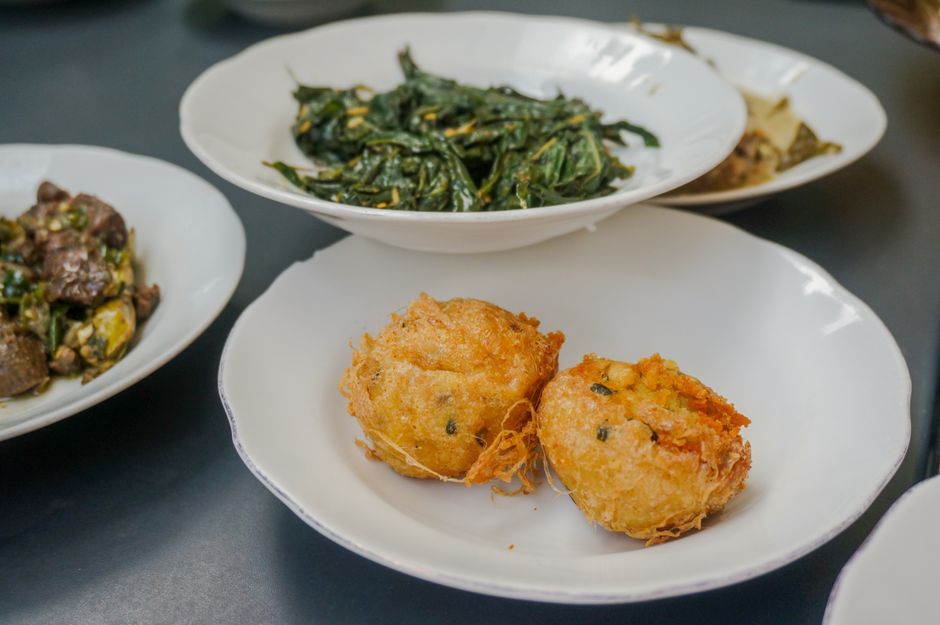
Koose is the fried bean fritter eaten with Hausa koko for breakfast across northern Ghana, and the striking thing about this recipe is how little water it uses: two hundred grams of peeled black-eyed beans to sixty millilitres, with a habanero, two onions and optional spring onions. That low hydration is what lets the batter hold air. The author promises the secret to a fluffy koose but the method is video-only, so no frying temperature, no oil quantity and no doneness cue are published — all of which is stated rather than filled in.
Ingredients
Equipment: Blender, Bowl and whisk, or a wooden spoon, Deep pot or fryer, Slotted spoon
- 200 g peeled black-eyed beans
- 1 large habanero chilli
- 2 medium onions
- 60 ml water
- 20 g chopped spring onions (optional)
- Salt, to taste
Oil for deep frying — no quantity is published
Method
The published method for this recipe is video-only. No written steps exist in the source.
- Peel the black-eyed beans if not already peeled, rubbing off the skins and rinsing them away.
- Blend the beans with the habanero, onions and the 60 ml of water to a thick paste.
- Beat the paste hard to whip air into it — this is what makes koose fluffy.
- Season with salt.
- Heat the oil for deep frying.
- Drop spoonfuls into the oil and fry until golden brown all over.
- Drain and serve hot with Hausa koko.
The order above is standard practice for this fritter family; it is NOT from this source.
Chef Tips
- Sixty millilitres of water to two hundred grams of beans is a very stiff paste, and that is the point. A wet batter cannot hold air and gives you flat, oily fritters.
- Beat the paste hard after blending. Air whipped into the bean paste is what makes a koose fluffy, and it is the one thing every cook says and almost nobody writes down.
- Peeled beans, not whole. The skins make the fritter grey and coarse.
- Be aware the method here is reconstructed. The author explicitly promises the secret to a fluffy koose and that secret is in her video, not her text.
- No frying temperature and no oil quantity are published anywhere in this source. Medium-hot oil is the convention — too hot and you get raw middles.
- Koose is bigger and more ginger-forward than Nigerian akara, by the 1968 government survey's account.
- Eaten with Hausa koko at breakfast. The pairing of a sour millet porridge with a hot savoury fritter is one of the better breakfasts anywhere.
Common Mistakes to Avoid
- Adding more water to make blending easier.
- Skipping the beating stage.
- Using unpeeled beans.
- Oil too hot, giving raw centres.
- Treating the reconstructed step order as the author's own.
Nutrition (per serving)
Health Benefits
- Black-eyed beans are high in plant protein, folate, iron and soluble fibre.
- Vegan and gluten-free.
- Eaten with koko it makes a complete-protein breakfast from cereal and legume.
- Peeled beans are easier to digest than whole.
Cultural Note
Koose and koko at dawn is the northern Ghanaian breakfast, bought from two different sellers standing side by side — one with a pot of porridge, one with a pan of oil. That the only published quantities come with no method, and the promised secret sits in a video, is a neat illustration of how much of this cuisine is still taught by demonstration.
Storage & Serving
Storage: Same day. They go soft and oily.
Reheating: A hot oven briefly.
Serve with: Hausa Koko, Bread, Rice Water
Adapted From
- Quantities from 'Perfect Koose or Akara Recipe (Fried Bean Fritters)', byline as printed 'Fafa Gilbert', dated 'May 7, 2018 (Updated August 9, 2023)'. Quantities confirmed across two fetches (TWO-PASS).
- Ingredients exactly as printed: 200g of peeled black eyed beans; 1 large Habanero chilli; 2 medium sized Onions; 20g of chopped Spring Onions (Optional); 60ml of water; Salt to taste.
- METHOD GAP, stated plainly and it is substantial: THE METHOD IS VIDEO ONLY. There is NO SOAKING INSTRUCTION, NO FRYING TEMPERATURE, NO OIL QUANTITY and NO DONENESS CUE in the text. The author promises 'the secret to a fluffy Koose or Akara' AND THAT SECRET IS NOT WRITTEN DOWN. The steps in this entry are explicitly marked as reconstructed from standard practice for this fritter family, and the step list carries a header saying so.
- WRITTEN KOOSE METHOD WITH QUANTITIES: EMPTY. This is the only source consulted that publishes koose quantities at all, and it publishes no method. That is recorded as the state of the record rather than disguised.
- THE BEATING STEP in the reconstruction is standard practice for bean fritters across West Africa and is NOT attributed to this source. It is flagged in the tips as the thing her video presumably shows.
- WHAT DISTINGUISHES KOOSE FROM AKARA, from Whitby 1968, 'Foods of Ghana', FRI Research Bulletin No. 1, verbatim: 'This resembles akara but is seasoned with ginger and pepper, and usually the cakes are bigger than those of akara.' NOTE that ginger is named there as a defining seasoning and it is ABSENT from this recipe's ingredient list — an unreconciled difference between the 1968 record and the modern recipe.
- THE PAIRING, from Atter A. et al., Frontiers in Microbiology 2021: Hausa koko is eaten 'with koose, a fried cowpea doughnut'. And from this same author's post: koose is eaten with 'Hausa Koko, (which is made from Millet) or Koko (which is made from milled fermented corn)' — which is a useful distinction between the two porridges.
- NOT FERMENTED: the bean paste is fried immediately. This carries no fermentation and needs no cue.
- NO YIELD is printed. The four servings above is an editorial reading of 200 g of beans.
- A SOURCE REJECTED: Eat with Afia's masa page, byline 'support', was rejected as Nigerian/Hausa style with a yeasted 'rise for an hour'. It is recorded because masa is the other thing koko is eaten with.