 Ghanaian · Soups & Stews
🫕 Benne Soup
Benne soup — sesame soup
A cup of tahini standing in for ground sesame, heated three to four minutes until the oil begins to separate — the northern sesame soup of Tamale.
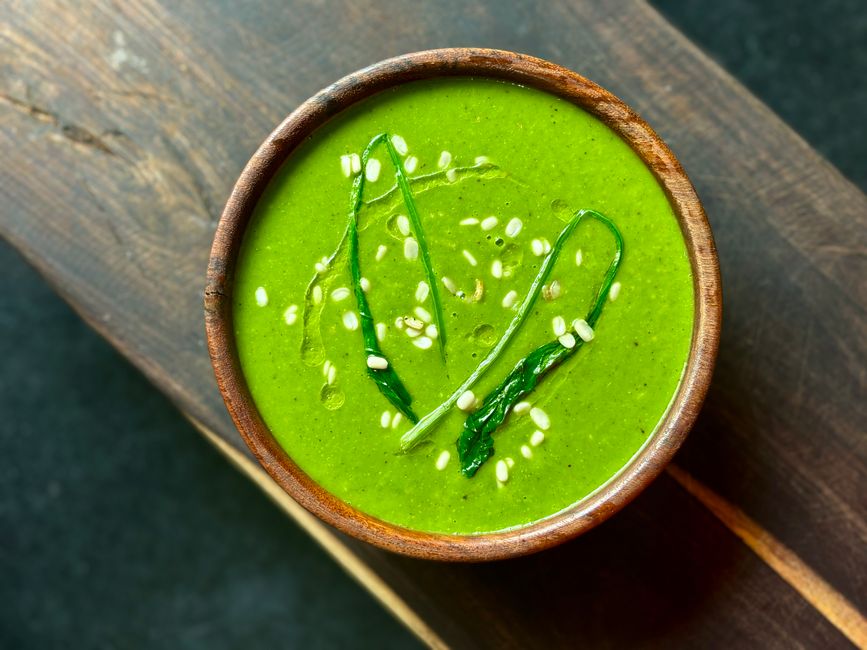
Benne soup is sesame soup, popular in Tamale, and traditionally made with guinea fowl. This version substitutes Cornish game hens and a cup of tahini for the ground sesame seed, which is an honest adaptation by a cook who learned the dish in Tamale while shadowing Mrs Comfort Awu Akor. The technique that matters is the same as groundnut soup's: heat the tahini three to four minutes until the oil begins to separate, and when the sesame oil rises, add a couple of ladles of the soup broth to the tahini mixture. Served with tuo zaafi, omo tuo or plain rice.
Ingredients
Equipment: Large pot, Separate pan, for the tahini, Ladle, Blender
- 2 Cornish game hens, around 4 lb total — traditionally guinea fowl
- 1 cup tahini, or less if you prefer
- 1 1/2 tsp salt, or to taste
- 3-4 cloves garlic
- About a 2-inch chunk fresh peeled ginger
- 1 onion, about 1 cup, red if available
- About 4 habanero peppers
- 6 small-to-medium tomatoes, or about half a large 28 oz tin
- About 4-5 cups water in total, added throughout
Method
- Steam the fowl about 10 minutes with the aromatics.
- After 10 minutes, add water and bring to a simmer.
- Simmer until the bird is tender, adding water as needed to 4 or 5 cups in total.
- Separately heat the tahini 3 to 4 minutes, until the oil begins to separate.
- When the sesame oil rises, add a couple of ladles of the soup broth to the tahini mixture.
- Stir the loosened tahini back into the pot.
- Add the tomatoes and continue simmering until the soup is thick and the oil sits on the surface.
- Serve with tuo zaafi, omo tuo or plain rice.
Chef Tips
- Heat the tahini separately until the oil begins to separate, three to four minutes. The same principle as groundnut soup — the paste has to break before it goes into liquid.
- When the sesame oil rises, let the broth down into the tahini rather than the tahini into the broth. Two ladles at a time, and it will not seize.
- A cup of tahini is a lot and she offers less as an option. Sesame is stronger and more bitter than groundnut.
- Four habaneros for four servings is genuinely hot. Pierce them whole if you want the aroma without the full heat.
- Guinea fowl is the traditional bird and it is a different animal from chicken — darker, gamier, tougher. Cornish game hens are her stated substitute.
- The Tamale provenance is worth knowing: she learned it in the market there with Mrs Comfort Awu Akor, who also taught her the tuo zaafi this soup goes with.
- Water is added throughout rather than at once — about four to five cups total, which is a loose instruction and deliberately so.
Common Mistakes to Avoid
- Adding the tahini straight into the pot.
- Moving on before the sesame oil rises.
- Using chicken and expecting guinea fowl's depth.
- All the water at the start.
- Chopping the habaneros in if you wanted it mild.
Nutrition (per serving)
Health Benefits
- Sesame is exceptionally high in calcium, magnesium, copper and lignans.
- Guinea fowl is leaner than chicken and higher in protein.
- Tahini supplies plant protein and monounsaturated fat.
- High in lycopene from the long-cooked tomato.
Cultural Note
Sesame soup is the northern counterpart to the south's groundnut soup, built on the same principle — an oily seed paste let down into broth until the oil breaks out — with sesame in place of peanut. That the recipe traces to a named Tamale cook and a trip to her local market makes it one of the better-provenanced northern dishes in print.
Storage & Serving
Storage: 4 days refrigerated, 3 months frozen.
Reheating: Gentle heat with water to loosen.
Adapted From
- Adapted from "Ghana's Benne (Sesame) Soup", Recipe #68, betumiblog.blogspot.com, 29 June 2011. BYLINE AS PRINTED: 'Posted by Fran at 2:28 PM'. The post is described as Northern Ghanaian and popular in Tamale.
- Ingredients exactly as printed, confirmed across two fetches: Fowl (2 Cornish game hens, around 4 lbs, total); 1.5 teaspoons salt, or to taste; 1 cup of tahini (or less if you prefer); 3 - 4 cloves of garlic; About 2-inch chunk of fresh peeled ginger; 1 onion (about 1 cup, red, if available); About 4 habanero; 6 small-to-medium tomatoes (or about half a large 28 oz can). Water '(approximately 4-5 cups total, added throughout)' is SINGLE-PASS.
- YIELD UNRECONCILED: one fetch gave 'Serves 2-4' and the other 'Not stated'. The four servings above is the upper of the two and is flagged as unverified.
- AUTHOR-DECLARED SUBSTITUTIONS, both flagged: GUINEA FOWL is the traditional bird and she writes 'I'll simply substitute Cornish game hens'. And TAHINI stands in for ground sesame seed, which is the more usual northern Ghanaian preparation. Both are honest adaptations by the author and the recipe is published as such.
- Key steps, SINGLE-PASS where marked: steam the fowl 'about 10 minutes'; simmer 'After 10 minutes'; tahini heated '3-4 minutes until oil begins to separate' (SINGLE-PASS). THE CUE, quoted and SINGLE-PASS: 'When sesame oil rises, add couple ladles of soup broth to tahini mixture'.
- SERVING, as printed: 'tuo zaafe (millet balls), omo tuo (rice balls), or plain rice.'
- THE PROVENANCE, from the same authors' cookbook entry 'Sesame Soup with Poultry' in The Ghana Cookbook (4 to 5 servings, Medium), whose headnote is the valuable part and is quoted: 'Sesame soup is popular in Northern Ghana. While in Tamale shadowing Mrs. Comfort Awu Akor, we went to the local outdoor market for ingredients to make ours, including guinea fowl and sesame seeds.' THE COOKBOOK'S METHOD IS NOT VISIBLE behind its publisher's paywall. Mrs Akor is the same named Tamale cook who taught the tuo zaafi at Tuo Zaafe, and the display author field credits her as the source of the dish.
- A NOTE ON THE URL: the post was reached at a URL whose slug reads 'recipe-67-groundnut-soup-with-chicken', so recipes #67 and #68 share a page. The groundnut soup from that page is recorded in the groundnut soup sources rather than published separately.
- ON GUINEA FOWL more generally, from Whitby 1968: 'In the north guinea-fowls are almost equally common.' The GAIN 2016 Karaga study notes that guinea-fowl eggs are those 'Usually' given to children.
- A SEPARATE GUINEA FOWL RECIPE, published at Grilled Guinea Fowl: Fafa Gilbert's grilled akonfem.