 Nigerian · Street Food & Snacks
🍢 Suya
Suya — tsire
Thin beef fillets threaded on soaked sticks, dabbed in yaji, marinated an hour, then grilled at 150°C fifteen to twenty minutes a side and finished hot.
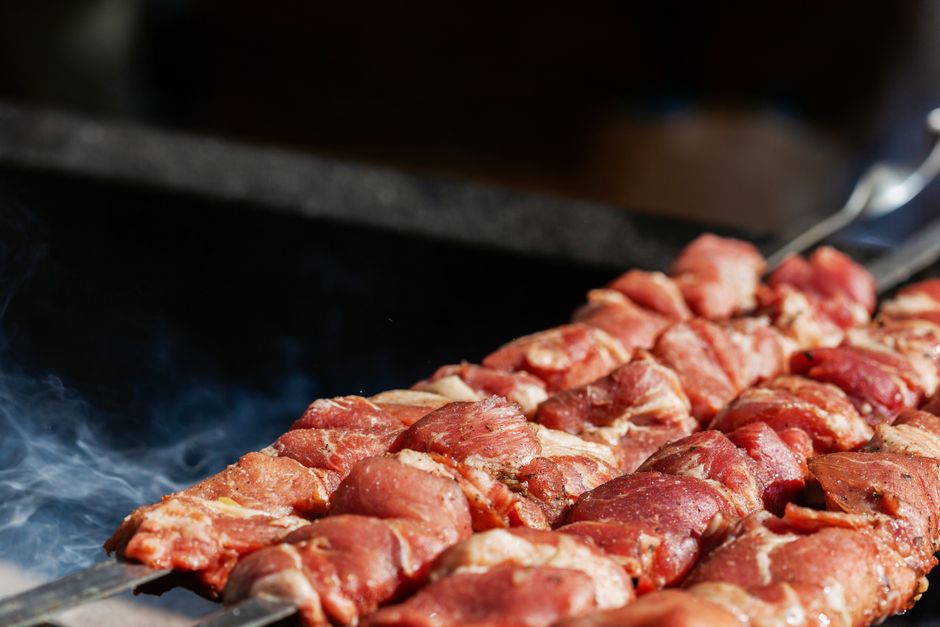
Suya is thin beef, yaji and fire. The sequence here is the thing to follow: the sticks soak in cold water for five hours or more so they do not burn, the beef is cut into thin fillets and threaded on, brushed with groundnut oil mixed with salt, then dabbed in yaji spread in a wide dish rather than sprinkled. An hour's marinade at room temperature, then thirty to forty minutes at 150°C turning once, and finally the remaining oil is rubbed on and the heat raised for five minutes a side. Note that no ingredient on the source page carries a quantity.
Ingredients
Equipment: Skewers or wooden sticks, Wide shallow dish, for the yaji, Oven with a grill, or charcoal grill, Basting brush
- Beef, best cut with minimal fat, in thin fillets
- Yaji (suya spice) — see Yaji
- Groundnut or peanut oil
- Salt
Equipment that behaves like an ingredient
- Skewers or sticks, soaked in cold water 5 hours or more
Method
- Soak the sticks in cold water for 5 hours or more.
- Cut the beef into thin fillets and thread them onto the sticks.
- Brush with groundnut oil mixed with salt.
- Spread the yaji in a wide dish and dab the threaded beef in it, coating both sides.
- Marinate covered 1 hour at room temperature.
- Preheat the oven to grill at 150°C (300°F).
- Roast the skewers flat on the oven rack 15 to 20 minutes.
- Flip and roast the underside 15 to 20 minutes — 30 to 40 minutes in total.
- Rub the remaining oil on both sides, increase the temperature, and roast 5 minutes each side.
- Serve hot with sliced tomatoes, onions and extra yaji.
Chef Tips
- Soak the sticks five hours minimum. Dry wood under a grill burns through and your suya falls into the fire.
- Dab the meat in yaji spread on a dish, rather than sprinkling it on. You get an even coat and the spice adheres to the oil.
- Thin fillets. Suya is not kebab — the meat should be thin enough to cook through fast and take spice on both faces.
- Oil twice: once with salt before the yaji, once plain at the end before the final high-heat blast. The second oiling is what gives the finished char.
- An hour at room temperature is the marinade, and it is enough. Longer and the salt starts drawing the meat out.
- No quantities are given on the source page for any ingredient. Roughly 500 g of beef to three tablespoons of yaji and two of oil is a reasonable starting point, and that is a suggestion rather than a sourced figure.
- On skewering, the source's own line is worth keeping: putting the beef on sticks is optional but it's not Nigerian suya if it's not on a stick.
Common Mistakes to Avoid
- Using dry sticks.
- Sprinkling the yaji instead of dabbing the meat in it.
- Cutting the beef too thick.
- Marinating for hours, which toughens it.
- Skipping the final high-heat finish, which is where the char comes from.
Nutrition (per serving)
Health Benefits
- Lean beef is high in protein, iron, zinc and B12.
- Very low in carbohydrate.
- Grilled rather than fried, with minimal added oil.
- The groundnut cake in yaji adds protein rather than filler.
Cultural Note
Suya spots are at every major junction in Nigeria and the Mai Suya — the vendor — is a fixture of the evening. The meat is sliced thin on a board, dusted with more yaji, and handed over in newspaper with raw onion and tomato. In the north it is a whole category of specialty meats rather than one dish, with tsire the skewer, balangu the fire-roast, dambu the shredded version and kilishi the dried one.
Storage & Serving
Storage: 2 days refrigerated. Suya is best within the hour.
Reheating: Hot grill or oven, briefly. Never the microwave.
Serve with: Yaji, Sliced tomatoes and onions, Cold beer or stout
Adapted From
- Adapted from 'Nigerian Suya Recipe', All Nigerian Recipes — no byline on the page, credited to the site. Headnote as printed: 'In Nigeria, Suya spots litter almost every major street junction. This Suya recipe is for Nigerians in diaspora who want to get a taste of homeland Suya they sorely miss.'
- NOT ONE INGREDIENT ON THE PAGE CARRIES A QUANTITY. The list is exactly: Beef (best cut with minimal fat); Suya Spice; Groundnut or Peanut Oil; Salt; Tools: Skewers or sticks. That is recorded as a finding, and the starting point suggested in the tips is labelled as a suggestion rather than sourced.
- What the page DOES give precisely is the process, and all of it is as printed: soak the sticks in cold water for 5+ hours; cut the beef into thin fillets and thread onto sticks; brush with groundnut oil mixed with salt; dab the threaded beef in suya spice spread in a wide dish; marinate covered 1 hour at room temperature; preheat the oven to Grill at 150°C (300°F); roast flat on the oven rack 15-20 minutes; flip and roast the underside 15-20 minutes, 30-40 minutes total; rub the remaining oil on both sides, increase the temperature, roast 5 minutes each side.
- On skewering, verbatim: 'Putting the beef on sticks is optional but it's not Nigerian Suya dear if it's not on a stick.'
- A DEFINITIONAL POINT WORTH KEEPING, from Kitchen Butterfly's 'The Arewa Kitchen: Specialty Meats (or Suya Plus)': suya is 'a Hausa word meaning "to fry"' and functions as the UMBRELLA TERM for northern Nigerian meat products, of which tsire is one. Tsire specifically is boneless grilled meat dredged in yaji, commonly skewered — small pieces of beef, chicken and offal 'flame-grilled over open coals till cooked through', served with sliced tomatoes, onions and chilli pepper. So suya is the category and tsire is the skewer; most sources conflate them. That page gives no quantities.
- From the same survey piece, two other members of the suya family: BALANGU, 'spit roasted/fire roasted meat on brown paper', thin-sliced meat 'slow-cooked essentially in its own juices and with its own fat' with little or no seasoning added during cooking, with Sokoto State named as a producer and gurasa and sweet potato fries as the accompaniments. NO RECIPE EXISTS for balangu in any source consulted — no quantities, times, temperatures or doneness cue — so it is not published here, but its defining feature, minimal seasoning and cooking in its own fat, distinguishes it sharply from suya and is worth recording.
- ATTRIBUTION NOTE: Kitchen Butterfly pages byline as the site name rather than as Ozoz Sokoh; the site is credited with Sokoh noted as proprietor.