 Nigerian · Soups & Stews
🌳 Miyan Kuka
Miyan kuka — baobab leaf soup
Three tablespoons of dried baobab leaf powder spread and stirred into the broth to avoid lumps, then five minutes covered with the palm oil and dawadawa.
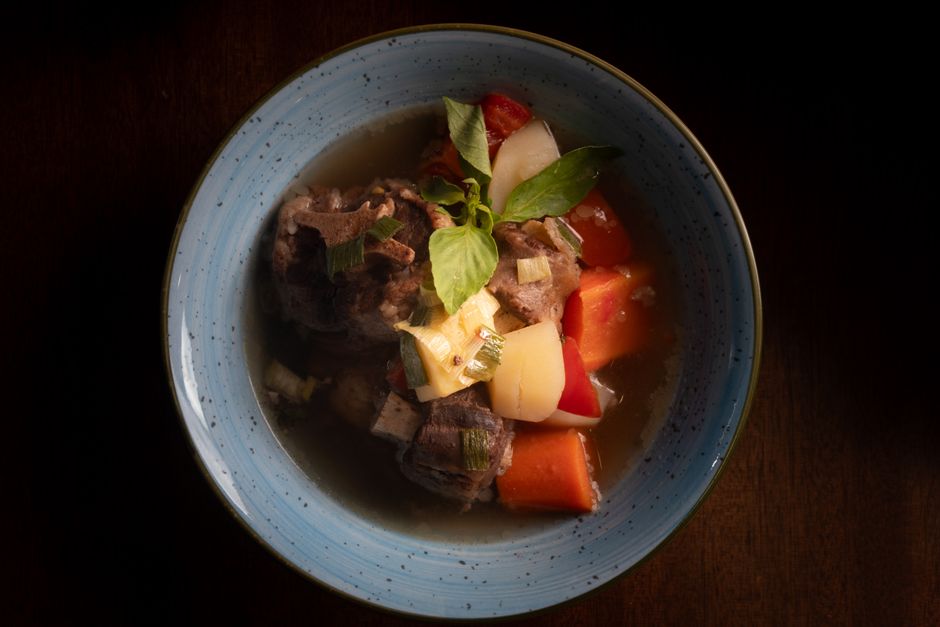
Miyan kuka is the baobab leaf soup of the north and it is built on kuka powder, which is both the flavour and the thickener. A kilo of cow ribs is boiled with seasoning and onion, the meat lifted out, and then three tablespoons of kuka powder are spread across the broth and stirred thoroughly — the spreading rather than dumping is the one technical instruction and it is what prevents lumps. Pepper, crayfish, blended dawadawa and two cooking spoons of palm oil follow, five minutes covered, then the beef back in. It is done when it boils again.
Ingredients
Equipment: Large pot with a lid, Blender or mill, Wooden spoon
- 3 tbsp kuka powder (dried baobab leaves, ground)
- 1 kg cow ribs, cut into pieces
- 2 dry catfish
- 2 cooking spoons red palm oil
- 2 handfuls crayfish (2 tbsp ground crayfish)
- 1 flat round dawadawa (ogiri okpei, iru, locust beans)
- Habanero pepper (atarugu, ose oyibo, atarodo)
- 1 onion
- 2 big seasoning cubes
- Salt to taste
- Water, for the broth — see the note on the missing quantity
Method
- Cook the cow ribs with the seasoning cubes and the onion until tender.
- Remove the onion chunks and the meat from the broth and set the meat aside.
- Add the kuka powder, spreading it across the surface and stirring thoroughly to avoid lumps.
- Add the pepper, the crayfish, the blended dawadawa and the palm oil, and stir well.
- Cover and cook 5 minutes on medium heat, stirring frequently.
- Add the cooked beef and the salt, and stir well.
- Cover, and when it boils again it is done.
Chef Tips
- Spread the kuka powder across the surface and then stir, rather than tipping it in one place. That is the whole technique and it is how you avoid lumps.
- Take the meat out before the powder goes in. It gets in the way of stirring and the lumps form around it.
- Five minutes covered, stirring frequently, which sounds contradictory but means lifting the lid to stir and replacing it.
- Once it boils again, it is done. That is the stated cue and there is no more to it.
- Blend the dawadawa before it goes in. A flat round of it will not disperse whole.
- Baobab leaf has a distinctive sour, slightly mucilaginous character. Three tablespoons is a proper amount and the soup should taste of it.
- The liquid is never quantified on the source page, so the kuka-to-liquid ratio cannot be derived. Roughly a litre to a litre and a half of broth is what a kilo of ribs will give you, and that is an estimate.
Common Mistakes to Avoid
- Tipping the kuka powder in one spot.
- Leaving the meat in while you add the powder.
- Cooking it much longer than five minutes before the beef goes back.
- Adding the dawadawa unblended.
- Over-thickening it, which is easy once lumps start forming.
Nutrition (per serving)
Health Benefits
- Baobab leaf is high in calcium, iron and vitamin A.
- Very low in carbohydrate.
- Cow ribs and dried catfish give a high protein load.
- Red palm oil provides carotenoids and vitamin E.
Cultural Note
Miyan kuka is made from the leaves of the baobab, the tree that dominates the northern Nigerian landscape, dried and ground to a green powder that keeps for months. That is the logic of a lot of northern cooking — ingredients preserved dry against a long season — and it is why kuka, dawadawa and kilishi all exist in the forms they do.
Storage & Serving
Storage: 4 days refrigerated, 3 months frozen.
Reheating: Low heat with a splash of water. It thickens considerably cold.
Serve with: Tuwo Shinkafa, Tuwo Masara, Gurasa or bread
Adapted From
- Adapted from 'Miyan Kuka (Baobab Leaves Soup)', All Nigerian Recipes — no byline on the page, credited to the site. Local name and language: Miyan Kuka, Hausa. Headnote as printed: 'The first time I tasted Miyan Kuka, it jumped straight up to my top 5 favourite Nigerian soups.'
- Quantities exactly as printed: 3 tablespoons kuka powder (dry baobab leaves powder); 1kg cow ribs (cut into pieces); 2 dry cat fish; 2 cooking spoons red palm oil; 2 handfuls crayfish (2 tablespoons ground crayfish); 1 flat round dawa dawa (ogiri okpei, iru, locust beans); Habanero pepper (atarugu, ose oyibo, atarodo); 1 onion; 2 big seasoning cubes; salt to taste.
- Method and cue as printed: cook the ribs with seasoning cubes and onion; remove the onion chunks and meat when tender; add the kuka powder 'spreading and stirring thoroughly to avoid lumps'; add pepper, crayfish, dawadawa blend and palm oil and stir well; cover and cook 5 minutes on medium heat, stirring frequently; add the cooked beef and salt and stir well; cover and serve when it boils again — 'Once it boils again, it is done!' Serving: 'best served with Tuwo Shinkafa'. Yield not specified.
- THE KUKA-TO-LIQUID RATIO CANNOT BE DERIVED FROM THIS SOURCE, and this was specifically investigated. The 3 tablespoons of kuka powder go into a broth whose volume is NEVER STATED — the beef is cooked in an unspecified amount of water and the soup thickens into it. The habanero also carries no quantity. Since kuka powder is the thickener, the whole dish depends on that ratio, and establishing it would mean inventing the denominator. That has not been done; the broth estimate in the tips is labelled as an estimate.
- This is the single most consequential gap in the Hausa soup record found in this research. Anyone needing the ratio would have to establish it by test and label it as their own.
- ON THE CONDIMENT NAMES in the ingredient line: the page treats dawadawa, ogiri okpei, iru and locust beans as the same thing. That equivalence is NOT universally accepted — see Kaun, where one named food historian defines dawadawa as a soybean ferment distinct from iru. The names are reproduced here as the page prints them.
- Kuka powder appears in a quite different structural role in dan wake, where it acts as a binder in a dumpling rather than as a soup thickener. Same ingredient, two functions.