 Nigerian · Main Dishes
🌺 Hibiscus Chicken
Hibiscus chicken
Chicken marinated thirty minutes in a dry herb rub, griddled four to five minutes a side, and glazed with a hibiscus and coconut sauce reduced by half.
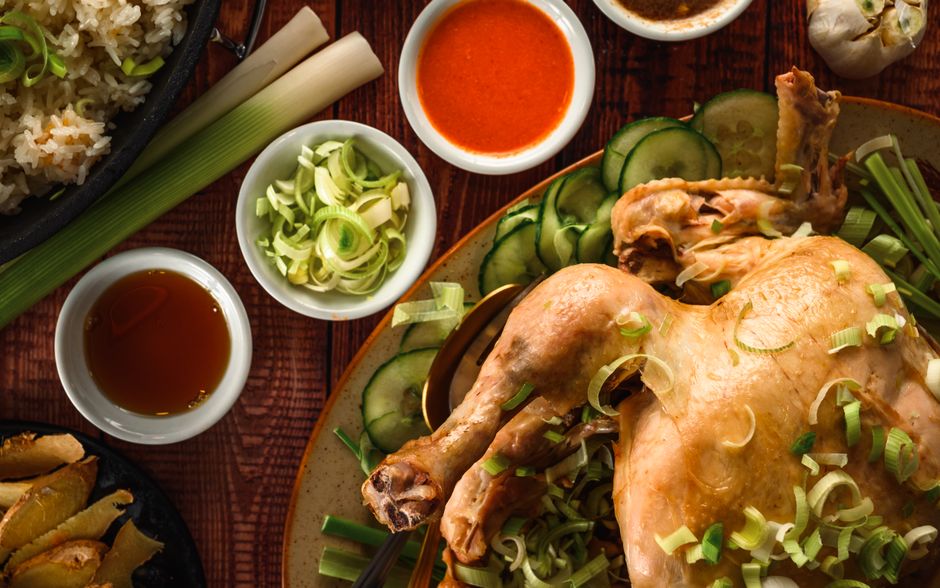
This takes the dried hibiscus petals that Nigeria drinks as zobo and uses them as a savoury glaze, which is the author's own invention rather than a traditional preparation. The marinade is dry — celery salt, onion and garlic granules, black and white pepper, cayenne, parsley and tarragon — and the chicken sits in it with melted coconut oil for thirty minutes. The sauce is lemon juice, coconut water, hibiscus petals and coconut sugar simmered fifteen minutes until reduced by half, cooled, then brushed on as the chicken griddles.
Ingredients
Equipment: Mixing bowls, Saucepan, Griddle pan, Basting brush
- 4 chicken breasts
- 2 tbsp coconut oil, melted
- Fine-cut dried hibiscus petals, for the final garnish — see the note
Marinade
- 1 tsp celery salt
- 1 tsp onion granules
- 1 tsp garlic granules
- 1 tsp black pepper
- 1 tsp ground white pepper
- 1 tsp cayenne pepper
- 2 tsp finely chopped parsley
- 2 tsp finely chopped tarragon
Sauce
- 2 tbsp freshly squeezed lemon juice
- 200 ml unsweetened coconut water
- 2 tbsp fine-cut dried hibiscus petals
- 4 tbsp coconut sugar
Method
- Combine the marinade ingredients in a bowl.
- Toss the chicken with the melted coconut oil, then with the marinade, and leave 30 minutes.
- Whisk the sauce ingredients together in a saucepan over medium heat.
- Bring to the boil, then simmer 15 minutes, until reduced by half.
- Cool 15 minutes.
- Heat a griddle pan. Brush the chicken with the sauce.
- Cook 4 to 5 minutes per side, until browned.
- Plate, drizzle with the remaining sauce, and sprinkle with crushed hibiscus petals.
- Serve with fried coconut rice.
Chef Tips
- Reduced by half is the sauce cue, at fifteen minutes. It needs to be syrupy enough to cling to the chicken on a griddle.
- Cool the sauce fifteen minutes before brushing. Hot sugar syrup on a hot griddle burns before the chicken is done.
- Four to five minutes a side on a properly hot griddle. Brush rather than pour, or the sugar pools and scorches.
- A dry marinade with melted coconut oil as the carrier. Thirty minutes is enough — the salt would start drawing the chicken out beyond that.
- Coconut sugar rather than white sugar gives a deeper, more caramel note that stands up to the hibiscus tartness.
- The hibiscus quantity for the final garnish is NOT given on the source page — only the two tablespoons for the sauce. A pinch of crushed petals is enough.
- This is a declared invention. Hibiscus as a savoury glaze is not traditional Nigerian cooking, and the author's stated purpose is finding new uses for traditional ingredients.
Common Mistakes to Avoid
- Brushing hot sauce onto the griddle.
- Pouring the sauce rather than brushing it, so the sugar burns.
- Marinating for hours, which toughens the breast.
- Under-reducing the sauce so it will not cling.
- Treating this as a traditional Nigerian dish.
Nutrition (per serving)
Health Benefits
- Hibiscus is high in vitamin C and anthocyanins.
- Chicken breast is very lean and high in protein.
- Coconut water provides potassium and electrolytes.
- Low in carbohydrate despite the glaze.
Cultural Note
Taking an ingredient a country drinks and using it as a savoury glaze is exactly the kind of move diaspora cooking makes, and this author is explicit that she is doing it deliberately. Whether a Nigerian cook would recognise it is beside the point she is making — the hibiscus is Nigerian, the technique is not, and the result belongs to both places.
Storage & Serving
Storage: 3 days refrigerated. The sauce keeps a week separately.
Reheating: Low oven, briefly, to avoid drying the breast.
Serve with: Fried Coconut Rice, Zobo, Green salad
Adapted From
- Adapted from 'Hibiscus Chicken' by Lopè Ariyo, from Hibiscus (HarperCollins, £18.99 hardback, photography Ellis Parrinder), as printed in The Irish News, 24 June 2017. SERVES 4, as printed.
- Quantities exactly as printed. Main: 4 chicken breasts; 2 tbsp coconut oil, melted; Fine-cut dried hibiscus petals (available from Amazon). Marinade: 1tsp celery salt; 1tsp onion granules; 1tsp garlic granules; 1tsp black pepper; 1tsp ground white pepper; 1tsp cayenne pepper; 2tsp finely chopped parsley; 2tsp finely chopped tarragon. Sauce: 2tbsp freshly squeezed lemon juice; 200ml unsweetened coconut water; 2tbsp fine-cut dried hibiscus petals; 4tbsp coconut sugar (available from Ocado and Lakeland).
- QUANTITY GAP, flagged: the whole-recipe ingredient list says 'Fine-cut dried hibiscus petals' WITH NO QUANTITY — only the sauce's 2 tbsp is quantified. The final garnish sprinkle is therefore unquantified and has not been estimated.
- Method as printed: combine the marinade ingredients; toss the chicken with coconut oil and marinate 30 minutes; whisk the sauce ingredients in a saucepan over medium heat; boil then simmer 15 minutes 'until reduced by half'; cool 15 minutes; heat a griddle pan, brush the chicken with sauce, cook '4–5 minutes per side until browned'; plate, drizzle with remaining sauce, sprinkle with crushed hibiscus petals; serve with fried coconut rice.
- AUTHOR-DECLARED INVENTION, and published as one. Her stated goal is exploring 'many uses for the traditional ingredients that haven't really been explored yet' — an explicit invention licence. Hibiscus as a savoury glaze is not a traditional Nigerian preparation; the petals are traditionally drunk as zobo. This is recorded as a British-Nigerian invention on a traditional ingredient rather than as a Nigerian dish.
- Her framing, verbatim: 'The idea that my cooking style has to be either Nigerian or British just sounds really bizarre to me', and she describes Hibiscus as 'an entry point' into West African cuisine.
- Both of her recipes in this collection are flagged as inventions. Newspaper serialisation of in-print cookbooks is what made them retrievable.