 Ugandan · Vegetables & Legumes
🫛 Dek Ngor
Dek ngor — lapena
Pigeon peas soaked twenty minutes in warm water, sun-dried ten, ground to split the seeds and winnowed, then boiled soft and mashed with an ogwec stick into a thick creamy paste with sesame or groundnut butter.
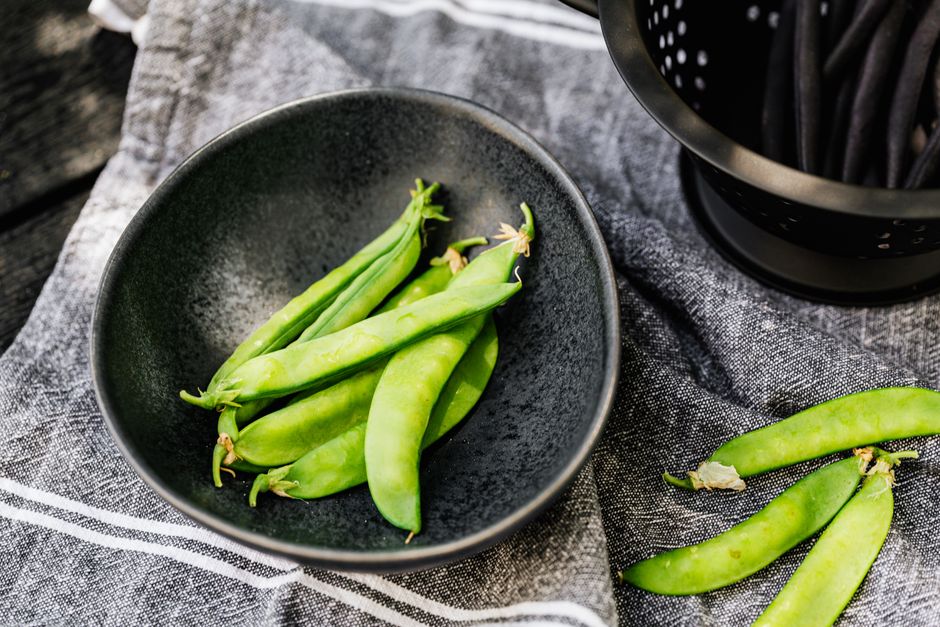
Dek ngor is pigeon pea sauce and it is ceremonial food in the north — it must be served to visiting in-laws, and it turns up at marriages, baptisms, family reunions and namings. The pea, lapena, was a wild plant that monkeys and baboons ate until the famines of the sixteenth and seventeenth centuries pushed people to cook it, after which they cultivated it in home granaries. The processing sequence is the interesting part: soak, sun-dry, grind to split, winnow away the husks.
Ingredients
Equipment: Bowl, for soaking, Drying mat, Grinding stone or mill, Winnowing basket, Saucepan, Ogwec — a stirring stick
- Lapena — pigeon peas, or yellow split peas
- Odi — sesame paste or peanut butter
- Table salt
Optional
- Moo yaa — shea butter
- Magadi — rock salt or sodium bicarbonate, to speed the cooking
No quantities are documented for any ingredient
Method
- Soak the dry pigeon peas in warm water for 20 minutes.
- Remove them and sun-dry 10 minutes.
- Grind the dried lapena to split the seeds.
- Winnow to remove the pea covers. Skip the grinding and winnowing if you are using pre-split peas.
- Boil the split peas until soft. Magadi can be added to speed the cooking.
- Stir and mash with an ogwec into a thick creamy paste.
- Add salt.
- Mix in sesame or peanut butter, for taste, aroma and thickness.
- Add shea butter if you want it.
- Serve with millet bread, sweet potatoes, ugali or cassava — or on its own.
Chef Tips
- The soak-then-sun-dry sequence is what makes the grinding work. Twenty minutes wet, ten minutes dry, and the seeds split cleanly instead of mashing.
- Winnow properly. Pea husks in the finished paste are gritty and there is no fixing it later.
- Thick and creamy is the cue, worked with the ogwec. That stick is the same tool used for malakwang and for karo.
- Magadi speeds the boil and is optional. It is the same rock salt used across northern cooking.
- Odi is the sesame-and-groundnut paste of the north, and it goes in for taste, aroma and thickness all at once.
- Shea butter — moo yaa — is the northern cooking fat and a spoonful transforms this. It is what makes the dish read as northern rather than central.
- No quantities are documented for any ingredient, in any source. Nothing here is estimated to cover that.
- One published version gives a cup of split pigeon peas soaked in '1.5ml of warm water', which is about a third of a teaspoon and cannot be right. It is almost certainly a mis-typed 1.5 litres or one and a half cups. I have not guessed at a replacement.
- It works as a sauce and as a meal on its own, which is why it is called a sauce that also works as food.
Common Mistakes to Avoid
- Grinding the peas wet.
- Skipping the winnowing.
- Under-boiling, so they will not mash smooth.
- Adding the odi at the start rather than after the mash.
- Serving it to in-laws without it, in a household where that matters.
Nutrition (per serving)
Health Benefits
- Pigeon peas are high in protein, fibre, folate and potassium.
- Sesame or groundnut paste adds calcium, magnesium and vitamin E.
- Shea butter is the traditional fat and is used sparingly.
- Contains peanuts or sesame.
Cultural Note
A dish that must be served to visiting in-laws is a dish with obligations attached, and dek ngor carries them across the whole north — Acholi, Lango and West Nile. That the pea itself was famine food before it was ceremonial food is the same pattern as malakwang: what saved people becomes what honours them.
Storage & Serving
Storage: Refrigerate up to 3 days.
Reheating: Warm gently with a little water.
Serve with: Karo, Boiled Sweet Potatoes, Posho
Adapted From
- Adapted from the Wikipedia article on Dek Ngor, whose method is the most complete northern sequence in that set — the 20-minute warm soak, the 10-minute sun-dry, the grinding to split, the winnowing, the boil until soft with optional magadi, the mashing with an ogwec into a thick creamy paste, the salt, the sesame or peanut butter for taste, aroma and thickness, and the optional shea butter. That article carries five citations including one peer-reviewed paper in Frontiers in Sustainable Food Systems, 2023, and states explicitly that it gives no quantities for any ingredient.
- The crop history — lapena as a wild plant eaten by monkeys and baboons, cooked for survival during sixteenth and seventeenth century famines and then cultivated in home granaries — and the occasions at which it appears, including the requirement to serve it to visiting in-laws, are from 'Dek-ngor, traditional sauce that also works as food on its own', Daily Monitor, 5 May 2012, reporting a method from Ms Rebecca Latigo that matches the above.
- A Wikibooks West Nile chapter on Dek Ngoo prints '1 cup of split pigeon peas' and '1.5ml of warm water' for soaking. 1.5 ml is about a third of a teaspoon and cannot soak a cup of peas; it is likely a mis-typed 1.5 L or 1½ cups. No replacement has been estimated.
- A caution about the 2012 Monitor series: its 'soak in warm water at least 20 minutes, then sun-dry 10 minutes' opening is identical to the malakwang method in the same series, and the mingling stick is given the same name in both, so the shared steps may be editorial boilerplate rather than two independent attestations.