 Ugandan · Vegetables & Legumes
🍠 Mugoyo
Mugoyo — emugoyo, omugoyo
Dark purple sweet potatoes steamed in banana leaves and red kidney beans boiled soft, mashed separately and then combined thoroughly — the name means mingled, and that is the instruction.
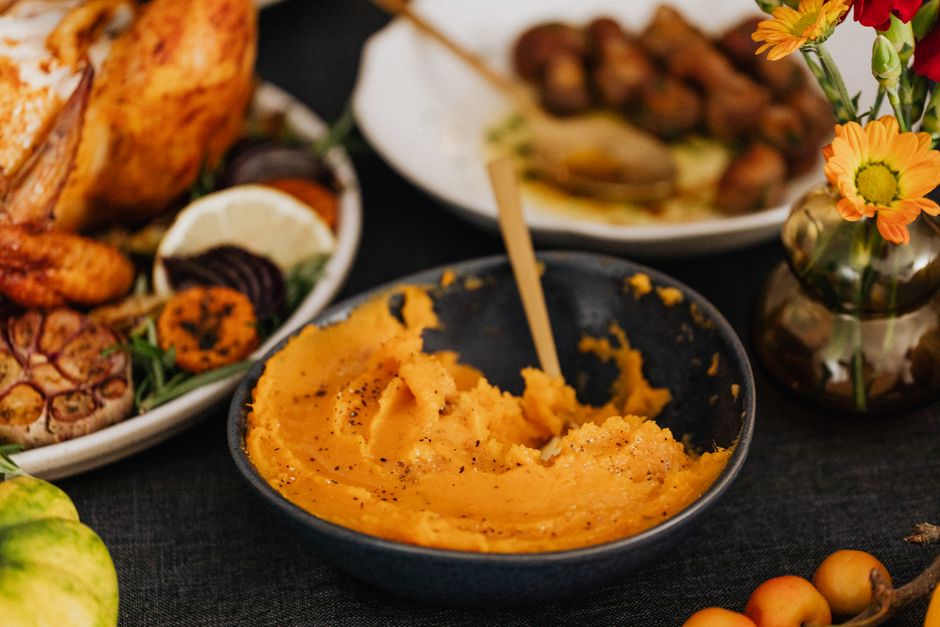
Mugoyo is sweet potatoes and beans mashed together, and the name means mingled — emugoyo among the Iteso, omugoyo among the Basoga and Baganda. The two components are cooked and mashed separately and only then brought together, which is what gives it an even colour and texture rather than streaks. The sweet potatoes are the dark purple-skinned kind and they are steamed in banana leaves to keep their moisture. Traditionally it is finished by baking over firewood, a process called kubobeeza.
Ingredients
Equipment: Bowl, for soaking, Saucepan, Deep pan with banana leaves and stems, for steaming, Masher, A firewood stove — ekyoto — for the traditional finish
- Dark purple-skinned sweet potatoes
- Red kidney beans, locally nambale
- Salt (optional)
- Banana leaves, for steaming
- Plantain leaves, for wrapping during roasting
No quantities are documented
Method
- Soak the dried beans overnight.
- Boil them with salt until tender.
The potatoes
- Peel the purple sweet potatoes, wrap them in banana leaves and steam them, to preserve the moisture.
Mingling
- Mash the beans and the potatoes separately.
- Combine them thoroughly into a homogeneous mixture.
The traditional finish
- Bake it over firewood — the process called kubobeeza — or wrap it in plantain leaves and roast it on a traditional Kiganda stove, an ekyoto.
- Serve, with coffee or tea if you like.
Chef Tips
- Mash them separately, then combine thoroughly. The name means mingled and a homogeneous mixture is the standard — mashing them together in one pot gives you streaks.
- Steam the potatoes in banana leaves rather than boiling them. It preserves the moisture, and boiled potatoes make a wet mugoyo.
- The dark purple-skinned varieties are specified. They are drier and starchier than orange sweet potatoes and the texture depends on it.
- Nambale is the local name for the red kidney beans used. Soak them overnight; there is no shortcut.
- Kubobeeza — the finish over firewood — is what turns a mash into mugoyo proper, and it is the step most often skipped.
- Salt is marked optional in the source, which is unusual and worth respecting on a first attempt.
- It is eaten with coffee or tea, which places it as a breakfast or a snack rather than a main meal in some households.
- No quantities are documented. The bean-to-potato ratio is by eye.
Common Mistakes to Avoid
- Mashing the beans and potatoes together from the start.
- Boiling the potatoes instead of steaming them.
- Using orange sweet potatoes.
- Skipping the overnight bean soak.
- Serving it without the firewood finish, which is where the flavour is.
Nutrition (per serving)
Health Benefits
- Beans and sweet potato together give complete protein and a great deal of fibre.
- Purple-skinned varieties carry anthocyanins as well as beta-carotene.
- Steamed rather than boiled, so less of the vitamin content is lost.
- No added fat at all.
Cultural Note
That one dish carries the same name in Ateso, Lusoga and Luganda, differing only by prefix, is a good sign of how old it is and how far it travels. Mingling a starch and a pulse into one mash is also the same instinct behind katogo and firinda — Ugandan cooking likes things brought together in one vessel.
Storage & Serving
Storage: Refrigerate up to 3 days.
Reheating: Steam, or warm in a pan.
Serve with: Ugandan tea, Coffee, Binyebwa
Adapted From
- Adapted from the Wikipedia article on Mugoyo, which names it a main course of sweet potatoes and beans, gives the meaning of the name as 'mingled' and its variants emugoyo among the Iteso, Omugoyo among the Basoga and Mugoyo or Omugoyo among the Baganda, and lists dark purple-skinned sweet potatoes, red kidney beans locally called nambale, optional salt, banana leaves for steaming and plantain leaves for wrapping during roasting, with no quantities.
- Its method is carried here: soak the dried beans overnight, boil with salt until tender, peel the purple sweet potatoes and wrap them in banana leaves to steam and preserve moisture, then mash the two separately and combine thoroughly into a homogeneous mixture, traditionally finished by baking over firewood in a process called kubobeeza, or wrapped in plantains and roasted on a traditional Kiganda stove called an ekyoto, and served with coffee or tea.
- That article carries no maintenance banner and five citations, one of which is a safari operator's food guide, which is noted rather than relied on.
- No quantities are documented. None has been estimated.