 Ghanaian · Rice Dishes
🌾 Fonio Jollof
Fonio jollof
Jollof made with fonio instead of rice — the West African grain goes in for only three minutes before the stock.
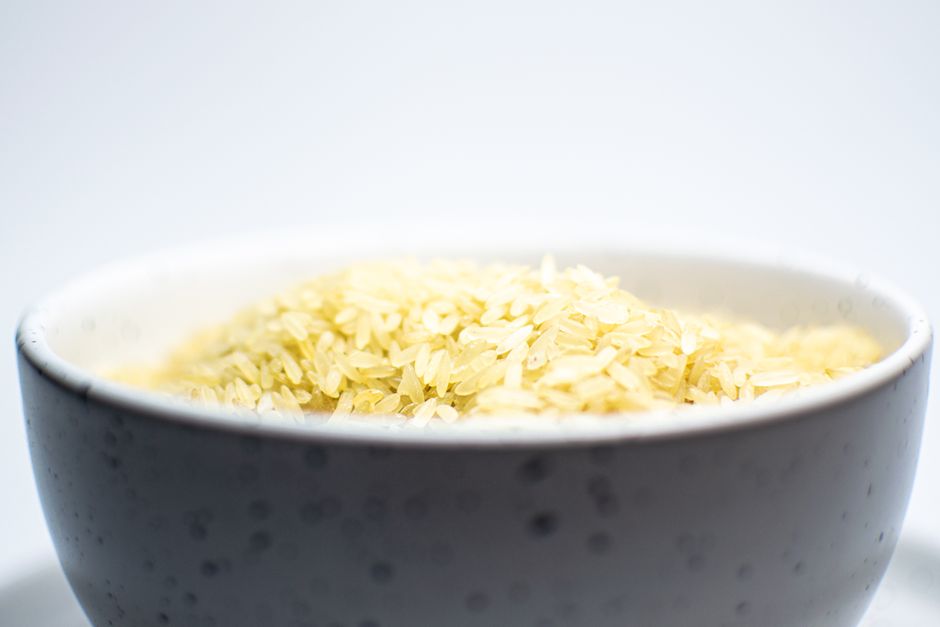
A Fulani chef's jollof, made with fonio rather than rice. Fonio is the ancient West African cereal — faster-cooking, gluten-free and far more nutritious than rice — and it needs only three minutes in the pan before the stock goes in, against the fifteen to twenty a rice jollof needs. Five hundred grams of fonio, half a kilo of yellow onions, five hundred grams of plum tomatoes, two hundred grams of tomato paste, a habanero, a bulb of garlic, two teaspoons of curry powder, three bay leaves and a hand of thyme. The vegetables should be tender but retain a slight firmness.
Ingredients
Equipment: Heavy pot with a lid, Blender, Wooden spoon
- 500 g fonio, or rice
- 1/2 kg yellow onions
- 500 g fresh plum tomatoes
- 200 g tomato paste
- 1 habanero pepper or spicy chilli
- 1 bulb garlic
- 2 tsp curry powder
- 1 little hand fresh thyme leaves
- 3 bay leaves
- 1-2 cups chicken or vegetable stock
- 1 cup mixed vegetables, finely chopped — carrot, scallions, capsicum
- 1 litre oil — see the note on this quantity
Method
- Blend the onions, tomatoes, habanero and garlic.
- Heat the oil and add the curry powder, cooking 2 minutes.
- Add the blended sauce and cook about 10 minutes.
- Add the tomato paste and the bay leaves and cook 10 minutes.
- Add the fonio and cook 3 minutes.
- Add the stock and the thyme and cook 10 minutes.
- Stir through the mixed vegetables.
- Cook until the vegetables are tender but retain a slight firmness.
Chef Tips
- Fonio needs three minutes in the pan before the stock, not fifteen. It is the fastest-cooking grain in West Africa and overcooking it gives porridge.
- Tender but retaining a slight firmness is the vegetable cue, and with fonio cooking this fast the vegetables are the thing to judge by.
- One to two cups of stock for five hundred grams of fonio is far less liquid than rice would take. Fonio absorbs less and faster.
- The oil quantity printed is one litre for five hundred grams of fonio, which cannot be right as a cooking quantity — it appears identically in both readings of the source and is almost certainly a misprint or a deep-frying figure. Start with a quarter cup.
- Two hundred grams of tomato paste is a lot and it is what gives this jollof its depth without a long reduction.
- Fonio is gluten-free, very low glycaemic and higher in amino acids than rice. It is worth seeking out for its own sake.
- The chef is Sierra Leonean and works in Ghana, so this is a Fulani interpretation rather than a Ghanaian traditional dish — the Fulani are spread across the whole Sahel.
Common Mistakes to Avoid
- Cooking the fonio as long as rice.
- Using a litre of oil as printed.
- Rice-quantity stock, which drowns it.
- Cooking the vegetables to softness.
- Adding the fonio before the paste has cooked out.
Nutrition (per serving)
Health Benefits
- Fonio is gluten-free, low glycaemic and richer in the amino acids methionine and cystine than rice.
- Vegan as written with vegetable stock.
- High in fibre and iron.
- A generous fresh vegetable load cooked only to firmness.
Cultural Note
Fonio has been grown in West Africa for thousands of years and was nearly lost to rice imports; chefs putting it back into familiar dishes is how a crop gets saved. A Fulani chef from Sierra Leone cooking it as jollof in Accra is also a neat answer to the question of whose dish jollof is.
Storage & Serving
Storage: 3 days refrigerated. Fonio firms up considerably.
Reheating: Steam, or microwave with a splash of water.
Adapted From
- Adapted from a fonio jollof recipe published on somethingcurated.com, 3 May 2021. BYLINE AS PRINTED: 'By Something Curated' — a SITE BYLINE, not a person. The recipe is credited to Chef Fatmata Binta, who is credited in the display author field. Yield as printed: 'Serves 6'. Quantities confirmed across two fetches (TWO-PASS).
- AN ATTRIBUTION NOTE the page itself makes: she 'is from Sierra Leone and currently works in Ghana'. SO SHE IS NOT GHANAIAN BY BIRTH. The dish is filed under the Fulani community, which spans the Sahel across national borders, rather than as a Ghanaian regional dish.
- Ingredients exactly as printed, in the source's own format: Fonio (or rice) — 500g; Yellow Onions — ½kg; Oil — 1 litre; Fresh plum tomatoes — 500g; Habanero pepper or spicy chilli — 1; Curry powder — 2 teaspoon; Garlic — 1 bulb; Fresh thyme leaves — 1 little hand; Chicken or vegetable stock — 1-2 cups; Mixed vegetables, finely chopped (carrot, scallions, capsicum) — 1 cup; Tomato paste — 200g; Bay leaf — 3 leaves.
- A QUANTITY FLAGGED AS PROBABLY WRONG AND NOT CORRECTED: '1 litre' of oil for 500 g of fonio IS PRINTED IDENTICALLY IN BOTH FETCHES. One litre of oil in a jollof is not a cooking quantity — it is either a misprint or a deep-frying figure that has strayed into the list. No corrected figure is asserted; the tips name it as unreliable and suggest a starting point, labelled as such.
- Method times as printed (detail from one fetch): curry 2 minutes; blended sauce about 10 minutes; paste and bay '10 minutes'; add fonio '3 minutes'; add stock and thyme '10 minutes'.
- THE CUE, SINGLE-PASS and quoted: the vegetables should be 'tender but retain slight firmness'.
- ON FONIO: Digitaria exilis, the oldest cultivated cereal in West Africa, gluten-free, very fast-cooking and nutritionally superior to rice in its amino acid profile. It is also the grain the original Tamale tuo zaafi in this collection was made from before being adapted to millet — see Tuo Zaafe.
- WHY THIS IS PUBLISHED IN A GHANAIAN COLLECTION: the chef works in Ghana, fonio is a West African grain being actively revived there, and a jollof made with it is a genuine contemporary development of the dish rather than a foreign substitution. Its non-Ghanaian authorship is stated plainly above.