 Nigerian · Soups & Stews
🥣 Ogbono Soup
Ogbono — apon, ugiri
The ogbono is slaked in cold palm oil until the powder turns reddy-orange, then added to the boiling soup a tablespoonful at a time — never dumped in.
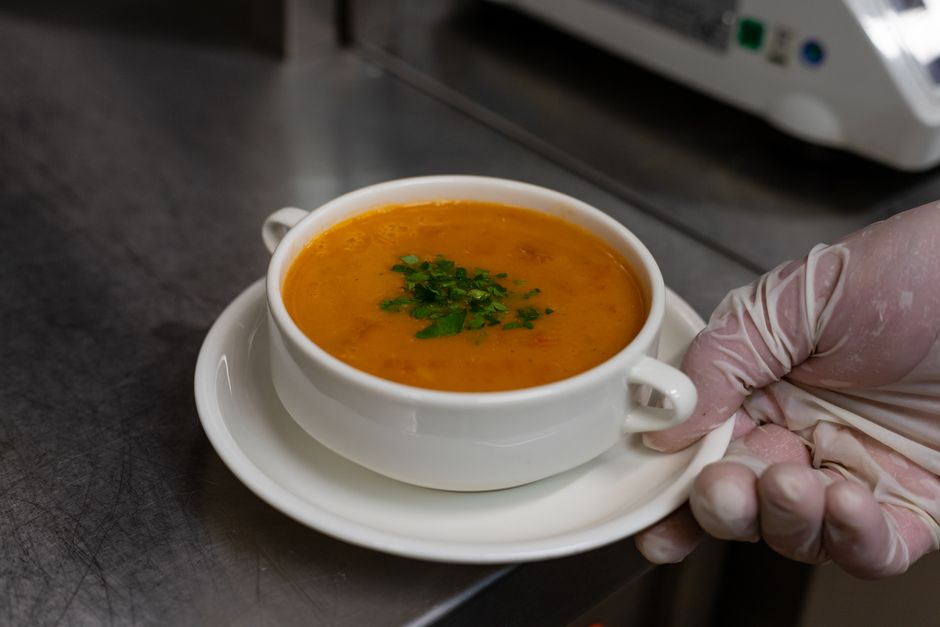
Ogbono is ground wild mango seed and it draws like okra. The method here is the slaking one: palm oil and ogbono powder are mixed together in a small bowl, off the heat, until the oil is absorbed and the powder has turned reddy-orange, and only then does the mixture go into the simmering soup — by the tablespoonful, stirring as you go, checking the consistency between additions. That incremental approach is the whole safeguard, because ogbono over-thickens in a way you cannot undo without ruining the seasoning.
Ingredients
Equipment: Large pot with a lid, Small bowl, Tablespoon, Wooden spoon
- 500 g beef, chicken or goat meat, on or off the bone, chopped into large chunks
- 1 litre of water, or more, depending on how much soup you want
- 1 onion, finely chopped
- 1-2 tsp ground crayfish or dried shrimp
- Salt to taste
- Dried red chili flakes, to taste
- 1-2 bouillon cubes
- 1-2 tbsp palm oil
- 2-3 tbsp ogbono powder
Optional
- Dried fish, stockfish, chicken
- Chopped greens or bitter leaf
Method
- In a large pot, combine the meat, water, chopped onion, crayfish, salt and chilli powder.
- Bring to the boil on medium heat, then reduce to a simmer in a covered pot until the meat is almost cooked.
- Check and adjust the seasoning.
- In a small bowl, combine the palm oil and the ogbono powder, until the oil is absorbed and the powder turns reddy-orange.
- Remove the lid from the pot and add the oil-and-ogbono mixture by the tablespoonful, stirring to ensure it is well mixed.
- Allow to simmer or boil 3 to 4 minutes and check the consistency.
- To thicken further, add more and adjust until you have the texture you want. If it is too thick, thin it with some water.
- Check the seasoning again and adjust. Serve with pounded yam.
Chef Tips
- Reddy-orange is the cue for the slaking, and it is a real one — the powder changes colour visibly as it takes up the oil.
- By the tablespoonful. Add, stir, simmer three or four minutes, look at it, then decide whether to add more. Tipping it all in at once is how soups get ruined.
- The warning is worth quoting: it is best to add the ogbono powder in small amounts until the desired consistency is achieved, to prevent it becoming too thick.
- Cold oil, off the heat, for the slaking. Hot oil cooks the powder and it will not draw properly.
- Ogbono needs twenty minutes or more to develop its draw fully if you are cooking a large pot — the three to four minutes here is the consistency check, not the finish.
- Ogbono is apon in Yoruba and ugiri in Igbo, botanically Irvingia gabonensis, the inner kernel of an African bush mango.
- Bitter leaf goes in with the soup early; soft greens at the end. Ogbono takes any of them.
Common Mistakes to Avoid
- Adding the dry powder straight to the pot.
- Slaking in hot oil.
- Adding all the ogbono at once.
- Leaving the lid on while you add it.
- Trying to thin an over-thickened soup with large amounts of water, which flattens the seasoning.
Nutrition (per serving)
Health Benefits
- Ogbono mucilage is a soluble fibre.
- Wild mango seed is high in healthy fats and magnesium.
- Very low in carbohydrate.
- Red palm oil provides vitamin E and carotenoids.
Cultural Note
Ogbono is eaten the length and breadth of Nigeria and the draw is the whole appeal — the quality that makes it slip down with a swallow is exactly the quality that puts off anyone meeting it for the first time. The seed itself comes from the African bush mango and is sold ground or whole; buying it whole and milling it fresh gives noticeably more draw.
Storage & Serving
Storage: 4 days refrigerated, 3 months frozen. The draw slackens with each reheating.
Reheating: Low heat with a splash of water, stirring.
Adapted From
- Adapted from 'How to Make Nigerian Ogbono "Soup"', published on kitchenbutterfly.com. ATTRIBUTION: the byline prints as 'By Kitchen Butterfly', the site name, not 'Ozoz Sokoh'. Credited to the site. The page reports Published Oct 9, 2011 and Modified June 3, 2026, that date being part of a site-wide bulk stamp.
- Quantities as printed: 500g beef, chicken, goat meat (on or off the bone) chopped into large chunks; 1 litre of water (or more), depending on quantity of soup required; 1 onion, finely chopped; 1 – 2 teaspoons of ground crayfish or dried shrimp; salt to taste; dried red chili flakes to taste; 1-2 Maggi/Knorr bouillon cubes; 1-2 tablespoons of palm oil; 2-3 tablespoons of Ogbono powder. Optional: dried fish, stockfish, chicken; chopped greens, bitter leaf.
- The method is verbatim in substance, including the slaking cue 'till oil is absorbed and the powder turns reddy-orange' and the instruction to add it 'by the tablespoonful, stirring to ensure it is well mixed', then simmer 3 to 4 minutes and check consistency.
- THE TECHNIQUE WARNING, verbatim: 'it is best to add the ogbono powder to the soup in small amounts, until the desired consistency is achieved – this will prevent it from becoming too thick.'
- Identification from the page: Yoruba apon, Igbo ugiri, botanically Irvingia gabonensis — 'Inner kernels/seeds of an African "bush/wild" mango.' Described as having 'mucilaginous properties (similar to okro)', and the page notes that the 'gelatinous' quality 'hated across the globe' is 'the very reason for which it is prized in Nigeria'.
- FLAG ON A COMPOSITION CLAIM ON THAT PAGE, not reproduced as fact: the page gives ogbono's composition as 'about 45% Lauric acid (which helps "good" cholestrol), and 46% Myristic acid' and places it next to the explanation of the draw. That is a fatty-acid profile of the extracted fat and has no bearing on the mucilage, which comes from the seed's polysaccharides. The number is recorded here as having been printed, not as the explanation of the draw.
- ON METHOD, a dispute left open. A commenter on that page, 'sandra davis', asserts that Urhobo women teach ogbono or ogwho correctly and points elsewhere for proper Urhobo preparation; the author replies confirming 'an Isoko mum and an Urhobo husband' and acknowledges regional variation but gives no alternative method in the recipe text. No source consulted documents an Edo- or Delta-specific ogbono technique. Recorded as a gap.
- ON THE THICKENERS GENERALLY: ogbono needs 20 minutes minimum to draw fully, okra is capped at about 5 minutes, and egusi does not draw at all — it cakes and breaks its oil. Their opposite time requirements are what dictates the sequencing when they are combined.