 Nigerian · Soups & Stews
🥬 Otong Soup
Otong — Efik okra soup
Half the okra pounded in a mortar and half left chopped — the pounded half draws, the chopped half keeps its texture.
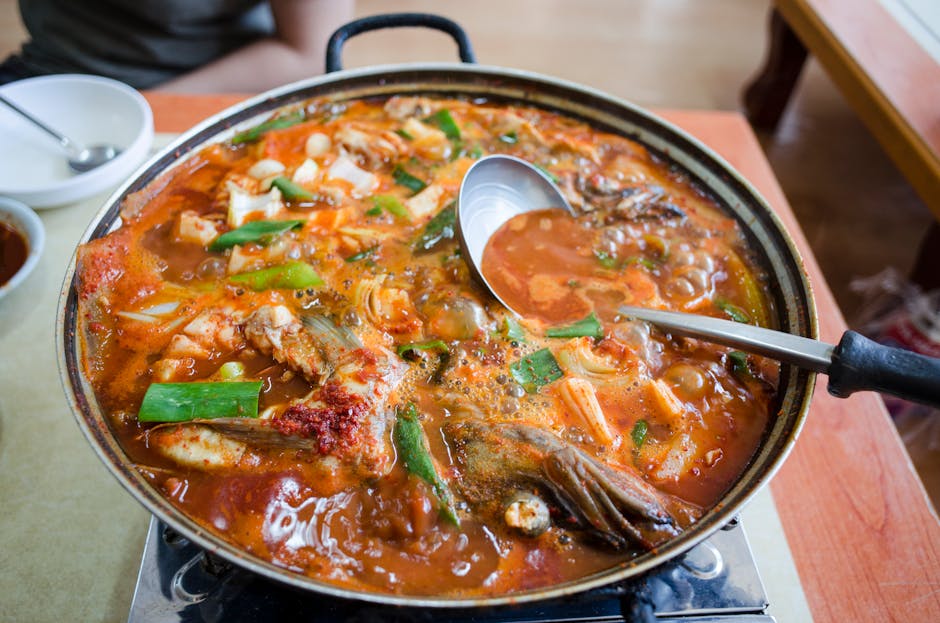
Otong is the southern okra soup and the clever move here is splitting the okra. Two cups are chopped fine, and half of that goes into a mortar to be pounded — pounded okra gives up its mucilage and thickens the broth, while the chopped half stays in visible pieces. The pounded half goes in with the chopped at the same time, after the meat and crayfish have simmered ten minutes, then ugu, uziza and palm oil follow for five to seven minutes. The source's own warning is to be sure not to overcook the vegetables.
Ingredients
Equipment: Medium pot, Mortar and pestle, or a blender, Sharp knife
- 2 cups ugu leaves, chopped
- 2 cups okra, finely chopped — half of it to be pounded
- 3 cups water
- 1/4 cup palm oil
- 1/4 cup uziza leaves (optional)
- 1/4 cup blended crayfish
- 1 tsp dried pepper
- 2 bouillon cubes
- Meat and seafood of choice, pre-cooked
- Salt to taste
Method
- Boil the 3 cups of water on medium heat.
- Pound half the chopped okra in a mortar, or pulse it in a blender.
- Add the crayfish, bouillon, pre-cooked meat, dried pepper and salt, and simmer 10 minutes.
- Add both the pounded and the chopped okra and stir.
- Add the ugu, the uziza and the palm oil, and simmer 5 to 7 minutes — be sure not to overcook the vegetables.
- Serve with a swallow.
Chef Tips
- Pound half, chop half. The pounded okra is your thickener and the chopped okra is your texture, and you want both.
- A mortar does it better than a blender. Pounding bruises the okra and releases the mucilage; blending shreds it.
- Five to seven minutes at the end, and the source says plainly not to overcook the vegetables. Okra past that point goes grey and slimy rather than drawing.
- Three cups of water to two cups of okra is a loose soup by Efik standards. Reduce the water if you want it thicker.
- Palm oil goes in with the greens rather than earlier. It is for richness and colour rather than as a frying base.
- Uziza is optional here and it is worth including — a quarter cup gives a peppery lift the okra alone does not have.
- The same dish is ila asepo in Yoruba, which this source states directly.
Common Mistakes to Avoid
- Pounding all the okra, which loses the texture.
- Blending instead of pounding.
- Cooking the greens past seven minutes.
- Adding the palm oil at the start.
- Boiling hard once the okra is in.
Nutrition (per serving)
Health Benefits
- Okra mucilage is a soluble fibre that moderates blood sugar.
- Ugu supplies iron, calcium and vitamins A and C.
- Very low in carbohydrate and calories.
- Uziza carries piperine-family compounds.
Cultural Note
Okra soup is one of the few dishes that exists in essentially every Nigerian cuisine, which makes its names a useful map: otong among the Efik, ila asepo in Yorubaland, and plain okra soup across the southeast. The split-okra method here — half pounded, half chopped — is the kind of refinement that only shows up once a cook has made something hundreds of times.
Storage & Serving
Storage: 2 days refrigerated. The draw slackens after a day.
Reheating: Warm gently. Boiling destroys the okra texture.
Serve with: Iyan, Eba or garri, Akpu or fufu
Adapted From
- Adapted from 'Otong Soup' on 9jafoodie — byline absent from the page, so credited to the site. Quantities as printed: 2 cups chopped ugu leaves; 2 cups finely chopped okra; 2 cubes maggi; salt; 1/4 cup palm oil; 1/4 cup uziza leaves (optional); 1/4 cup blended crayfish; 1 teaspoon dried pepper; meat and seafood of choice, pre-cooked — no quantity. Plus 3 cups of water from the method. Yield not specified.
- The split-okra technique is as printed: boil 3 cups water on medium heat; 'pound half the okra in a mortar' (or blend); add crayfish, maggi, meat, pepper and salt and simmer 10 minutes; add the pounded and chopped okra and stir; add ugu, uziza and palm oil and simmer 5-7 minutes, 'be sure not to overcook the vegetabes' — typo as printed.
- PROVENANCE FLAG, and it matters for where this entry sits. The page states the origin only as 'southern Nigeria', with a note that ethnic variations exist and that the Yoruba version is ila asepo. It does NOT confirm otong as specifically Efik or Ibibio, despite the Efik name. It is filed here as Efik on the strength of the name, and that inference is flagged rather than hidden.
- The cross-regional identification it does make is useful: otong and ila asepo are the same dish under Efik and Yoruba names. For the Yoruba version with its alkali timing note, see Ila Asepo.
- ON THE THICKENERS, worth stating together since three of them appear across this collection: okra is capped at about 5 minutes and draws immediately; ogbono needs 20 minutes minimum to draw fully; egusi does not draw at all, it cakes and breaks its oil. Their opposite time requirements are what dictates the sequencing when they are combined.