 Nigerian · Street Food & Snacks
♨️ Kilishi, Oven Method
Kilishi — kilichi
The domestic version with no sun at all — beef sliced as thin as 3 mm, baked at 250°C for fifteen minutes flipping every five, then ten to fifteen more.
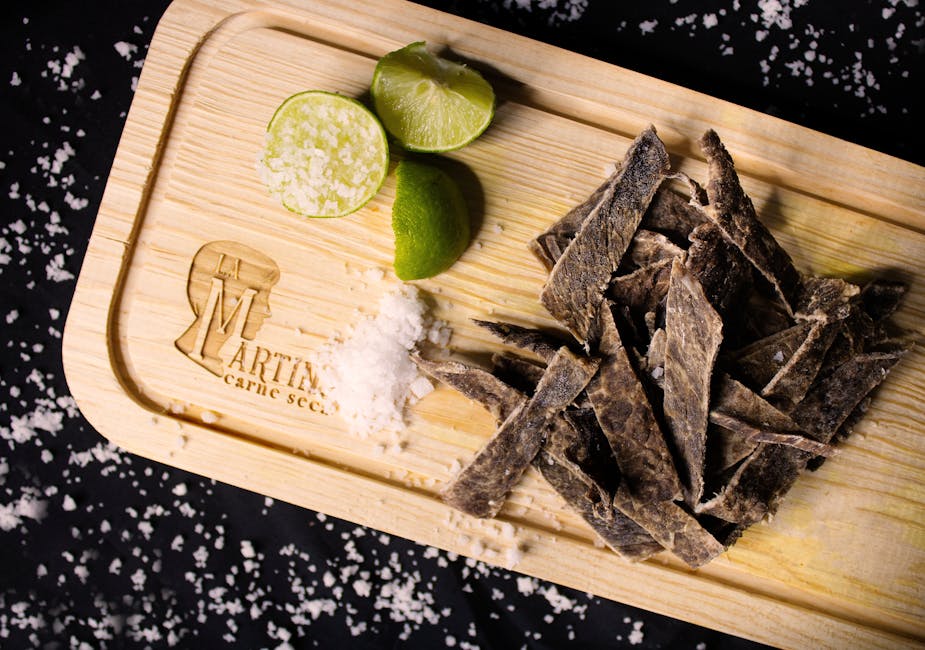
This is kilishi for a kitchen without a roof to dry on. Ten pieces of wafer-thin beef, sliced as thin as three millimetres, are seasoned with suya spice, garlic, cloves, ginger, a stock cube, salt and cayenne, and baked at 250°C — fifteen minutes with a flip every five, then another ten to fifteen. The target is stated well: dry and chewy, not crunchy, and the caution that follows matters — it will become drier once it has cooled completely, so stopping while it still seems slightly soft is correct.
Ingredients
Equipment: Very sharp knife, Oven, Baking tray and rack, Spice grinder
- 10 pieces wafer-thin beef, as thin as 3 mm
- 1 tbsp suya spice (suya pepper)
- 3 cloves of garlic
- 1 tsp cloves (kanafuru)
- A small piece of ginger
- 1 small stock cube
- 1/4 tsp salt
- 1 tsp dry cayenne pepper seeds
Method
- Slice the beef as thin as 3 mm — wafer thin.
- Grind the garlic, cloves, ginger, cayenne seeds and stock cube together with the suya spice and salt.
- Coat the beef pieces thoroughly in the spice mixture.
- Preheat the oven to 250°C (475°F), gas mark 9.
- Bake 15 minutes, flipping every 5 minutes.
- Bake a second time, 10 to 15 minutes.
- Take it out while it is dry and chewy, not crunchy.
- Cool completely — it will become drier as it cools.
Chef Tips
- Dry and chewy, not crunchy. That is the stated target and it is easy to overshoot at 250°C.
- It becomes drier when it has cooled down completely. Pull it while it still has a little give.
- Flip every five minutes during the first bake. Thin meat at that temperature cooks unevenly if you leave it.
- Three millimetres means partially freezing the beef first, which makes slicing that thin possible with a domestic knife.
- Two hundred and fifty degrees is very hot for drying, and it is doing the work the sun does in the traditional method. Watch it rather than trusting the clock.
- Cloves are in this recipe, which is worth noting — they are canonical in the academic description of yaji and absent from most published blends.
- This is not the traditional method and makes no claim to be. There is no sun-drying at all, and no labu marinade — the spice goes on dry. For the four-stage traditional process see Kilishi.
Common Mistakes to Avoid
- Baking until crunchy.
- Judging the texture while it is still hot.
- Not flipping during the first bake.
- Slicing too thick because the beef was not chilled.
- Expecting the shelf life of properly dried kilishi.
Nutrition (per serving)
Health Benefits
- Very high in protein and very low in carbohydrate.
- No added oil.
- Lean beef supplies iron, zinc and B12.
- Cloves and ginger both have documented anti-inflammatory activity.
Cultural Note
The oven kilishi is a diaspora and urban solution, and it is honest about what it is: no sun, no labu, no year on the shelf. What it keeps is the thing people actually want from kilishi — thin, intensely spiced, chewy beef — and it gets there in under two hours instead of a day and a half.
Storage & Serving
Storage: 2 weeks in an airtight container. It does not keep like properly dried kilishi.
Reheating: Eat as is.
Serve with: Yaji, Cold beer or stout, Hot tea
Adapted From
- Adapted from 'Kilishi (Nigerian Beef Jerky)', All Nigerian Recipes — no byline on the page, credited to the site. Local name also given as 'Kilichi'. Headnote as printed: 'Kilishi (also Kilichi) is the spicy Nigerian Beef Jerky, another gift from Northern Nigeria. This is one of those Nigerian snacks that you can eat till your chin pain you yet you will not want to stop.'
- Quantities as printed: 10 pieces wafer-thin beef; 1 tablespoon suya spice (suya pepper); 3 cloves of garlic; 1 teaspoon cloves (Kanafuru); a small piece of ginger; 1 small stock cube; 1/4 teaspoon salt; 1 teaspoon dry cayenne pepper seeds. Yield not specified.
- Slicing as printed: 'as thin as 3mm'. Oven as printed: 250°C (475F), Gas Mark 9; first bake 15 minutes flipping every 5 minutes; second bake 10 to 15 minutes.
- DONENESS CUE, verbatim: 'You want it dry and chewy not crunchy', with the caution that 'the Kilishi will become drier when it has cooled down completely.'
- NO SUN-DRYING AT ALL — this is an oven method throughout, and there is no labu marinade. It is a domestic adaptation rather than the traditional process, and it is published alongside the traditional one rather than instead of it. For the four-stage sun-dried process with moisture targets, see Kilishi.
- ON THE THICKNESS: 3 mm here, against 'about 0.5 cm' in the Kitchen Butterfly process account and 'about 20mm' in Igwe et al.'s Kano field survey. The 3 mm and the 5 mm corroborate each other in spirit; the 20 mm does not and is treated as a probable unit error in that paper, recorded rather than reconciled.
- NOTE that this is one of only two recipes in the whole northern set containing cloves, the other being the peanut-powder yaji variant that its own author flags as a deviation. Clove is canonical in the academic description of yaji and largely absent from the published blends.