 Nigerian · Street Food & Snacks
🫓 Masa in Masa Moulds
Masa — waina
Two and a half cups of sinasir rice, a shorter four-to-five-hour soak, the same eight-to-twelve-hour ferment — and cooked in a divoted masa mould until golden.
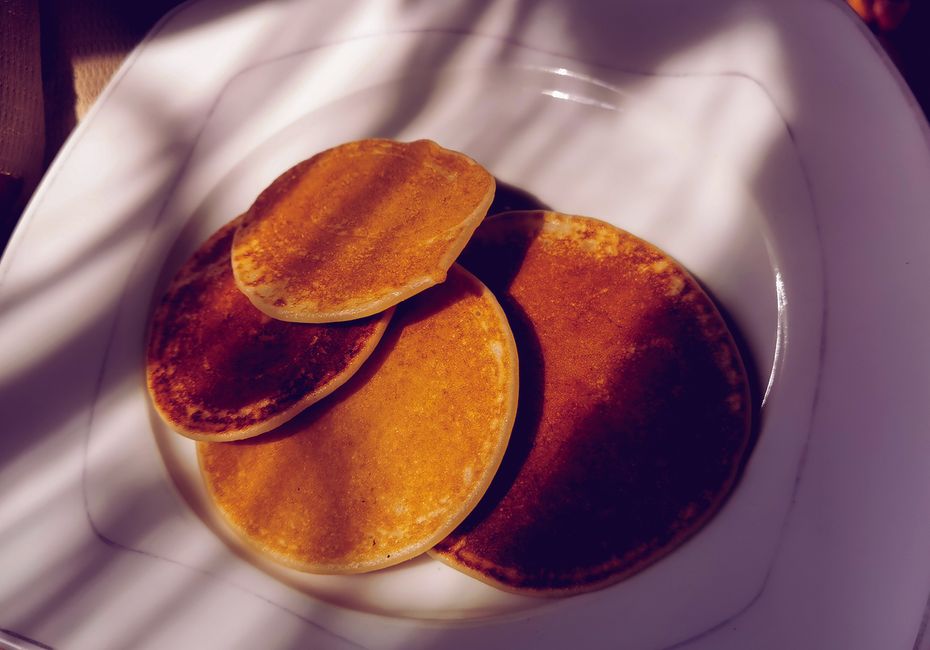
This version names the pan, which is the thing most masa recipes leave out: masa moulds, a traditional tray of divots that gives the cakes their shape. The timings are set out as a clock — rice soaked at five in the afternoon for four or five hours, the yeast bloomed and the batter blended at ten at night, then eight to twelve hours covered in a warm place, and frying at eight the next morning. Four tablespoons of cooked rice go in as the starter, considerably more than the other documented version, and the doneness cue is simply that it has taken on some golden colour.
Ingredients
Equipment: Masa moulds — a divoted tray, Large bowl, Blender, Spoon
- 2 1/2 cups raw sinasir rice
- 1 1/2 tsp instant or active dry yeast
- 4 tbsp sugar
- 1/4 tsp ground akaun (cooking potash), optional
- 4 tbsp cooked rice
- 1/2 tsp salt
- 1 cup warm water, for the yeast
- Water, for soaking
- A light coating of oil, for the moulds
Method
- Day 1, around 5 PM: soak the rice in water 4 to 5 hours.
- Day 1, around 10 PM: dissolve the sugar and the akaun in 1 cup of warm water and sprinkle over the yeast. Let it bloom 8 to 10 minutes.
- Blend the soaked rice with the yeasted water until smooth. Add the cooked rice and blend again.
- Cover and rest 8 to 12 hours in a warm place.
- Day 2, around 8 AM: add the salt, and optional sugar if it needs it.
- Heat the masa moulds with a light coating of oil.
- Fill the divots with a spoonful or two of batter.
- Allow to cook about 2 to 3 minutes on each side, or till it has taken on some golden colour.
Chef Tips
- Masa moulds are the traditional pan — a tray of divots that gives the cakes their shape. A flat frying pan is the diaspora workaround and it works, but the shape is different.
- Four to five hours on the soak, not overnight. The other documented version soaks overnight, and they disagree.
- Eight to twelve hours on the ferment, which is the figure both documented sources agree on exactly. This is the number to trust.
- Four tablespoons of cooked rice as the starter, against one and a half in the other version. More backslop means a faster, more assertive ferment.
- Golden colour is the cue rather than a strict time. Two to three minutes a side is the guide.
- The clock laid out on the source page is genuinely useful — soak at five, blend at ten, fry at eight. It makes masa a plan rather than a project.
- Sinasir rice is specified by name. It is the soft, sticky variety, the same type used for tuwo shinkafa.
Common Mistakes to Avoid
- Soaking overnight when this recipe wants four or five hours.
- Skimping on the cooked-rice starter.
- Filling the divots too full so they do not set in the middle.
- Pouring oil into the moulds rather than coating them lightly.
- Frying before it has had its full eight hours.
Nutrition (per serving)
Health Benefits
- Fermentation improves mineral bioavailability and digestibility.
- Barely any oil is used.
- Gluten-free.
- Lower glycaemic response than plain boiled rice.
Cultural Note
The masa mould is one of those pieces of equipment that defines a food — a cast tray of shallow divots, heated over coals, each hole producing one small round cake with a pale middle and a browned edge. Kebbi is particularly associated with masa, and Daily Trust's reporting there found sellers who had been making it in the same spots for decades.
Storage & Serving
Storage: 2 days at room temperature, 4 refrigerated.
Reheating: Dry pan, a minute a side.
Serve with: Miyan Taushe, Suya, Honey or sugar
Adapted From
- Adapted from 'How To Make Masa', published on kitchenbutterfly.com. ATTRIBUTION: the byline prints as the site name; credited to the site, with Ozoz Sokoh noted as proprietor. Headnote as printed: 'A pan-fried Rice Cake from the North of Nigeria that's delicious on its own, with suya (barbecued meats) and stews'.
- Quantities exactly as printed: 2 1/2 cups raw sinasir rice; 1 1/2 teaspoons instant/active dry yeast; 4 tablespoons sugar; 1/4 teaspoon ground akaun (cooking potash, optional); 4 tablespoons cooked rice; 1/2 teaspoon salt. Yield not specified.
- The timings are laid out as a clock on the page and are reproduced as printed: Day 1, 5 PM — soak rice in water 4 to 5 hours. Day 1, 10 PM — dissolve sugar and akaun in 1 cup warm water, sprinkle yeast, let bloom 8 to 10 minutes; blend the soaked rice with the yeasted water until smooth, add the cooked rice, blend again; cover and rest 8 to 12 hours in a warm place. Day 2, 8 AM — add salt and optional sugar; heat the pan with a light oil coating; 'Fill the divots/ holes with a spoonful or two...allow cook, about 2 - 3 minutes on each side or till it's taken on some golden colour.'
- DONENESS CUE as printed: 'taken on some golden colour.'
- THE PAN, NAMED — and this is why this version is published alongside the other: 'masa moulds', a traditional tray with divots. The page also mentions the author attempting the large pan used by street sellers, and notes that standard pan-frying is possible. The flat-pan method in the other documented recipe is the diaspora workaround.
- THE FERMENTATION WINDOW: 8 to 12 hours in a warm place, identical to the 9jafoodie figure. Two independent named sources agreeing exactly makes this the most reliable number in the northern record and it can be published with confidence.
- DISAGREEMENTS WITH Masa, not reconciled: the soak is 4 to 5 hours here against overnight there; rice 2 1/2 cups against 1.5 cups; cooked rice 4 tablespoons against 1.5 tablespoons. The cooked rice is the backslop starter, so that proportion genuinely affects the ferment.
- A GAP: both sources use commercial yeast and neither documents a wild or spontaneous fermentation, which is presumably the traditional route. The traditional leaven for masa is undocumented in everything consulted.
- ETHNOGRAPHY from Daily Trust's 'Masa: A delicacy in every Kebbi home', byline Ismail Adebayo, Birnin Kebbi, 20 March 2017 — no quantities, no method steps, no vessel and no fermentation time, but excellent headnote material. People named: Malam Yahya Sarki, a journalist of the royal family; Alhaji Sahabi Abdullahi, a Kebbi indigene; Zuwaira, a 23-year-old masa seller in the GRA area; Abdullahi, a customer; Abdullahi Yaro, bank staff; Hajiya Jumai Zuru, a 62-year-old masa seller with 15 years in the business. Places: Birnin Kebbi, the GRA area, the Aleru Abdul area. Occasions: marriage events, male child circumcision, Quranic graduation, thanksgiving, turbaning, child naming ceremonies, festivals and weddings. That source also lists wheat, millet and guinea corn as masa substrates alongside rice, where the blogs treat masa as rice-only.